+86 13520127780
 info@jingelway.com









What are the differences between single-parameter and multi-parameter ambient sensors?
Release time: 2026-09-28
The core difference lies in their focus: single-parameter ambient sensors are designed for the independent, precise measurement of a specific key indicator, whereas multi-parameter sensors integrate multiple environmental parameters into a single device or monitoring node to provide a more comprehensive view of conditions. When selecting equipment, enterprises should not simply assume that “more parameters are better”; instead, the choice should be based on a holistic assessment of monitoring objectives, accuracy requirements, the number of monitoring points, budget, maintenance capabilities, and future expansion plans.
Table of Contents
The Selection Challenge: “More Parameters” Isn’t Always Better
In fields such as environmental monitoring, industrial operations, smart agriculture, cold chain warehousing, building management, and laboratory research, procurement professionals often face a dilemma: should they choose single-parameter sensors or multi-parameter environmental sensors?
On the surface, multi-parameter devices—capable of simultaneously measuring temperature, humidity, CO₂, PM2.5, TVOC, air pressure, light levels, or noise—appear to offer superior functionality, whereas single-parameter sensors are limited to measuring a single metric. However, in real-world projects, equipment selection depends on “which data actually influence decision-making,” rather than the sheer number of parameters.
If a cleanroom requires strict control over temperature and humidity, or a laboratory needs only high-precision tracking of a specific gas concentration, adding numerous non-critical parameters can unnecessarily drive up procurement costs and increase the burden of calibration, maintenance, and data management. Conversely, in complex environments such as greenhouses, warehouses, workshops, or outdoor sites, factors like temperature, humidity, air quality, and lighting often interact; monitoring only a single metric may fail to provide a complete picture of environmental changes.
Therefore, enterprises must first clarify what needs to be monitored, the purpose of the monitoring, and the actions required in response to anomalies. The value of a multi-parameter monitoring platform lies in its ability to integrate multiple sensors or measurement modules into a unified system, creating a comprehensive view of environmental data; however, the selection of parameters should ultimately be guided by practical application needs, accuracy, response speed, durability, and system compatibility.
What is a single-parameter sensor?
A single-parameter environmental sensor is a device or instrument designed specifically to measure one type of environmental variable. Examples include temperature sensors, humidity sensors, CO₂ sensors, PM2.5 sensors, noise sensors, wind speed sensors, soil moisture sensors, and standalone pH or dissolved oxygen sensors; all of these fall under the category of single-parameter products. These sensors are typically designed around a specific parameter and offer various ranges, accuracy classes, output methods, and protection ratings to suit application requirements. For instance, an industrial temperature sensor might support PT100, 4–20 mA, RS485 Modbus, or wireless transmission, whereas a high-precision humidity sensor might prioritize long-term stability, low drift, and calibration capabilities.
Key advantages of single-parameter sensors include:
Focus on critical parameters: Ideal for scenarios with clearly defined monitoring targets and straightforward control logic—such as temperature monitoring in pharmaceutical warehouses, humidity control in cleanrooms, or temperature rise alerts for power distribution cabinets.
Superior accuracy and verifiability: Selecting a sensor for a specific measurement target makes it easier to meet requirements for high precision, rapid response, calibration certification, and regulatory compliance.
Flexible maintenance and replacement: If a single sensor fails, usually only that specific unit needs replacing, without disrupting the measurement of other parameters.
Ease of phased expansion: Enterprises can deploy sensors for core parameters first and subsequently add independent sensors for CO₂, particulate matter, gases, or lighting as needed.
However, when multiple parameters must be monitored in a single area, a single-parameter approach entails more installation points, cables, power supplies, communication interfaces, and maintenance tasks. If data protocols, sampling rates, and installation locations differ across multiple independent devices, the complexity of subsequent data integration increases.
What is a multi-parameter environmental sensor?
A multi-parameter ambient sensor is a device that integrates capabilities for measuring two or more environmental parameters within a single unit, probe, terminal, or monitoring node. Examples include combined temperature and humidity sensors, 3-in-1 sensors (temperature, humidity, and CO₂), or indoor air quality monitoring terminals that integrate temperature, humidity, PM2.5, PM10, TVOC, CO₂, and atmospheric pressure measurements.
The defining characteristic is not merely housing multiple sensors in one casing, but the ability to manage multiple parameters through unified power supply, communication, installation, and data interfaces. A typical multi-parameter monitoring system can display multiple data points simultaneously on a single platform, providing a foundation for analyzing correlations between environmental changes. For example, a rise in CO₂ concentration might coincide with changes in occupancy density, ventilation levels, and temperature/humidity; identifying the root cause is often easier when considering CO₂ levels alongside other parameters rather than in isolation. Multi-parameter devices typically offer the following value:
Reduced installation and cabling: A single device can replace multiple independent measurement terminals, making them particularly suitable for locations with limited installation space or high cabling costs.
Generation of correlated data: Collecting multiple environmental metrics at the same location and time facilitates the analysis of the causes and trends of environmental changes.
Simplified platform integration: Multiple types of data can be uploaded via a single communication link, making them ideal for interfacing with BMS, SCADA, MES, or IIoT cloud platforms.
Suitability for comprehensive environmental management: Commonly used in smart buildings, greenhouse cultivation, warehouses, production workshops, outdoor environmental stations, and multi-zone facility management.
Multi-parameter sensors are not always the most suitable choice compared to single-parameter devices. They are generally better suited for projects requiring comprehensive environmental assessment, monitoring across many points, sites where frequent maintenance is inconvenient, or scenarios demanding rapid deployment. Selection practices indicate that while integrated solutions reduce cabling and the number of on-site devices when multiple variables need monitoring at a single point, independent single-parameter sensors are often more straightforward and easier to manage when there is only one critical control variable.
Key Differences
| Comparison Dimension | Single-Parameter Environmental Sensors | Multi-Parameter Environmental Sensors | Selection Guidance |
| Measurement Accuracy and Specialization | Typically designed around one measurement target, such as high-accuracy temperature, humidity, CO₂, particulate matter, or a specific gas. Buyers can select specialized models based on range, accuracy, response time, long-term stability, and calibration standards. | Integrate temperature, humidity, CO₂, TVOC, PM2.5, light, air pressure, and other parameters in one device, with an emphasis on comprehensive environmental awareness. The accuracy and response performance of each parameter should be verified individually; a multi-in-one design alone does not guarantee performance. | When a parameter directly affects product quality, personnel safety, or compliance, prioritize its accuracy, drift, calibration capability, and certification requirements. |
| Number of Monitoring Points and Installation | Each additional parameter usually requires its own sensor, installation position, power supply, or communication interface. In projects with multiple parameters and zones, device counts and wiring work can increase quickly. | One device can cover multiple parameters. Where each monitoring point needs comprehensive environmental data, this can reduce the number of devices, mounting brackets, cables, and communication ports. | Multi-parameter devices reduce the number of devices at each point, but they do not replace sound monitoring-point planning. Large workshops, greenhouses, or warehouses still require point density based on zoning, airflow, heat sources, and risk areas. |
| Initial Purchase Cost | The cost per device is usually lower, making this option suitable for projects that monitor one critical parameter, have limited budgets, or require phased deployment. | The purchase price per device is generally higher because multiple sensing modules, communication interfaces, and data-processing capabilities are integrated. | Do not compare unit prices alone. If one location requires temperature, humidity, CO₂, and particulate monitoring, compare the total quotation for several single-parameter devices with that of one multi-parameter device. |
| Total Deployment Cost | When there are few parameters and limited monitoring points, procurement and maintenance costs are usually easier to control. However, as parameters and locations increase, installation, power, cabling, gateway ports, communications, and manual management costs also rise. | In multi-parameter, multi-point deployments, the enclosure, power supply, and communication link can be shared. This can reduce installation labor, cable use, interface consumption, and system-integration work. | Evaluate total cost of ownership (TCO), including equipment, installation, cabling, communications, platform integration, calibration, maintenance, replacement, manual inspections, and the cost of abnormal-condition risk. |
| System Integration Complexity | Different suppliers or types of single-parameter devices may use different communication protocols, output signals, sampling frequencies, and data formats. Each device may require wiring, address configuration, protocol parsing, and platform mapping. | Multiple data points are commonly uploaded through one communication protocol, device address, and data interface. This simplifies connection to BMS, SCADA, MES, or IIoT platforms and supports centralized visualization and remote management. | For fast-delivery projects or deployments that must connect substantial environmental data to a cloud platform, industrial gateway, or automation system, multi-parameter solutions generally reduce integration complexity. |
| Calibration and Maintenance | Each sensor usually requires separate inspection, calibration, maintenance, and replacement. A fault in one parameter can be handled independently without affecting others, but a large device count increases calibration scheduling and field-maintenance workload. | Multiple parameters can be managed through one device, simplifying inspections, configuration, communication diagnostics, and maintenance planning. Confirm whether each parameter supports independent calibration and modular replacement, and whether a failure in one module affects use of the entire device. | Single-parameter systems involve multiple independent calibration points: flexible, but with more maintenance objects. Multi-parameter systems enable more centralized calibration and maintenance, but maintenance intervals, spare-parts strategy, and backup plans should be confirmed in advance. |
| Failure Impact Scope | A failure in one device normally affects only one parameter; other environmental data can still be collected. System redundancy is generally easier to design. | A power, communication, or main-unit failure in one multi-parameter device may interrupt data collection for several parameters at the same time. | For areas requiring high continuity, consider a hybrid architecture: multi-parameter devices for primary monitoring plus backup single-parameter sensors for critical measurements. This balances monitoring efficiency with data reliability. |
Decision Framework: Which is right for your application scenario?
Enterprises can quickly determine the most suitable solution by considering the following three questions:
Large spaces and multi-point monitoring: Prioritize evaluating multi-parameter solutions.
If monitoring is required across multiple warehouses, floors, workshops, greenhouse zones, livestock areas, or outdoor sites—and each location requires tracking multiple variables such as temperature, humidity, CO₂, particulate matter, or lighting—multi-parameter sensors generally offer greater deployment efficiency.
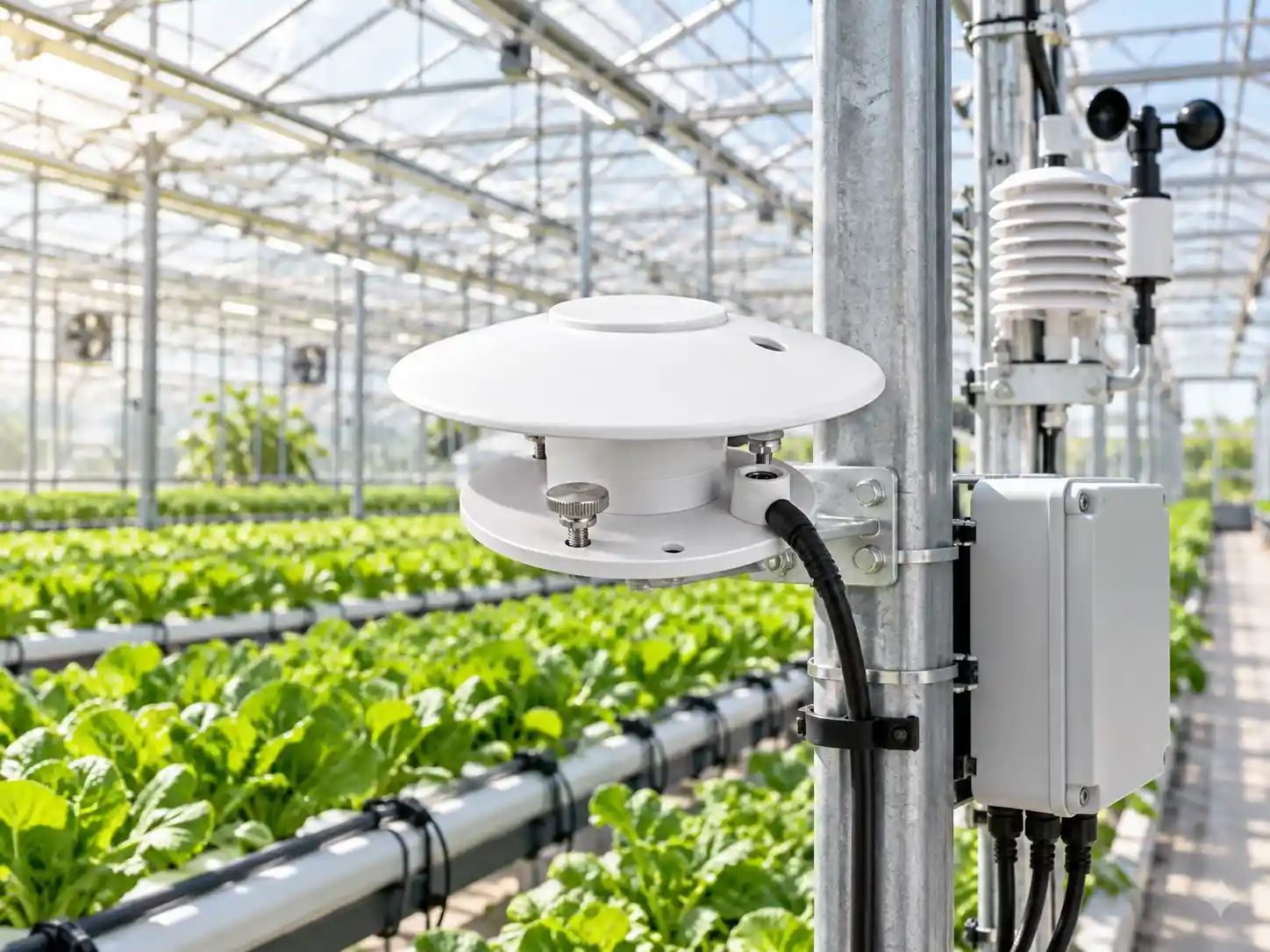
For example, a large greenhouse may need to track changes in temperature, humidity, lighting, and CO₂ across different cultivation zones. Installing four separate sensors at each point would entail significant work regarding power supply, communication, installation, and maintenance; conversely, using multi-parameter nodes allows data transmission via a unified interface and makes it easier to compare micro-climate differences between zones.
However, a “large space” should not be interpreted simply as a scenario requiring only a few multi-parameter devices. The larger the space—and the more pronounced the environmental stratification or zonal differences—the more critical it becomes to plan the monitoring point density carefully. Multi-parameter sensors address the question of “what to measure at a specific point,” not the question of “how many points are needed.” High-Precision Single-Metric Monitoring: Prioritizing Single-Parameter Solutions
When a project’s core objective is the high-precision, traceable, or compliant monitoring of a specific metric, single-parameter sensors are usually the better choice. For instance, cleanrooms might prioritize the control of temperature, humidity, and differential pressure; laboratories might focus on temperature stability, CO₂ levels, or specific gas concentrations; and cold-chain storage facilities often treat temperature as the primary quality indicator.
In such scenarios, it is advisable to verify the following requirements:
Do measurement accuracy, resolution, repeatability, and long-term drift meet specifications?
Is there support for calibration, calibration certification, or comparison against standard instruments?
Are the measurement range, ingress protection (IP) rating, corrosion resistance, and interference immunity suitable for the site environment?
Can the output signals and communication protocols integrate with existing control or data platforms?
In the event of equipment malfunction, is it possible to quickly replace the unit while maintaining the continuity of critical monitoring?
In sterile or pharmaceutical environments, the continuous monitoring and comprehensive logging of critical environmental parameters are often paramount; sensor selection must balance measurement accuracy, documentation requirements, and system reliability.
Budget and Scalability: Adopting a “Core Single-Parameter + Targeted Multi-Parameter” Combination
A limited budget does not dictate a choice of only single-parameter devices, nor does it imply that multi-parameter devices are necessarily more expensive. The correct approach is to evaluate the Total Cost of Ownership (TCO)—the sum of costs for equipment procurement, installation and wiring, power and communication, platform integration, calibration, maintenance, replacement, manual inspections, and potential losses due to anomalies.
For small-scale projects, it is recommended to first deploy the most critical single-parameter sensors. For example, a warehouse might initially implement temperature and humidity monitoring, adding CO₂, particulate matter, or gas leak monitoring later based on specific product storage requirements. This approach offers greater flexibility in investment timing and avoids paying for data that serves no immediate practical purpose.
For projects requiring multiple parameters, distributed monitoring points, or sites where maintenance is difficult, multi-parameter sensors can be deployed in core areas, supplemented by high-precision single-parameter devices to verify or augment critical metrics. In practice, many mature projects adopt a hybrid architecture rather than an “either-or” approach: multi-parameter nodes provide broad coverage and comprehensive insights, while single-parameter devices handle critical metrics, high-precision control, and specialized monitoring points. The environmental sensor market is shifting from standalone instrument readings to systematic applications integrating sensors, communication networks, platform software, and automated control linkages. Various types of sensors—monitoring temperature, humidity, air quality, gases, particulate matter, soil conditions, and water quality—are increasingly deployed across sectors such as industrial manufacturing, smart agriculture, energy infrastructure, warehousing and logistics, and building operations and maintenance.
The drive toward multi-parameter sensing stems primarily from the need for comprehensive environmental data, remote management capabilities, and efficient deployment. By capturing multiple variables through a single node, enterprises can reduce the number of on-site devices while gaining richer, interconnected data for anomaly analysis. At the same time, single-parameter sensors will retain their importance in applications requiring high precision, specialization, calibration capabilities, and monitoring at critical control points.
Future selection criteria will move beyond the simple choice between single-parameter and multi-parameter devices to focus on broader operational questions: Can the device maintain stable network connectivity? Is it compatible with existing platforms? Is the data traceable? Are calibration and maintenance straightforward? Can the sensor trigger automated responses in equipment such as ventilation fans, fresh air systems, HVAC units, irrigation systems, and dehumidifiers? These capabilities determine whether a monitoring system can truly evolve from mere data collection to a tool that supports operational decision-making.
Our solution:
Both single-parameter and multi-parameter environmental sensors offer distinct value. Single-parameter solutions are ideal for scenarios requiring high precision, monitoring of a single critical metric, or phased system expansion. Multi-parameter solutions are better suited for large spaces, multi-point monitoring, comprehensive environmental assessment, and unified network management. Enterprises should first identify the critical parameters that pose the highest risk or most significantly impact quality and safety, then evaluate the required number of monitoring points, the need for correlational analysis, and whether the budget covers long-term calibration and maintenance.
For enterprises looking to gradually digitize their environmental monitoring, JW-IoT offers tailored support. Based on specific monitoring objectives—whether for workshops, warehouses, greenhouses, laboratories, or outdoor sites—we assist in evaluating sensor architectures (single-parameter, multi-parameter, or hybrid) and developing deployment plans that align with site-specific needs regarding communication methods, platform integration, and future scalability.