+86 13520127780
  info@jingelway.com






Is a Disdrometer the Most Accurate Rain Gauge?
Release time: 2026-07-21
Disdrometers measure the size, velocity, and sometimes shape of individual hydrometeors as they fall through the air.
Instead of only giving you rainfall accumulation totals, a disdrometer can be used to calculate:
* Raindrop size distribution and variation
* Precipitation type distribution
* Average rainfall kinetic energy
* Precipitation calibration values for radar
* Potential erosion from specific rainfall events
* Understand precipitation microphysics
Just because a disdrometer can provide a lot of different information doesn’t mean it will be the best choice for your rainfall-monitoring project.
Disdrometers:
* Cost more than standard rain gauges
* Are more complex to install
* Require more maintenance
* Produce more complex data to process
* Are typically used for research, not farm irrigation
If your project only needs alarms for daily rainfall accumulation, you likely do not need a disdrometer.
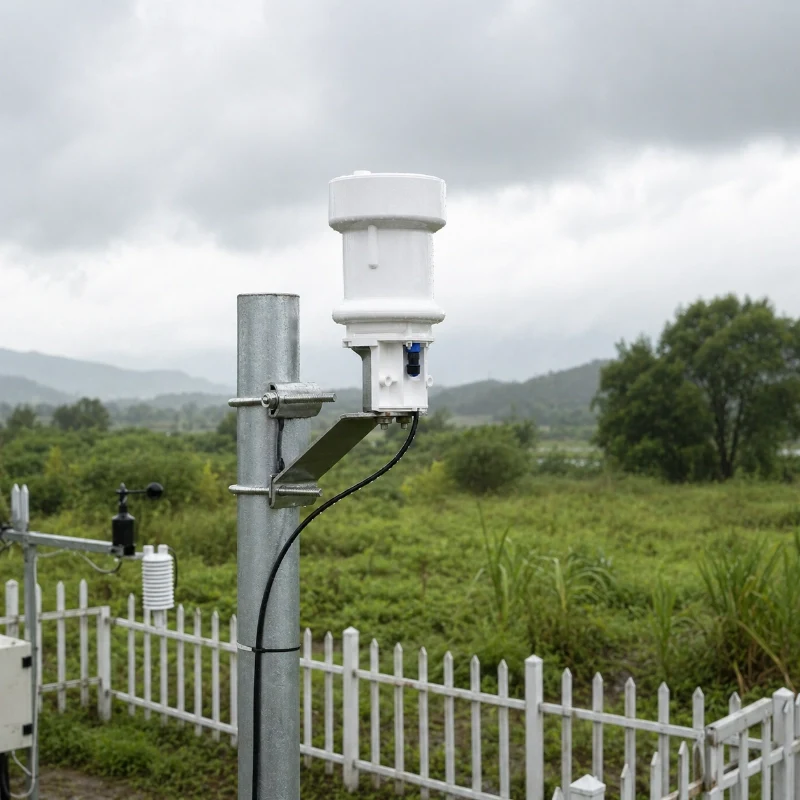
- Which Rain Gauge Is Best for Agriculture?
Tipping-bucket rain gauges offer quality rainfall monitoring at a low cost.
Applications where tipping buckets shine include:
* Irrigation scheduling and alerts
* Farm and field weather stations
* Orchards, vineyards, and other plantations
* Rainfall alerts
* Crop management decisions
* Distributed networks over large areas
Solar-powered tipping-bucket rain gauges are also available for farms and remote areas where power is not available.
Optical rain sensors or piezoelectric sensors might also work for compact or low-maintenance weather stations.
- Best Rain Gauge for Professional Weather Stations
If your weather station needs to meet observation standards or measure precipitation types other than liquid rainfall, you have a few options.
Liquid rainfall can be monitored automatically with a calibrated tipping-bucket rain gauge.
For continuous high-quality accumulation measurement or rain and snow together, a weighing rain gauge may be the preferred choice.
- The Best Rain Gauge for Hydrology
Rain gauges used in hydrology applications are typically concerned with rainfall totals and event timing.
Small tipping-bucket rain gauges are frequently used in watershed monitoring or flood-warning networks. They provide both event timing information and rainfall intensity estimates at a reasonable price.
Weighing rain gauges or additional redundant instruments may also be installed as high-value reference stations.
- Rain Gauge for Urban Drainage and Flood Warning?
Because rainfall intensity and event timing can be important during rainstorms and urban drainage applications, specifications to consider include:
* Fast data-transmission requirements
* Event-based rainfall intensity tracking
* Dependable alarms
* Local data storage
* Stable power supply
* Data visualization from multiple stations
Tipping-bucket or suitable solid-state rainfall sensors can be selected based on the application’s maintenance environment and desired level of accuracy.
- Best All-Purpose Rain Gauge for Scientific Research
Precipitation monitoring for scientific studies may require:
* Weighing gauge measurement
* Redundant manual rain gauges for verification
* Disdrometers for precipitation physics
* Installing multiple gauges near each other
* Field calibration of rain gauges
* Wind correction factors for rainfall data
* Comparing redundant gauges for quality control
Exactly which rain gauge is best depends on the research question at hand. The required rain gauge accuracy is determined by the project, not the other way around.
- Which Rain Gauge Should be Used for Snow and Mixed Precipitation?
Standard unheated tipping-bucket rain gauges are not ideal for measuring snowfall.
Projects that need to measure rain and snow often require:
* A heated all-weather precipitation gauge
* Rain gauge heating
* Wind shielding to prevent snow drift
* Antifreeze additives or evaporation prevention
* A specialized precipitation sensor that can measure all types of weather
Snow and mixed precipitation are challenging to measure, so be sure to review how each rain gauge technology will perform under your project’s specific conditions.
Specifications to Compare When Choosing Rain Gauges
Accuracy isn’t the only important specification when comparing rain gauges. Here are some terms that might be helpful.
- Measurement Resolution: The smallest rainfall increment that can be reported by the rain gauge.
- Accuracy: The amount of error allowed during testing at specified rainfall intensities.
- Rainfall-Intensity Range: Every rain gauge has a minimum and maximum measurable rainfall intensity.
- Collection Area: The size and shape of the collecting- funnel affects exposure to the elements and water-collection efficiency.
- Output Signal: Rain gauges commonly offer one or more of the following signals:
* Pulse output
* Reed-switch contact
* RS485 communication
* Modbus RTU
* SDI-12
* Analog output for specialized systems
- Operating Temperature: Rain gauges used in very hot, cold, or freezing conditions should have a specified operating temperature range that matches the application.
- Heating Option: Snow, freezing rain, and ice require a heating option if the sensor must be able to measure these types of precipitation.
- Environmental Protection: Rain gauge materials, corrosion resistance, IP rating, cable gland & sealing protection, insect protection, and more will affect long-term reliability.
- Maintenance Requirements: How often will the rain gauge need to be cleaned, inspected, leveled, emptied or drained, and calibrated?
- Calibration Support: When requesting rain gauge calibration, some companies can provide records, procedures, or certificates.
Installation Matters More Than Sensor Type
Installing a rain gauge on an unstable surface will reduce data quality, even if the sensor is theoretically more accurate.
Installing rain gauges near:
* Buildings or trees can affect exposure
* Uneven surfaces can cause maintenance challenges
* Locations with excessive wind exposure can increase snow drifting or evaporation.
* Open booths can increase the risk of splash
* Areas with flying insects can cause nests to block the funnel
* Wrong cable grounding can create measuring problems
Remember: the WMO does not treat precipitation measurement as a matter of choosing the right sensor. Instead, they define good practice as a combination of instrumentation, exposure, operating procedure, calibration, and quality control.
Rain Gauge Recommendations from JW- IoT
JW- IoT offers rainfall monitoring solutions for agriculture, weather stations, smart cities, hydrology, flood warning, and environmental monitoring.
Our rain gauge options include:
* Stainless steel tipping bucket rain gauges
* Standard tipping bucket rainfall sensors
* Optical rainfall sensors
* Piezoelectric rainfall sensors
* Weather sensors with built-in rainfall monitoring
* DIY weather stations
* Weather station data loggers and communications
* Connecting rainfall sensors to the cloud
We can also integrate rainfall monitoring with additional sensors for soil moisture, air temperature, humidity, wind speed and direction, solar radiation, water level, and much more.
FAQ
1. What rain gauge is the most accurate?
A weighing rain gauge can be one of the best options for quality automatic accumulated precipitation monitoring. But factors such as precipitation type, time resolution, calibration, installation conditions, and intended use of the data will influence the optimum choice.
2. Is a weighing gauge always more accurate than a tipping bucket?
Not necessarily.
A calibrated tipping-bucket rain gauge can perform exceptionally well in many automatic rainfall-monitoring applications. They can also provide rainfall-event timing data that may be more useful than weighing gauges for some types of distributed monitoring.
3. Why does rainfall intensity affect tipping bucket accuracy?
Rain falls into the gauge while the tipping bucket is moving. This can change the relationship between the number of bucket tips and the actual amount of collected water depending on the rainfall intensity.
4. Is 0.1 mm resolution better than 0.2 mm resolution?
The resolution only tells you how often rainfall is reported in mm increments. But accuracy, calibration, and environmental exposure also impact the usefulness of rain gauge measurements.
5. Which rain gauge is best for measuring heavy rainfall?
Choose a rain gauge that can handle your expected rainfall intensity. Both tipping-bucket and weighing gauges can be used for heavy rainfall if they have been calibrated and field-tested at high intensity. Manufacturers should be able to provide this information if you ask.
6. Which rain gauge requires the least maintenance?
Optical and piezoelectric rain sensors have no moving parts. But they still require regular cleaning and inspection to ensure performance. All rain gauges will require maintenance.
7. Can JW- IoT help you compare rain gauge types?
We can recommend a rain sensor based on your required rainfall resolution, rainfall intensity, precipitation type, desired output, current communication network, available power, environmental exposure, and maintenance plan.
Conclusion
There isn’t a single rain gauge type that works best in all situations.
For continuous rainfall monitoring and high-quality precipitation accumulation totals, weighing rain gauges are frequently the preferred solution. But tipping-bucket rain gauges offer excellent accuracy at a low cost. Manual rain gauges still have applications where automatic sensors aren’t an option.
Compact optical rainfall sensors and low-maintenance piezoelectric sensors can also play an important role in distributed monitoring.
Compare Rain Gauge Options for Your Project with JW- IoT.
Contact us with your project information. Share precipitation type, expected rainfall intensity, required resolution & accuracy, output requirements, available power supplies, preferred communication method, and intended installation conditions.
Our team can help you compare different rain gauge technologies and choose a monitoring solution that meets your needs.