+86 13520127780
 info@jingelway.com









How to Design an Efficient Fertigation System
Release time: 2026-05-16
A fertigation system is not simply a water pump connected to a fertilizer tank. It is a complete irrigation and nutrient delivery network that must be carefully designed from the water source to the final emitter.
Many problems such as clogged drippers, uneven irrigation, unstable pressure, and poor fertilizer distribution are not caused by the fertigation unit itself. They usually result from weak system planning, especially in three areas:
- Improper water source selection
- Inadequate filtration design
- Poor pressure and pipeline matching
A high-performance fertigation system should follow a clear logic:
Water Source → Pumping System → Multi-Stage Filtration → Fertilizer Injection → Main and Branch Pipelines → End Irrigation Devices → Smart Control System
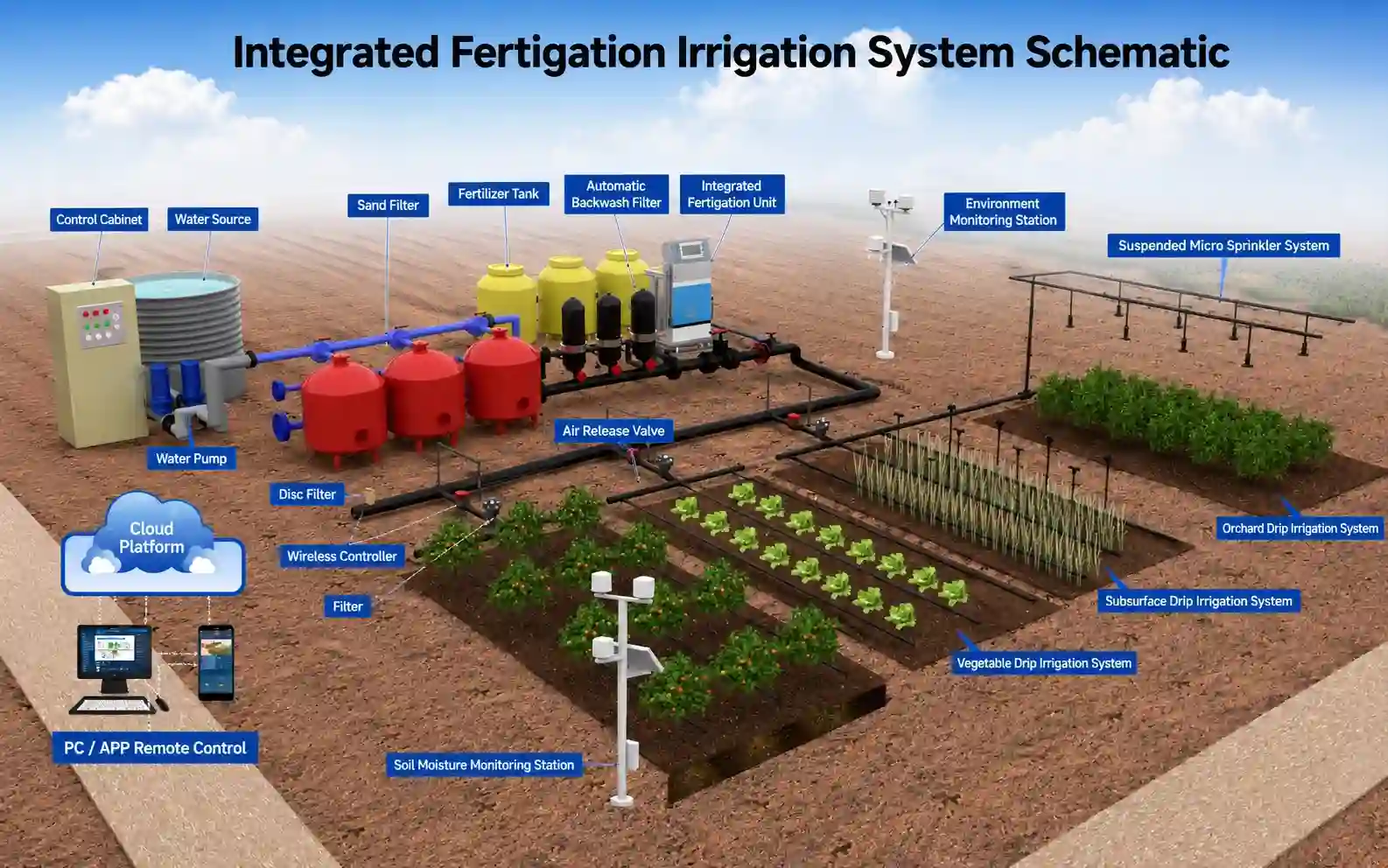
Only when these modules are properly matched can the system achieve stable water delivery, precise nutrient dosing, and long-term reliable operation.
1. Water Source Selection: The Foundation of System Reliability
The water source determines the “health” of the entire fertigation system. Poor-quality water increases the risk of sediment buildup, emitter blockage, and chemical instability.
Recommended Water Source Priority
- Deep Groundwater
Deep groundwater is usually the preferred option because it contains fewer suspended solids and often maintains a relatively stable temperature. - Mountain Spring Water or Treated Storage Pond Water
These sources can also be used, but sediment content should be monitored carefully. - River Water or Pond Water
These sources are usable only when effective pretreatment is applied, such as sedimentation tanks, screens, or strong filtration systems.
Water Sources to Avoid
Water with the following characteristics should generally not be used:
- Excessively high salinity
- Extremely high or low pH
- Industrial contamination
- Severe biological growth or algae concentration
These conditions may damage pumps, disrupt fertilizer solubility, or reduce irrigation uniformity.
2. Pump Selection: Matching Flow and Pressure to the Farm Scale
The pump acts as the “heart” of the irrigation system. It must supply enough flow and maintain stable pressure across the entire pipeline network.
Typical Pump Selection by Farm Size
| Application Scale | Recommended Flow | Recommended Head | Typical Pump Choice |
| 1–10 mu small greenhouse or farm | 1.5–5 m³/h | 20–40 m | Self-priming pump, submersible pump, or pipeline pump |
| 10–50 mu production base | 5–20 m³/h | 40–60 m | Multistage centrifugal pump or variable-frequency constant-pressure unit |
| Over 50 mu orchard or large farm | Above 20 m³/h | 60 m+ | Variable-frequency constant-pressure system with deep well pump |
For larger and more continuous irrigation areas, a variable-frequency pressure stabilization system is highly recommended. It helps maintain consistent pipe pressure, prevents water hammer, and reduces uneven irrigation caused by pressure fluctuations.
3. Multi-Stage Filtration: The First Defense Against Clogging
Filtration is one of the most important parts of fertigation system design. Even high-quality drippers can fail quickly if filtration is insufficient.
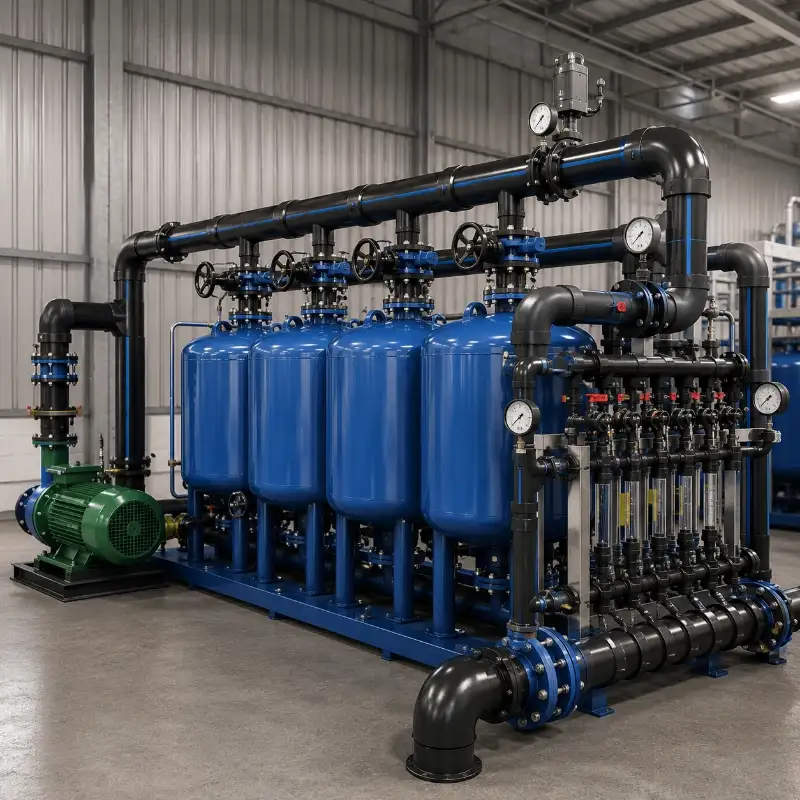
A professional fertigation system usually follows a coarse-to-fine filtration sequence.
Stage 1: Sand Media Filter
Main Function:
Removes larger suspended particles such as mud, algae, and organic debris.
Typical Application:
Especially important for surface water, pond water, and river water.
Why It Matters:
It acts as the first protective barrier for the entire irrigation system.
Stage 2: Disc Filter
Main Function:
Captures fine fibers, microorganisms, and smaller suspended impurities.
Advantages:
- High dirt-holding capacity
- Strong filtration performance
- Easy to backwash and maintain
Disc filters are commonly used in greenhouse irrigation, orchard systems, and field-scale fertigation projects.
Stage 3: Screen Filter
Main Function:
Provides final-stage filtration before water enters the irrigation network.
Typical Role:
Blocks fine particles that may still damage drippers or micro-sprinklers.
Selection Principle:
The filtration grade should be chosen according to the end irrigation device and its flow passage size.
Key Installation Rule
Filtration order should never be reversed.
For example, if a sand filter is placed after a fine filter, large particles may rapidly clog the downstream filter and reduce the overall efficiency of the system.
Pressure gauges should be installed before and after key filtration units. When the inlet and outlet pressure difference becomes too high, cleaning or backwashing should be performed promptly.
4. Fertilizer Injection System: Choosing the Right Dosing Method
The fertilizer injection unit determines how accurately nutrients can be mixed into irrigation water. Different farm sizes require different solutions.
Option 1: Venturi Fertilizer Injector
Suitable for:
Small farms, household greenhouses, and low-budget applications.
Working Principle:
Uses the negative pressure created by water flow to draw fertilizer solution into the pipeline.
Advantages:
- Very low cost
- Simple structure
- Easy installation
Limitations:
- Causes noticeable pressure loss
- Fertilizer absorption accuracy is relatively low
- Requires sufficient pressure difference in the main pipeline
Option 2: Proportional Fertilizer Dosing Pump
Suitable for:
Medium-sized farms and commercial production bases.
Working Principle:
Uses water pressure or mechanical drive to inject fertilizer solution at a defined ratio.
Advantages:
- More stable dosing ratio
- Good reliability
- No external electricity required in some models
- Suitable for standard fertigation needs
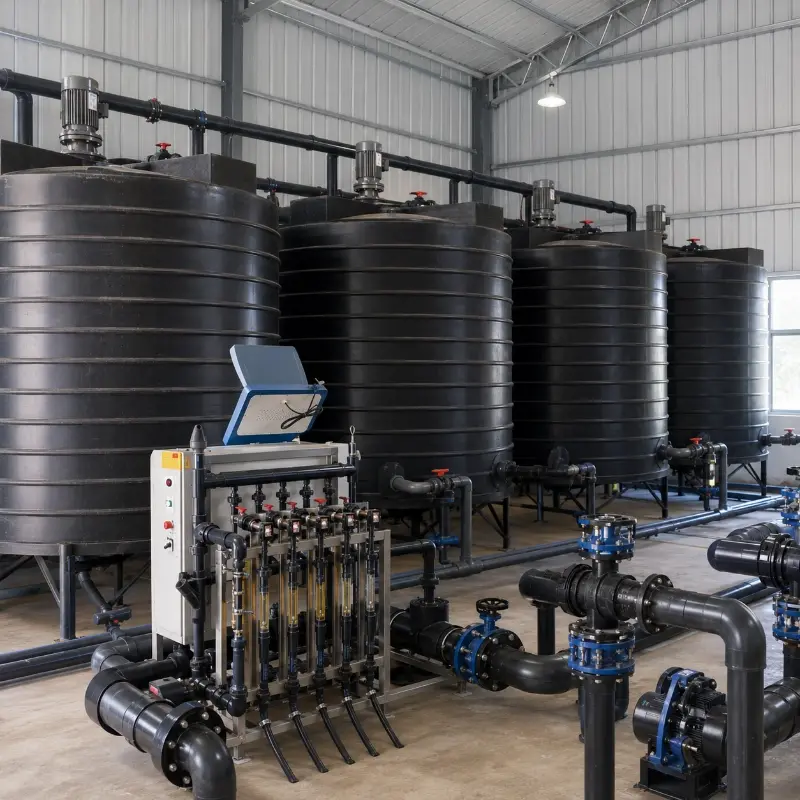
Option 3: Smart Integrated Fertigation Machine
Suitable for:
Large farms, modern greenhouses, high-standard orchards, and precision agriculture projects.
Main Components:
- Fertilizer injection pumps
- Mixing tanks
- EC and pH sensors
- Control modules
- Remote management interface
Core Functions:
- Set different fertigation recipes by irrigation zone
- Monitor and stabilize EC/pH values in real time
- Support automated fertilizer dosing
- Enable remote operation through PC or mobile terminal
Smart fertigation systems provide the highest degree of automation and are increasingly used in commercial agriculture projects that require precise nutrient control.
5. Pipeline Design: Main Pipes Branch Pipes and Final Emitters
Pipeline design directly affects irrigation uniformity and system pressure balance.
Main Pipe
The main pipe delivers the total system flow and must be:
- Pressure-resistant
- Anti-aging
- Suitable for continuous operation
Common material choices include PVC-U and high-pressure PE pipe.
Branch Pipe
Branch pipes distribute water into individual irrigation zones.
They are often made of PE flexible pipe or PE rigid pipe.
Lateral Pipe
Lateral pipes are installed close to the crops and connect directly with drippers, drip tapes, or micro-sprinklers.
6. Pressure Control: The Key to Uniform Irrigation
Stable pressure ensures uniform water delivery across different irrigation zones.
For many drip irrigation systems, it is recommended to install:
- Pressure regulators
- Pressure-reducing valves
- Pressure gauges at key locations
Recommended Pressure Ranges
- Branch line pressure: approximately 0.15–0.25 MPa
- Overall pipeline network pressure: approximately 0.15–0.30 MPa
When the pressure is too high, emitters may be damaged.
When it is too low, distant irrigation points may receive insufficient water.
7. Choosing the Right End Irrigation Device
The final irrigation device should match the crop type, growing stage, and desired moisture pattern.
Drip Tape
Best for:
Vegetables, strawberries, and seasonal crops.
Advantages:
- Low cost
- Easy to install and retrieve
- Suitable for large-area crop rows
Inline Drip Pipe
Best for:
Orchards, perennial crops, and long-term irrigation projects.
Advantages:
- Strong anti-clogging performance
- More uniform water discharge
- Longer service life
Micro-Sprinklers and Fogging Nozzles
Best for:
- Leafy seedlings
- Edible fungi
- Greenhouse humidification
- Orchard cooling and local moisture regulation
These devices produce fine droplets or mist and are especially useful where surface cooling or humidity enhancement is required.
8. Operating Parameters: Precision Matters
Even when the system is well designed, poor fertilizer management can still cause clogging and uneven nutrient delivery.
Recommended Fertigation Solution Parameters
- pH: typically 5.5–6.5
- EC: should be controlled according to crop stage
A typical stage-based EC reference may include:
| Crop Stage | Suggested EC Range |
| Seedling stage | 0.8–1.0 mS/cm |
| Vigorous growth stage | 1.0–1.2 mS/cm |
| Fruiting stage | 1.1–1.3 mS/cm |
These values should be adjusted based on crop type, local water quality, and agronomic requirements.
9. Fertilizer Compatibility and Solubility
Only fully water-soluble fertilizers should be used in fertigation systems.
A dissolution rate above 99% is strongly recommended.
Common Compatibility Risks
Some fertilizers may react with each other and form insoluble precipitation. For example:
- Calcium fertilizers mixed with phosphate fertilizers
- Calcium fertilizers mixed with sulfate fertilizers
These reactions may create deposits and block pipelines or drippers.
To reduce risk:
- Dissolve incompatible fertilizers separately
- Use well-matched nutrient formulas
- Prepare fertilizer stock solutions fresh when possible
- Avoid leaving mixed mother solution standing for long periods
10. Smart Control: The Future of Fertigation Systems
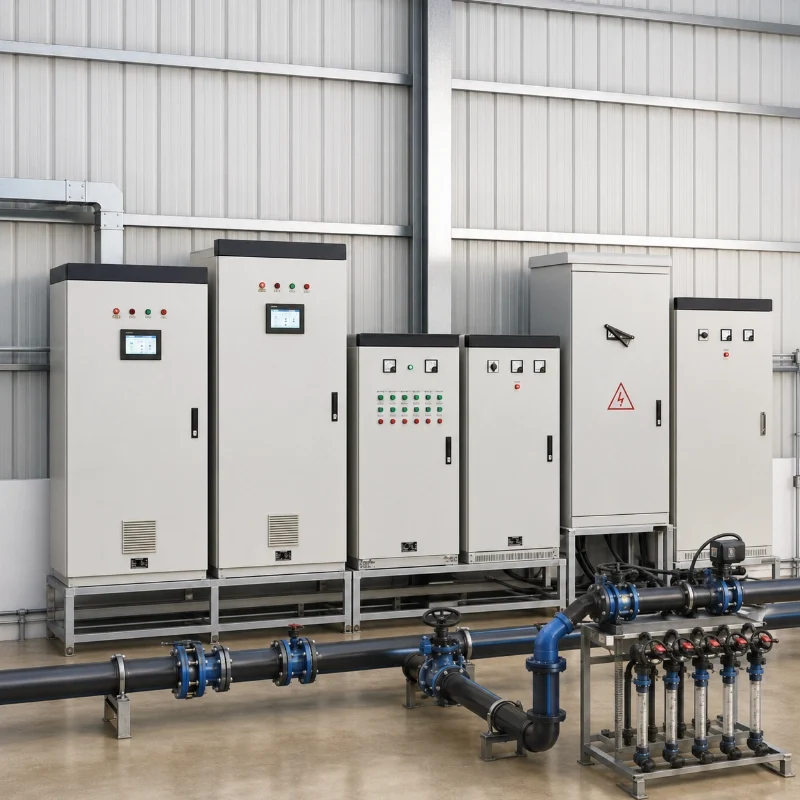
Modern fertigation systems are increasingly integrated with:
- Soil moisture sensors
- EC/pH monitoring
- Weather stations
- Solenoid valve control
- Cloud platform dashboards
- Mobile and PC remote access
With these tools, growers can move from manual irrigation to data-driven irrigation and nutrient management.
A smart fertigation system can help users:
- Automatically schedule irrigation
- Adjust fertilizer dosing by crop zone
- Reduce labor dependence
- Improve water and fertilizer efficiency
- Support standardized and traceable farm management
Conclusion
A reliable fertigation system is built on precise engineering rather than simply connecting equipment together. The success of the system depends on the correct matching of:
- Water source
- Pump capacity
- Multi-stage filtration
- Fertilizer injection method
- Pipeline structure
- Pressure regulation
- End irrigation device
- Operational parameters
When these elements are properly integrated, the result is a stable and efficient system that delivers water and nutrients accurately, reduces clogging risk, and improves long-term crop performance.
For modern farms, greenhouses, and orchards, integrated fertigation is becoming a core infrastructure for precision agriculture.