+86 13520127780
  info@jingelway.com








Smart Rice Farm Demonstration Project for Digital Paddy Field Management
Release time: 2026-04-14
Project Overview
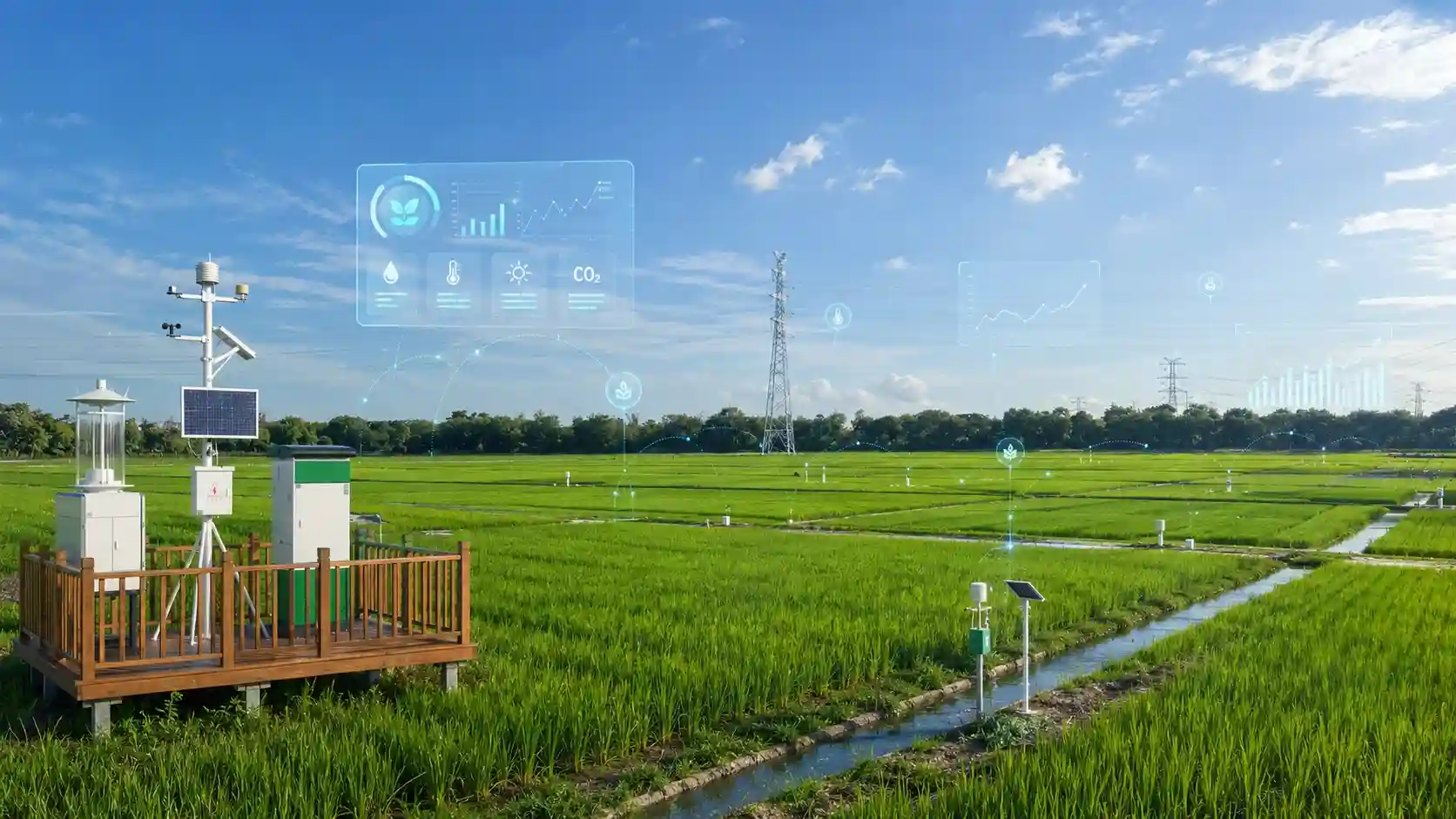
A smart rice farming system helps rice farms move from manual field inspection to data-driven paddy field management. By integrating water level monitoring, soil condition sensing, weather observation, water quality monitoring, pest risk detection, video surveillance, and remote irrigation control, the system gives farm managers a clearer view of field conditions and equipment status.
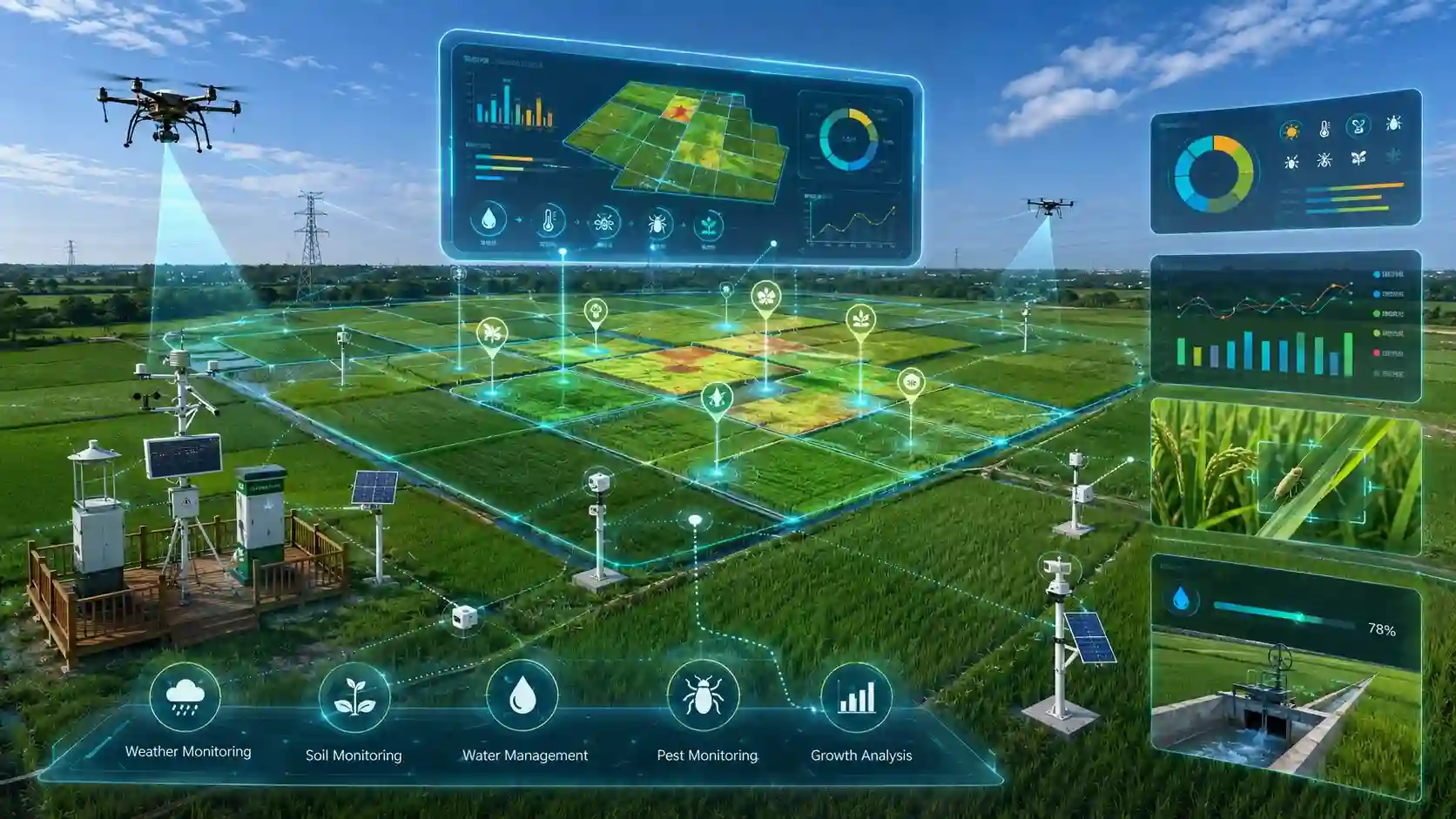
For large rice farms, agricultural demonstration zones, and government-supported digital farmland projects, real-time field data is especially important. It helps managers understand irrigation demand, drainage status, pest occurrence trends, and environmental changes across different field blocks. With a centralized IoT platform, paddy field data can be displayed through GIS maps, dashboards, alarms, historical trends, and video feeds.
JW-IoT provides flexible smart rice farming solutions for overseas projects, including field sensors, RTUs, IoT gateways, communication modules, cloud dashboards, and system integration support. The solution can be customized for different farm sizes, communication environments, irrigation structures, and local project requirements.
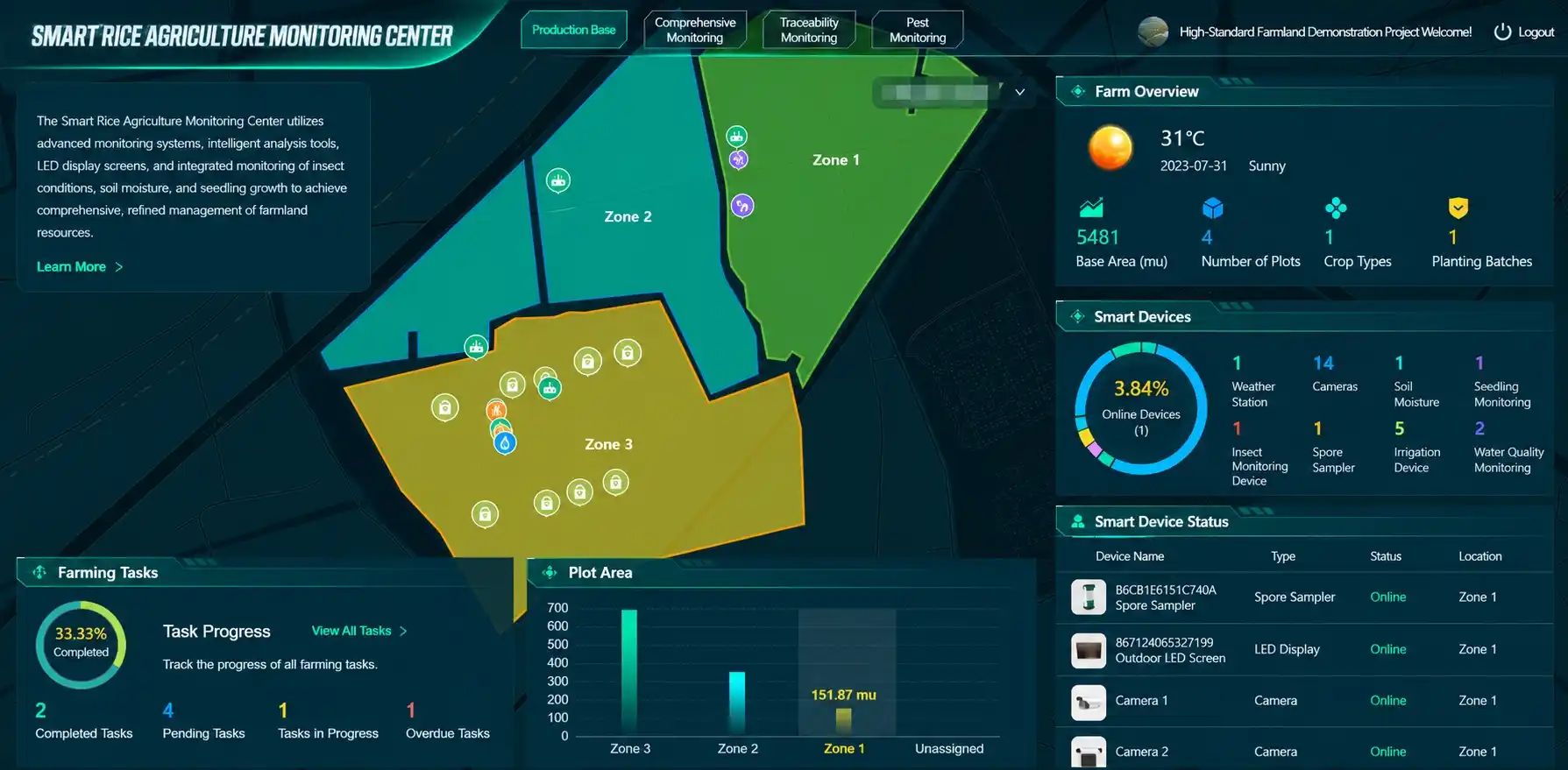
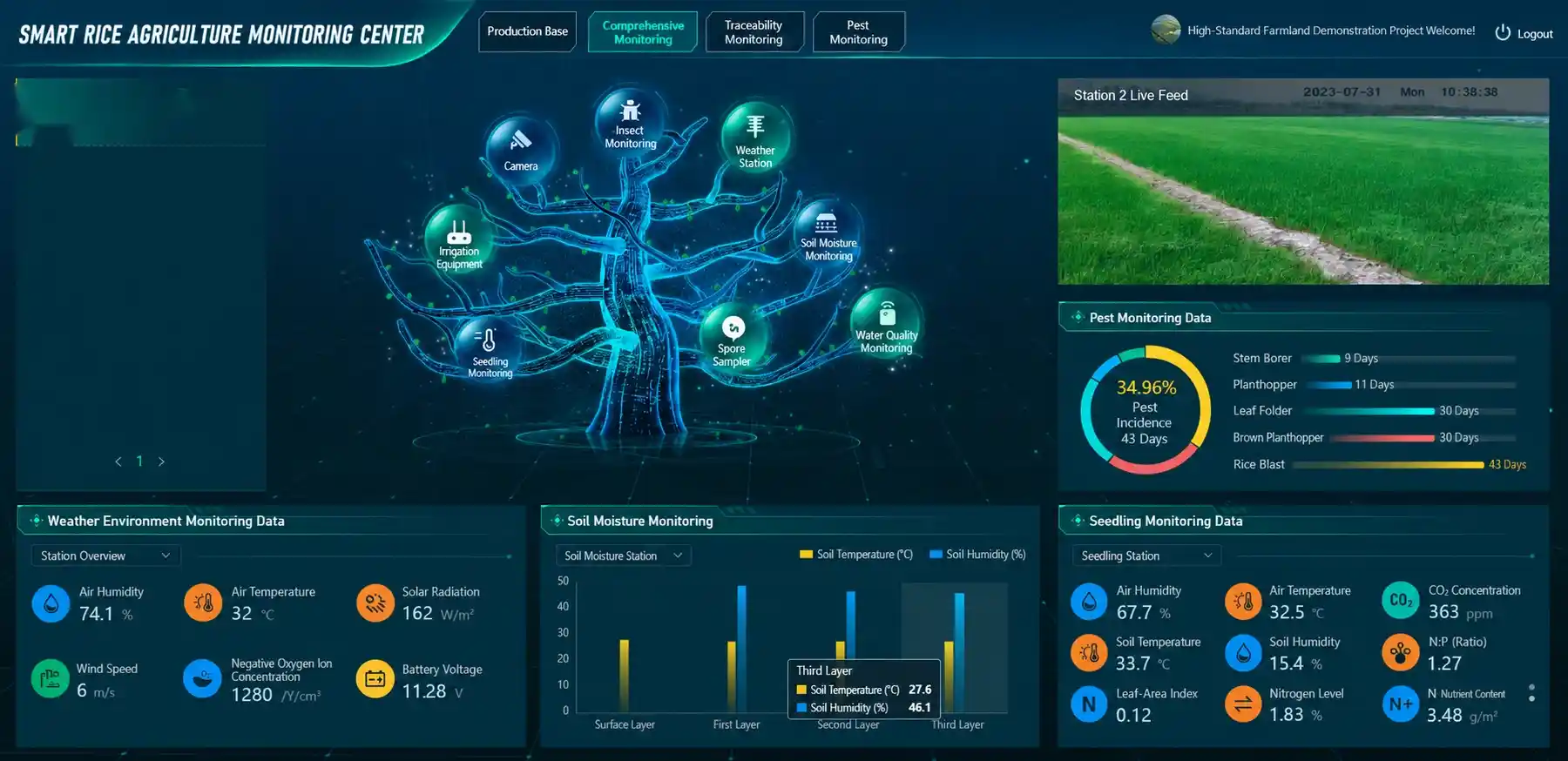
This case is a smart rice farmland demonstration project in Zhejiang, China. It combines high-standard farmland construction with IoT-based monitoring, intelligent irrigation, water quality sensing, pest surveillance, video monitoring, and a centralized management platform.
The project model can serve as a practical reference for overseas rice farms, agricultural demonstration zones, irrigation districts, and government-led smart agriculture programs.
Challenges in Traditional Rice Farm Management
| Pain Point | Why It Matters | Smart System Response |
| Water level is hard to monitor | Paddy field water depth affects irrigation timing and crop growth | Water level sensors provide real-time field data |
| Irrigation depends on experience | Manual decisions may cause over-irrigation or delayed drainage | RTU and platform support data-based irrigation control |
| Field inspection is labor-intensive | Large farms require frequent patrols | Remote monitoring reduces unnecessary manual checking |
| Data is scattered | Soil, water, weather, pest, and video data are not connected | Cloud platform centralizes all field data |
| Pest and weather risks are detected late | Delayed response may affect crop health | Alarms and monitoring devices support early warning |
| No visualized platform | Demonstration projects need clear data presentation | GIS dashboard supports digital farm display |
Smart Rice Farming System Architecture
| Layer | Content |
| Field Monitoring Layer | water level sensors, soil moisture sensors, weather stations, water quality sensors, pest monitoring devices, cameras |
| Data Acquisition Layer | RTU, IoT data logger, irrigation controller, edge gateway |
| Communication Layer | 4G LTE, LoRaWAN, RS485 Modbus, Ethernet |
| Cloud Platform Layer | GIS map, dashboard, alarm center, data trends, device status |
| Control Layer | pumps, valves, drainage gates, irrigation facilities |
How the System Works,How the Smart Rice Farming System Works
A smart rice farming system connects field sensors, RTUs, IoT gateways, wireless communication, cloud monitoring, and irrigation control into one complete workflow. By collecting real-time data from paddy fields, irrigation channels, drainage areas, and farm facilities, the system helps farm managers improve field visibility, reduce manual inspection, and make better decisions for rice production.
Step 1: Field Sensors Collect Paddy Field Data
The system starts from the field monitoring layer. Water level sensors, soil moisture sensors, agricultural weather stations, water quality sensors, pest monitoring devices, and cameras are installed in key areas of the rice farm. These devices collect real-time data such as paddy field water depth, soil moisture, rainfall, air temperature, humidity, water quality, pest activity, and field images.
For rice farming, water level monitoring is one of the most important parts of the system. Real-time water depth data helps managers understand irrigation status, drainage demand, and field water distribution across different paddy blocks.
Step 2: RTU or IoT Gateway Transmits Data
After field data is collected, the sensors send signals to an RTU, IoT data logger, or gateway. The gateway collects, stores, and transmits data through 4G LTE, LoRaWAN, RS485 Modbus, Ethernet, MQTT, or API integration.
Different communication methods can be selected according to the project environment. LoRaWAN is suitable for large open paddy fields with scattered monitoring points. 4G LTE is suitable for farms with cellular network coverage. RS485 Modbus is commonly used for pump stations, control cabinets, and wired sensor connections.
Step 3: Cloud Platform Displays Real-Time Monitoring Data
The cloud platform receives field data and displays it through dashboards, GIS maps, charts, alarms, and video monitoring interfaces. Farm managers can view water level, soil condition, weather data, water quality, pest observation data, camera images, and equipment status in one platform.
The GIS map allows users to see the location of each monitoring point, field block, irrigation channel, pump station, and camera. This makes it easier to identify abnormal field conditions and manage large rice farms more efficiently.
Step 4: Managers Control Irrigation and Drainage Equipment
The smart rice farming system can also connect with irrigation pumps, drainage pumps, electric valves, canal gates, and control cabinets. Based on real-time water level, rainfall, soil moisture, and weather data, farm managers can remotely control irrigation and drainage facilities.
For example, when the paddy field water level is too low, the system can remind managers to start irrigation. When the water level is too high after rainfall, the system can trigger a drainage alarm or support remote drainage control. For advanced projects, automatic control rules can also be configured according to field conditions.
Step 5: Historical Data Supports Better Farm Decisions
All field data can be stored in the platform for long-term analysis. Historical data helps managers compare water level changes, irrigation frequency, rainfall impact, soil condition, pest activity, and equipment operation records across different seasons and field blocks.
This data supports better irrigation scheduling, water-saving management, crop growth analysis, equipment maintenance, and digital agriculture project reporting. For smart rice farms, agricultural demonstration zones, and government-supported digital farmland projects, historical data is an important foundation for long-term paddy field management.
Need a complete smart rice farming system for your paddy field project? JW-IoT can provide field sensors, RTUs, IoT gateways, cloud dashboards, irrigation control devices, and customized integration support for overseas rice farm monitoring projects.
Recommended Sensor Configuration for Rice Farms
| Monitoring Item | Recommended Device | Application Value |
| Field water level | Radar water level sensor / ultrasonic level sensor | Monitor paddy field water depth and irrigation status |
| Soil condition | Soil moisture temperature EC sensor | Support irrigation scheduling and soil environment analysis |
| Weather condition | Compact weather station / agricultural weather station | Track rainfall, wind, temperature, humidity, and solar radiation |
| Irrigation water quality | pH, EC, turbidity, DO sensors | Monitor irrigation source and drainage water quality |
| Pest risk | Pest monitoring lamp / spore monitoring device | Support early pest and disease observation |
| Field visibility | Fixed camera / PTZ camera | Remote field inspection and operation verification |
| Data control | RTU / IoT gateway / irrigation controller | Data acquisition, transmission, and remote control |
Before and After Digital Paddy Field Management
After deploying a smart rice farming system, rice farm management can shift from manual inspection to real-time monitoring and data-supported decision-making. The system helps improve water level visibility, irrigation response, field inspection efficiency, and project display value.
| Item | Before | After |
| Water level monitoring | Manual checking, usually 1–3 times per day | Real-time monitoring at key paddy field points |
| Irrigation decision | Mainly based on experience | Supported by water level, rainfall, soil, and weather data |
| Drainage response | Problems are often found after field inspection | High water level alarms can be triggered automatically |
| Field inspection | Requires frequent manual patrols | Remote dashboard and cameras help reduce unnecessary patrols |
| Data management | Data is scattered or recorded manually | Field data is stored in one platform |
| Equipment status | Pumps and valves need on-site checking | Equipment status can be viewed remotely |
| Project reporting | Reports require manual data collection | Data trends and alarm records can be exported |
| Demonstration display | Difficult to show project results visually | GIS map, dashboard, and video support visual presentation |
Typical Improvement Direction
| Indicator | Expected Improvement |
| Field data visibility | From periodic manual checking to near real-time monitoring |
| Manual inspection workload | May reduce by about 20%–40%, depending on farm size and sensor coverage |
| Abnormal water level response | Can shorten response from several hours to minutes after alarm generation |
| Irrigation management | Helps reduce experience-only decisions |
| Reporting efficiency | Improves data traceability and reduces repeated manual summary work |
| Demonstration value | Makes the project easier to display through dashboard, GIS map, and video monitoring |
Overseas Application Value
This project model is suitable for rice-producing regions seeking to:
- Improve irrigation efficiency
- Reduce labor-intensive field inspection
- Strengthen crop and pest monitoring
- Build visible smart agriculture demonstration projects
- Support sustainable and data-driven paddy farm management
It is particularly relevant for Southeast Asia, South Asia, Africa, and Latin America, where rice cultivation and water-saving agriculture are important development priorities.
FAQ
1. What is a smart rice farming system?
A smart rice farming system uses IoT sensors, irrigation control devices, cameras, gateways, and a cloud platform to monitor paddy field water level, soil conditions, weather, water quality, pest risks, and field operations.
2. How does a paddy field water management system work?
It collects field water level, rainfall, soil moisture, and irrigation facility status, then supports remote monitoring and control of pumps, valves, and drainage equipment.
3. Can JW-IoT provide a complete rice farm monitoring system?
Yes. JW-IoT can provide sensors, RTUs, communication gateways, cloud dashboards, alarm management, GIS visualization, and integration support for smart rice farm projects.
4. Which sensors are commonly used in rice farm monitoring?
Common devices include water level sensors, soil moisture sensors, agricultural weather stations, water quality sensors, pest monitoring equipment, and video cameras.
5. Is this system suitable for Southeast Asian rice farms?
Yes. The system is suitable for rice-producing regions that require better irrigation efficiency, field visibility, pest observation, and digital farm management.
6. Can JW-IoT support OEM or project customization?
Yes. JW-IoT can support customized device configuration, communication protocol adaptation, dashboard customization, and OEM/ODM cooperation for overseas smart agriculture projects.
7. What communication methods can be used in paddy fields?
Depending on site conditions, the system can use 4G LTE, LoRaWAN, RS485 Modbus, Ethernet, or hybrid communication networks.
8. What is the main value of digital paddy field management?
It helps reduce manual inspection, improve irrigation decisions, centralize field data, support early risk awareness, and build visible smart agriculture demonstration projects.