Smart Fertigation and Irrigation Project for Vegetable and Rice Farms in Vietnam
Release time: 2026-05-15
Project Overview
To support more efficient crop production in Southeast Asia, a digital agriculture pilot project was designed for a 120-mu equivalent demonstration farm in the Mekong Delta, Vietnam, serving both leafy vegetable cultivation and rice production.
The Mekong Delta is one of Vietnam’s most important agricultural regions, where rice remains a backbone crop and vegetable farming continues to expand, including leafy greens such as mustard greens.
Upgrading Traditional Vegetable and Rice Irrigation
Leafy vegetables and rice require careful water and nutrient management, but conventional farming methods often rely heavily on manual experience. This creates several operational challenges:
1. Low Water and Fertilizer Utilization
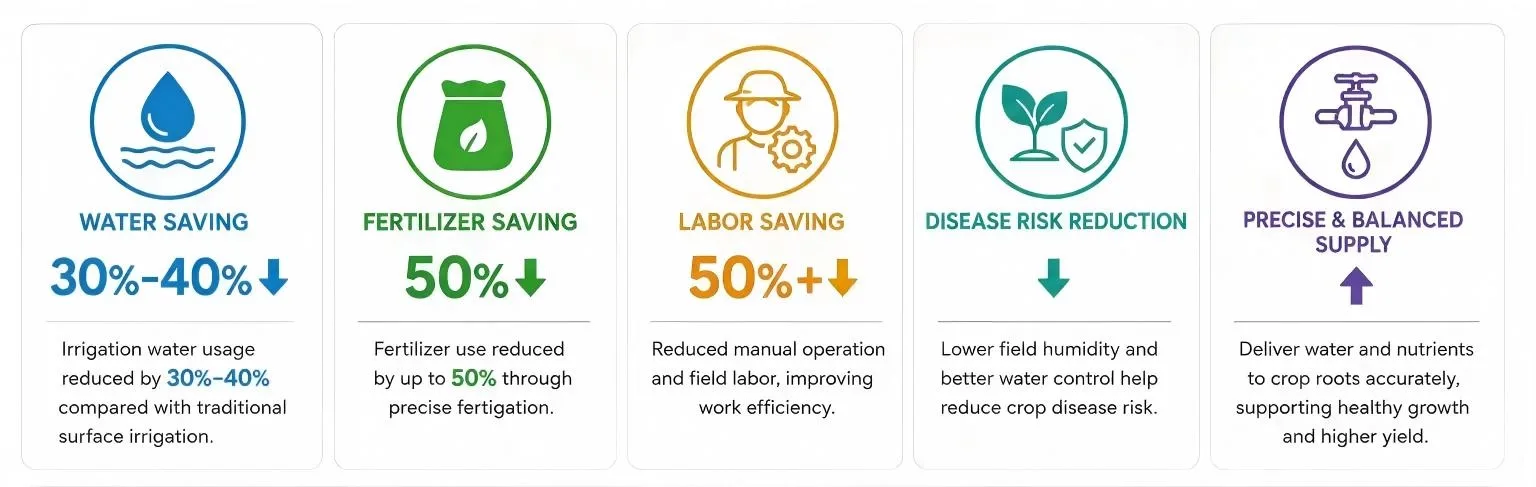
Traditional irrigation and fertilization can cause uneven distribution of water and nutrients. Excess input may be wasted through runoff, evaporation, or ineffective root-zone delivery.
2. High Labor Demand
Manual irrigation, fertilizer application, valve switching, and field inspections require significant labor, especially across larger planting areas.
3. Disease Risk from Improper Humidity Control
In vegetable production areas, excessive surface moisture and poorly managed irrigation may increase the risk of soil-borne and humidity-related crop diseases.
4. Limited Precision in Crop Nutrition
Different crops and growth stages require different irrigation and nutrient strategies. Without a digital control system, it is difficult to adjust water and fertilizer delivery accurately.
Project Scope
Item
Details
Project Type
Digital Agriculture Demonstration Pilot
Localized Overseas Setting
Mekong Delta, Vietnam
Cultivation Area
Approx. 120 mu equivalent
Main Crops
Mustard greens, leafy vegetables, rice
Core System
Smart fertigation and wireless irrigation control
Key Objective
Improve water use, fertilizer efficiency, and field management
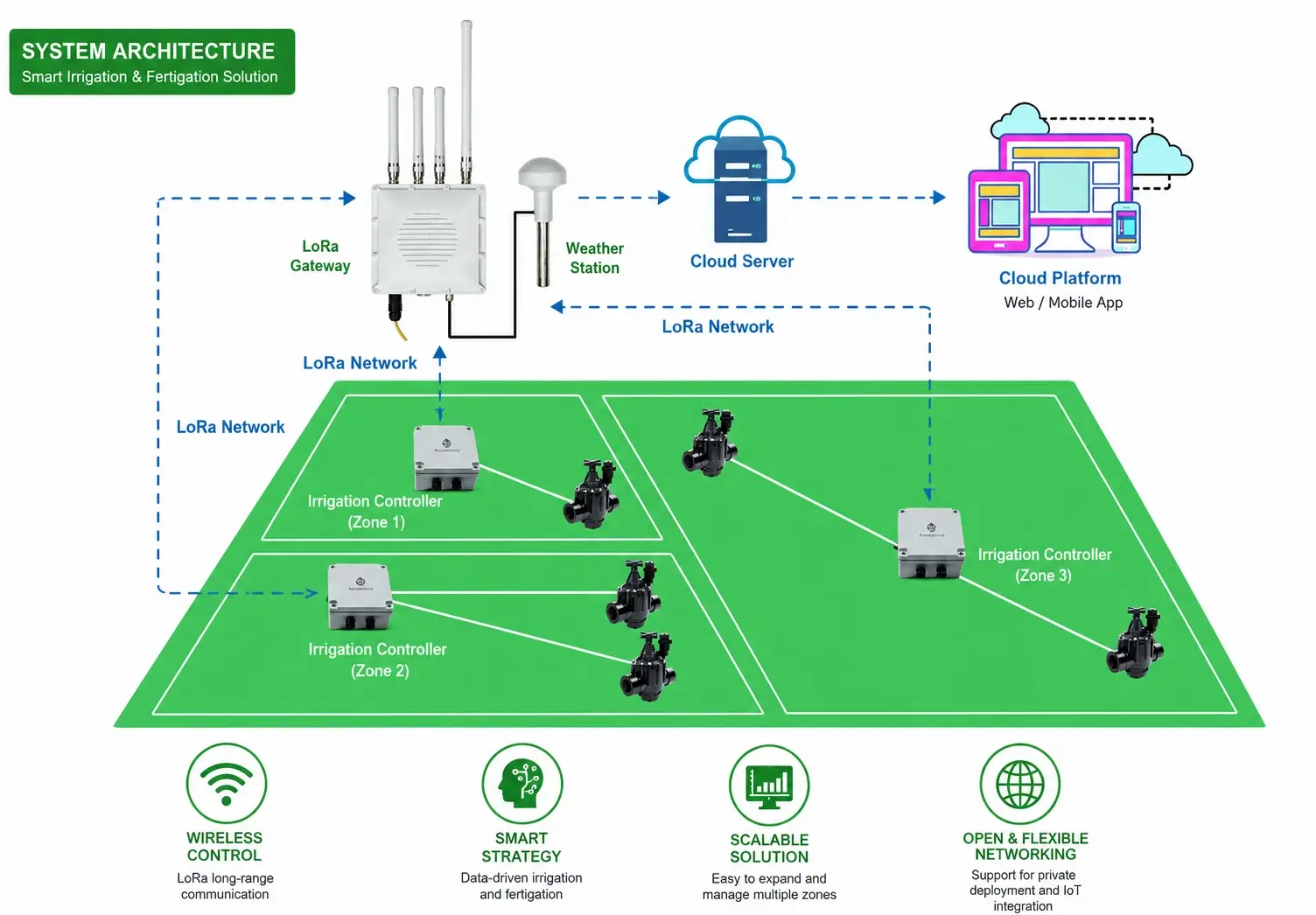
Smart Fertigation and Irrigation System Architecture
An Integrated Water and Fertilizer Management System
The project adopted a complete smart irrigation architecture consisting of:
Water Source System
Filtration System
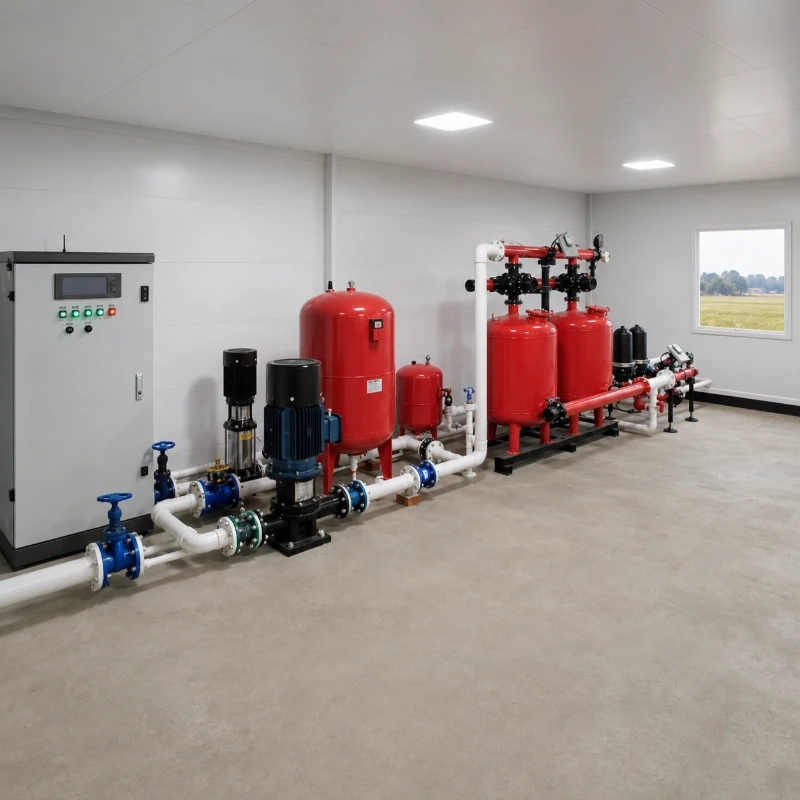
Intelligent Fertigation System
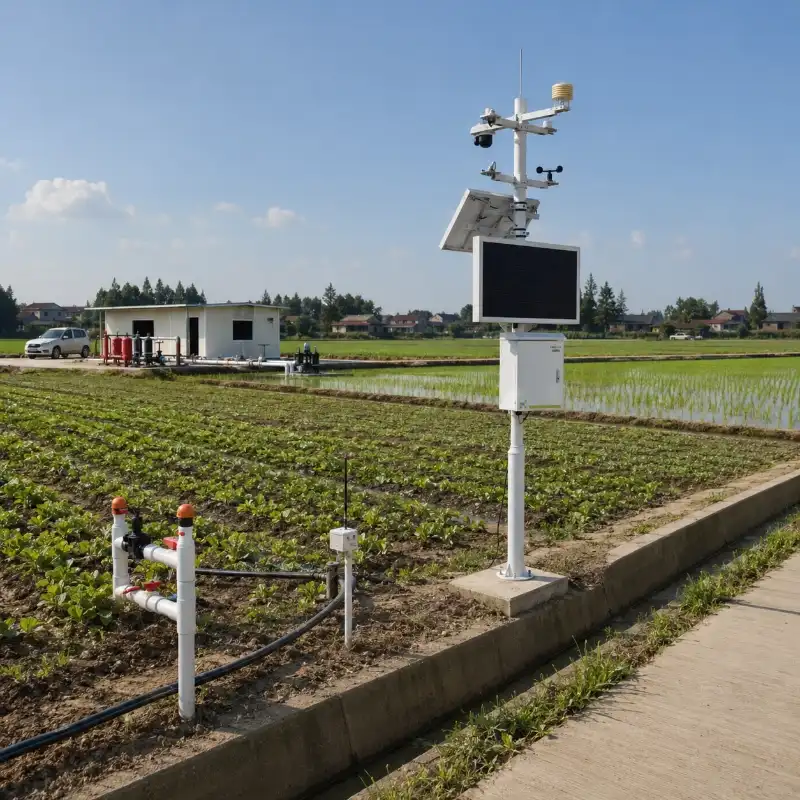
Field Pipeline Network
Drip Irrigation and Irrigation Belts
LoRa Wireless Smart Irrigation Control
This structure formed a closed-loop irrigation and nutrient delivery system from the equipment room to the crop root zone.
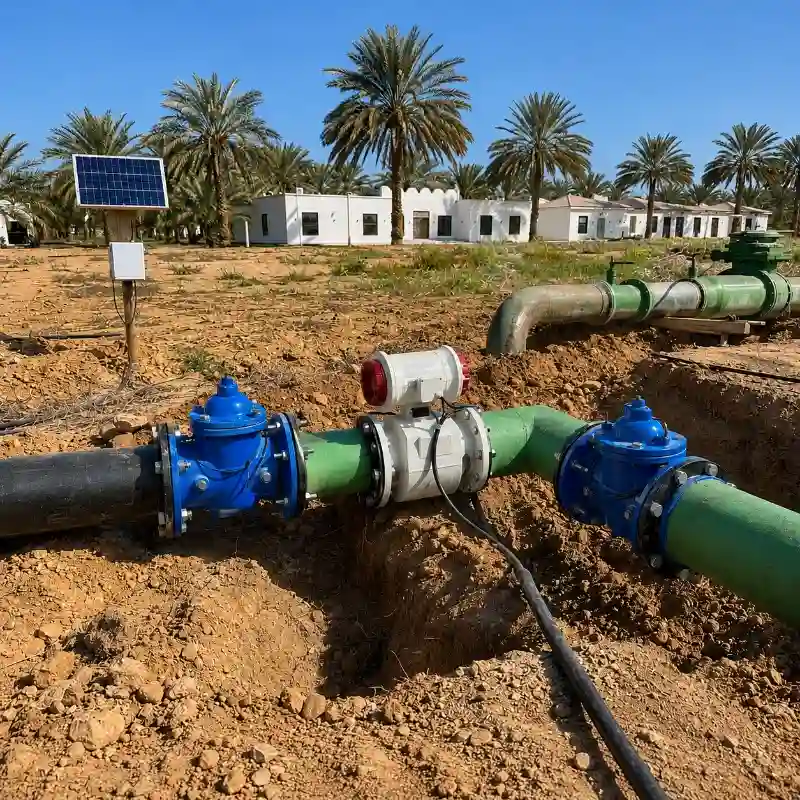
The irrigation headworks included water storage, filtration, and pressure-stabilizing components to ensure that water entering the field network was suitable for precision irrigation.
Key Functions
Removes suspended impurities
Protects irrigation pipelines and emitters
Reduces blockage risk
Improves long-term system stability
Reliable filtration is especially important for drip irrigation systems, where clogging can affect uniform water and fertilizer delivery.
2. Smart Fertigation Unit
Delivering Water and Nutrients Together
The fertigation unit automatically mixes fertilizers with irrigation water according to preset crop requirements. This helps provide a more consistent nutrient supply than manual fertilizer application.
Key Advantages
Uniform fertilizer distribution
Improved nutrient absorption
Reduced fertilizer waste
Better support for crop growth stages
More stable fertigation concentration
By delivering nutrients directly through irrigation water, crops can receive a more balanced supply at the root zone.
3. Field Irrigation Network
Efficient Distribution Across the Demonstration Area
The field engineering section included:
Main irrigation pipelines
Branch pipelines
Drip irrigation belts
Field valve control nodes
Wireless irrigation management units
This setup made it possible to manage irrigation by planting zone and crop type, supporting different water needs for vegetables and rice.
This approach helps reduce the need for workers to manually inspect and operate valves across the entire site.
Before and After Smart Irrigation Upgrade
Project
Before Upgrade
After Smart Fertigation and Irrigation
Irrigation method
Manual or experience-based irrigation
Scheduled and zone-based irrigation control
Fertilizer application
Manual fertilization
Automated fertilizer dosing
Field operation
Workers manually switch valves
LoRa wireless remote valve control
Water distribution
Uneven water delivery
More uniform drip irrigation distribution
Crop management
Limited data support
Data-driven farm management
Labor demand
Frequent field inspection
Reduced manual field operation
Expansion ability
Difficult to scale
Easier expansion for larger farms
Expected Project Benefits
The smart fertigation and irrigation project is designed to help vegetable and rice farms improve field management efficiency through more accurate water and fertilizer delivery.
Key expected benefits include:
Improved irrigation uniformity across different planting zones
Better fertilizer application consistency through automated dosing
Reduced manual valve operation and field inspection workload
Lower risk of over-irrigation in vegetable production areas
More flexible irrigation scheduling for different crop types
Better support for scalable digital agriculture demonstration projects
Improved long-term operation stability through filtration and pipeline protection
Recommended System Components
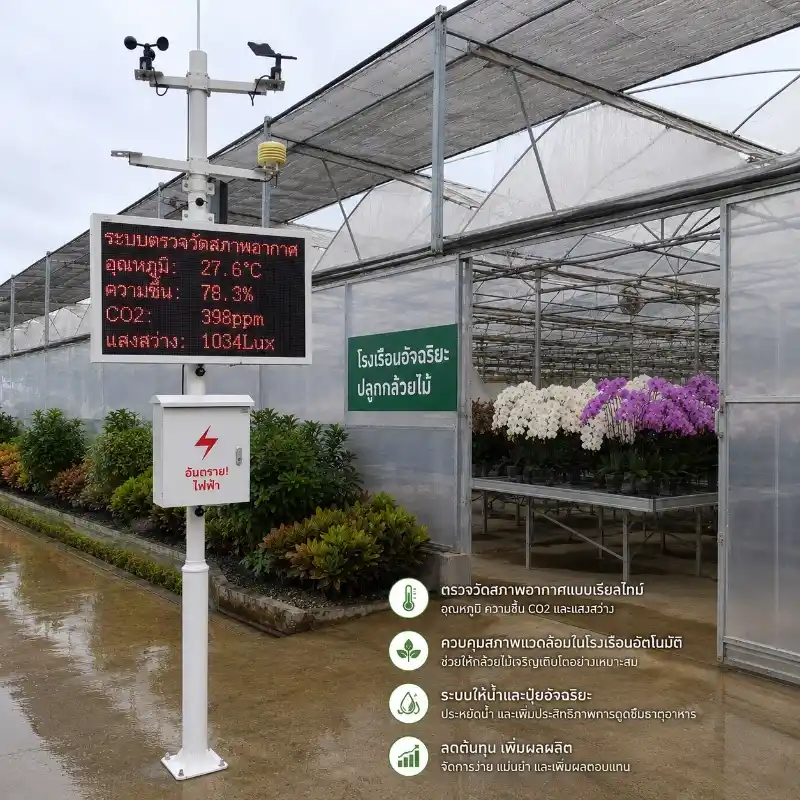
For similar projects, JW-IoT can provide soil sensors, weather stations, irrigation controllers, LoRa wireless communication devices, water monitoring sensors, and cloud-based management platforms according to the field layout and crop management requirements.
Remote monitoring, scheduling, alarm, historical data
Power Supply
Mains power or solar power depending on site conditions
Suitable Applications in Southeast Asia
A Replicable Digital Farming Model
This localized case structure is highly relevant for overseas agricultural regions where:
Leafy vegetable farms
Rice and vegetable rotation fields
Agricultural demonstration farms
Government-supported digital agriculture projects
Open-field drip irrigation projects
High-standard farmland construction
Southeast Asian smart irrigation pilot projects
Large farms requiring wireless irrigation control
The Mekong Delta is a suitable overseas reference setting because it combines major rice production with increasingly important vegetable cultivation, including leafy greens such as mustard greens.
FAQ
1. What is a smart fertigation and irrigation system? A smart fertigation and irrigation system combines water source management, filtration, fertilizer dosing, field irrigation networks, wireless control, and remote monitoring to improve water and nutrient delivery.
2. Why is LoRa wireless irrigation control suitable for farms? LoRa wireless control is suitable for open-field farms because it supports long-distance communication, flexible installation, and remote valve management without complex cabling.
3. Can this system be used for both vegetable and rice farms? Yes. The system can be configured for different crop types, planting zones, and irrigation schedules according to field layout and crop water requirements.
4. What sensors can JW-IoT integrate into this type of project? JW-IoT can integrate soil moisture sensors, soil EC sensors, soil temperature sensors, weather stations, rain gauges, water sensors, controllers, and communication devices.
5. Does the system support automated fertilizer dosing? Yes. The fertigation unit can mix fertilizer with irrigation water according to preset crop requirements to support more consistent nutrient delivery.
6. Is this solution suitable for Southeast Asian farms? Yes. It is suitable for vegetable farms, rice fields, irrigation demonstration zones, and digital agriculture pilot projects in Southeast Asia.
7. Can JW-IoT customize the system for different farm sizes? Yes. JW-IoT can design the system based on field area, crop type, irrigation zones, communication distance, water source conditions, and platform requirements.
If you are planning a smart irrigation, fertigation, or digital agriculture project for vegetable farms, rice fields, orchards, or demonstration farms, JW-IoT can help you design a complete system based on your crop type, irrigation zones, water source, communication conditions, and platform requirements.
 +86 13520127780
  info@jingelway.com