+86 13520127780
  info@jingelway.com








Smart Fertigation Upgrade Project for Flue-Cured Tobacco Farms in Zimbabwe
Release time: 2026-05-15
Project Overview
To improve water efficiency, fertilizer utilization, and tobacco leaf quality, a smart fertigation upgrade project was implemented in Karoi, Mashonaland West, Zimbabwe, one of the country’s major flue-cured tobacco growing regions.
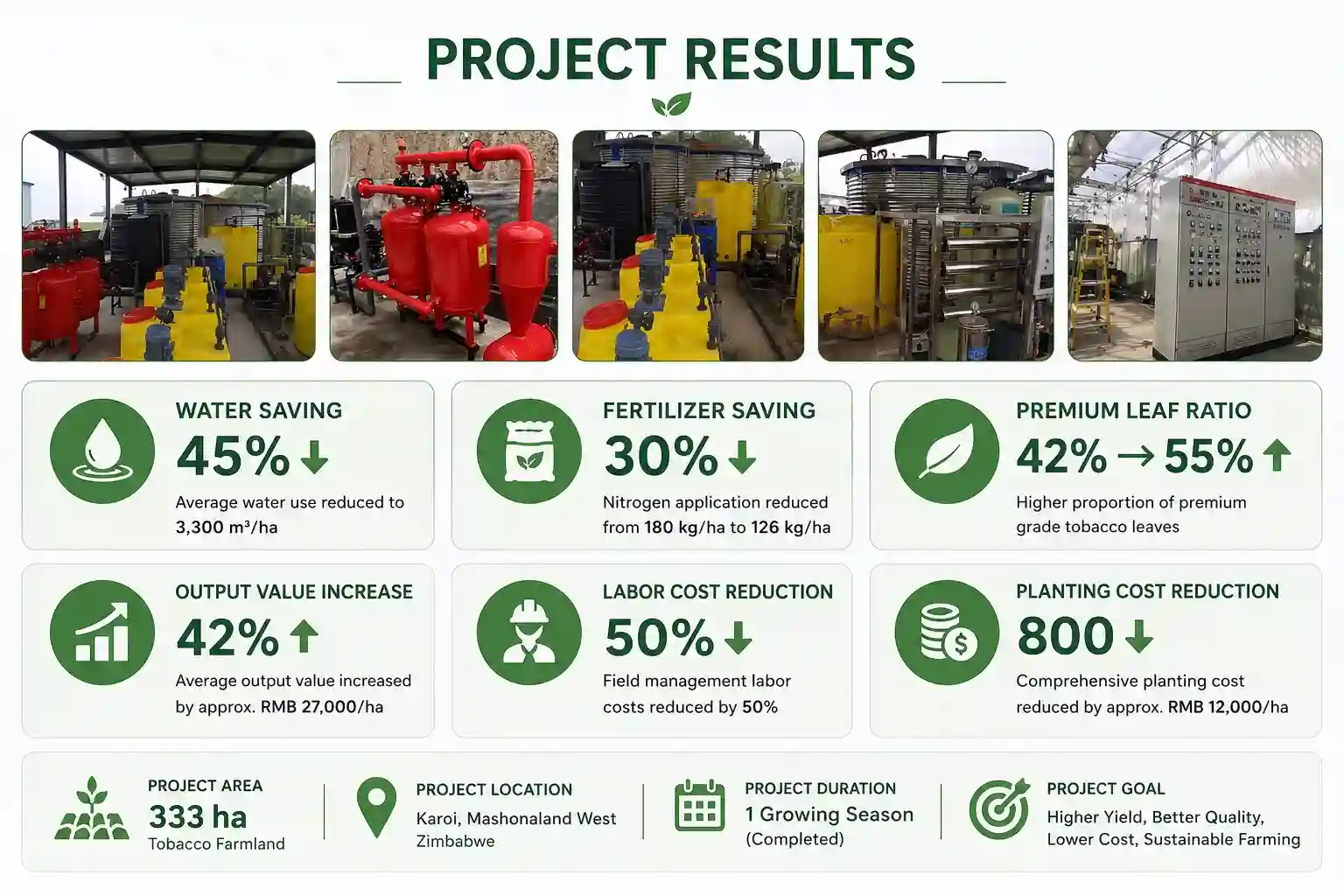
The project introduced an integrated irrigation and fertigation solution covering approximately 333 hectares of tobacco farmland. By combining filtration, fertilizer mixing, sensor monitoring, and intelligent control, the project helped local growers move from traditional manual irrigation practices to a more efficient and data-driven management model.
The result was a clear improvement in four key areas:
- Water saving
- Fertilizer saving
- Leaf quality improvement
- Labor cost reduction
Project Background
Why Tobacco Farms Needed an Upgrade
Flue-cured tobacco is a high-value crop, but it is also highly sensitive to soil moisture, nutrient balance, and timely field management. In many traditional tobacco-growing areas, irrigation and fertilization are still managed mainly by experience, which creates several problems:
1. Rough Water and Fertilizer Management
Manual irrigation often leads to overwatering, uneven application, and unstable soil moisture conditions. At the same time, fertilizer distribution can be inconsistent, reducing nutrient uptake efficiency and affecting plant growth balance.
2. High Labor Dependence
Tobacco requires multiple fertilizer applications during different growth stages. In conventional field operations, workers need to transport fertilizers, mix solutions, and manually manage irrigation, which significantly increases labor input and operational costs.
3. Difficulty in Maintaining Stable Leaf Quality
Tobacco leaf quality is closely linked to controlled water supply and accurate nutrient application. Without precise irrigation and fertigation management, growers may face fluctuations in leaf grade and market value.
To address these challenges, the farm adopted a smart water and fertilizer integration system tailored to tobacco production.
Solution Architecture
An Integrated Smart Fertigation System for Tobacco Farming
The project adopted a complete “filtering + fertilizer mixing + intelligent control + field execution” approach. The solution included the following core components:
- Sand and media filtration system
- Intelligent fertilizer mixing and dosing unit
- IoT-based smart control cabinet
- Soil moisture and EC monitoring sensors
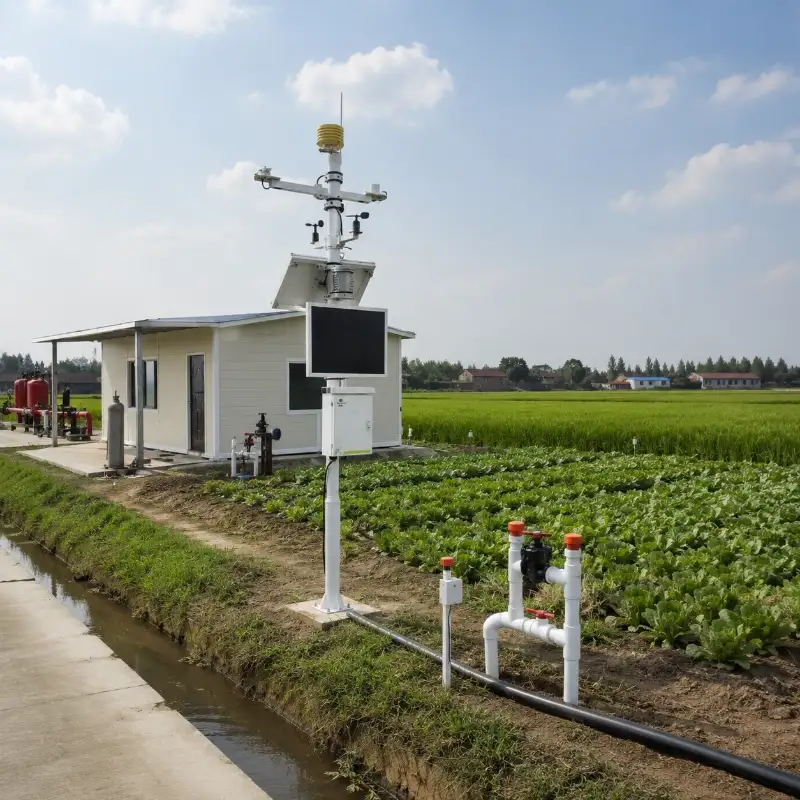
- Weather monitoring equipment
- Automated valve and irrigation control system
Together, these components formed a closed-loop irrigation and fertigation management system.
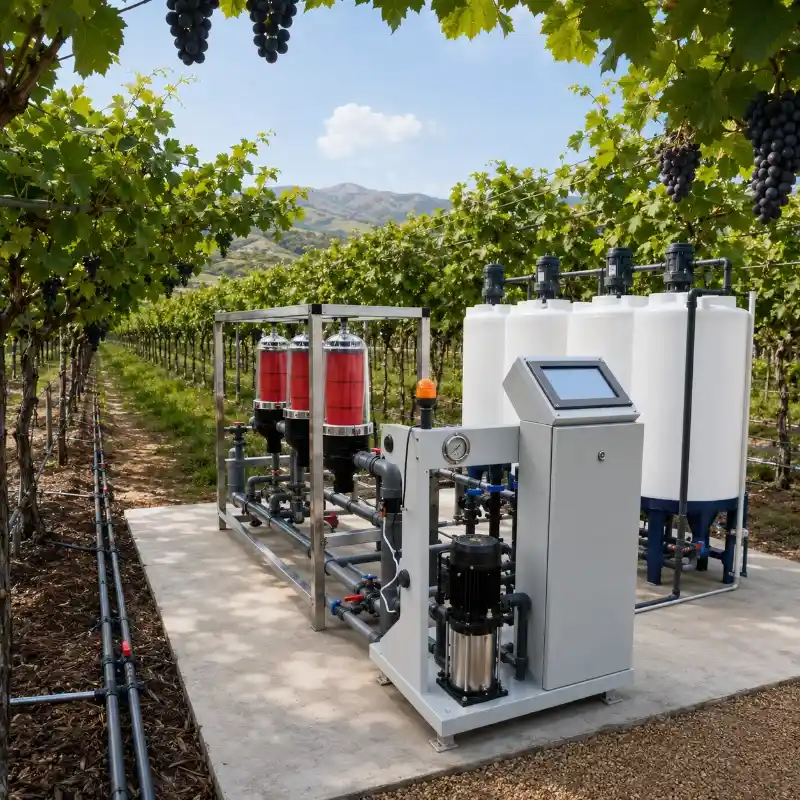
1. Filtration System
Protecting the Irrigation Network from Clogging
Water sources used in tobacco farms may contain suspended particles, sand, algae, and other impurities. If these materials enter the irrigation lines directly, they can clog emitters and reduce system reliability.
To solve this issue, the project adopted a dual-stage sand and media filtration system with fine filtration capability. The system helps remove a high percentage of suspended solids before water enters the irrigation network.
Key Benefits
- Reduces blockage risk in drip irrigation lines
- Improves long-term irrigation stability
- Extends the service life of downstream equipment
- Helps maintain uniform water and fertilizer delivery
After installation, the emitter clogging rate was significantly reduced, helping ensure more reliable field operation throughout the tobacco season.
2. Intelligent Fertilizer Mixing Unit
Precise Nutrient Preparation for Each Growth Stage
Tobacco plants require different nutrient ratios at different growth stages. A manual mixing process often leads to inaccurate dosing, unstable concentration, and wasted fertilizer.
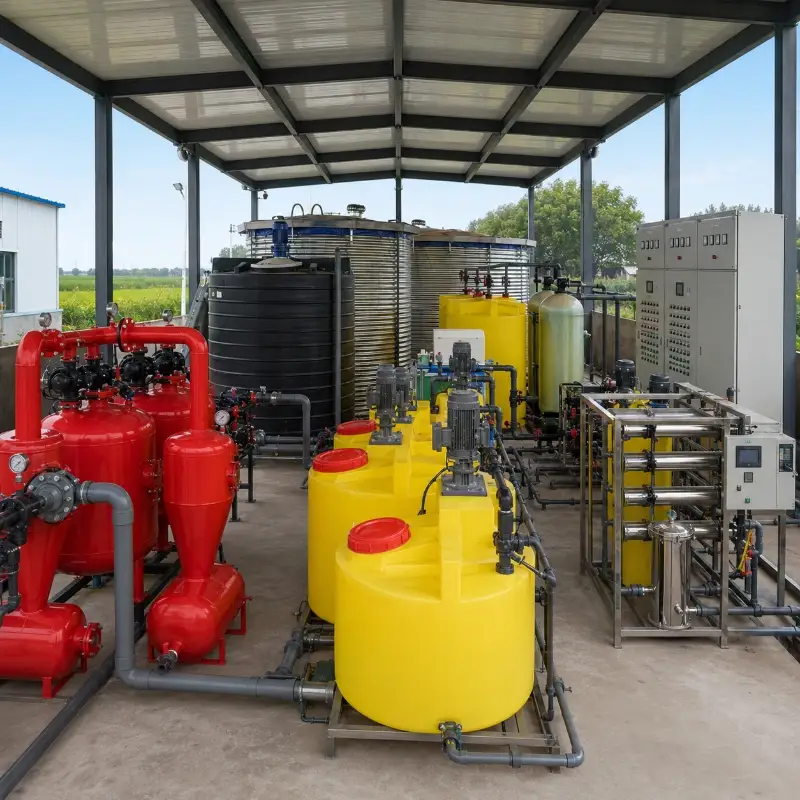
The project therefore used an intelligent fertilizer mixing and dosing tank equipped with:
- PLC-controlled mixing operation
- Automatic solution preparation
- Liquid level sensing
- Preset formula management
The system automatically dissolves and mixes fertilizers based on target nutrient formulas, helping improve application consistency.
Key Benefits
- More accurate fertilizer concentration control
- Better nutrient uptake efficiency
- Reduced fertilizer waste
- Lower risk of over-concentration and root damage
Compared with traditional manual mixing, fertilizer utilization efficiency improved significantly.
3. IoT Smart Control Cabinet
Automated Irrigation and Fertigation Decision-Making
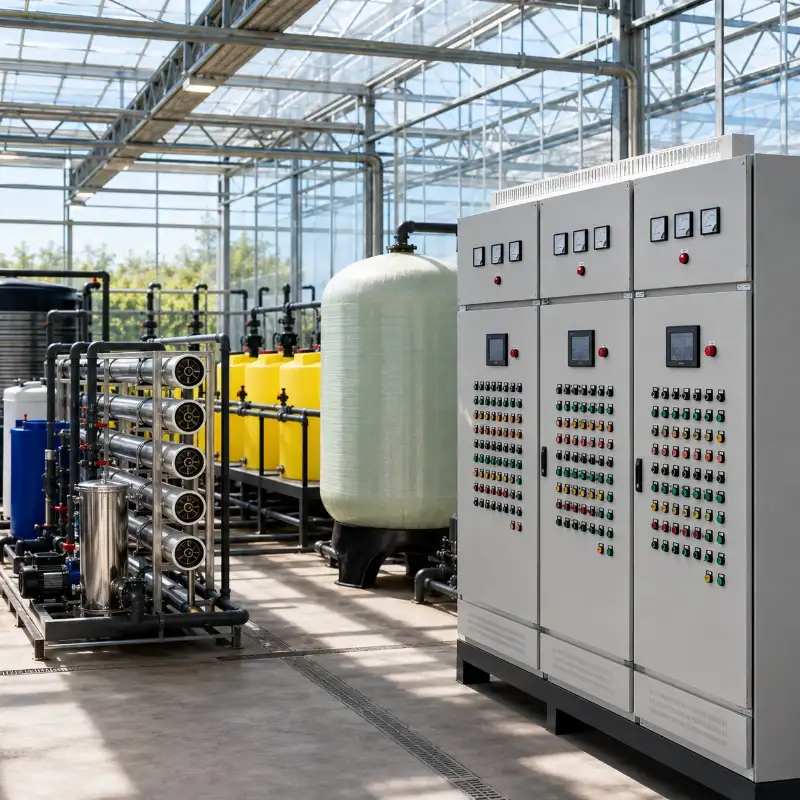
At the center of the solution is an IoT smart irrigation control cabinet. It integrates field data from:
- Soil moisture sensors
- Soil EC sensors
- Weather station data such as temperature and rainfall
Using preset irrigation targets and crop parameters, the controller can automatically manage:
- Irrigation timing
- Water volume
- Fertilizer dosing ratio
- Pump start/stop
- Valve opening and closing
Farm managers can also monitor the system and adjust settings through a mobile app or control interface.
Example of Practical Use
Instead of manually arranging irrigation and fertilizer operations for each field block, farm staff can set a target such as maintaining a desired soil moisture level, and the system will execute the irrigation plan automatically.
This helps reduce decision delays and makes daily field management faster and easier.
4. Field-Level Irrigation Execution
Delivering Water and Nutrients More Efficiently
Once water and fertilizer are filtered, mixed, and scheduled, the system distributes them through the field irrigation network to the tobacco root zone with improved accuracy.
This enables:
- More uniform irrigation
- More controlled fertigation
- Reduced runoff and loss
- Better root-zone moisture balance
As a result, plants receive water and nutrients in a more stable and efficient way, which directly supports tobacco leaf growth and quality.
Project Results
Why This Project Matters
A Practical Smart Agriculture Model for Tobacco Growers
This project shows how a smart fertigation system for tobacco farming can solve long-standing field challenges by replacing manual, experience-based management with a more precise digital workflow.
Key Value for Tobacco Farms
- Improves irrigation efficiency
- Reduces fertilizer waste
- Enhances tobacco leaf consistency and quality
- Lowers labor intensity
- Supports more scalable farm management
For growers in Zimbabwe, Malawi, Tanzania, Brazil, and other tobacco-producing regions, this project provides a strong reference model for upgrading traditional tobacco irrigation systems.
Future Expansion
From Irrigation Upgrade to Digital Tobacco Farming
The success of this smart fertigation project also creates a foundation for future agricultural digitalization. In the next stage, the system can be expanded with:
- Drone-based field scouting
- AI image analysis for crop growth monitoring
- Remote agronomic recommendations
- Multi-zone irrigation optimization
- Farm data dashboards for growers and agronomists
This makes it possible to evolve from a single irrigation improvement project to a broader smart tobacco farming platform.
Conclusion
The smart fertigation upgrade project in Karoi, Zimbabwe demonstrates how technology can help tobacco farms achieve better water efficiency, better fertilizer control, better leaf quality, and lower labor cost.
By integrating filtration, automatic fertilizer mixing, IoT control, and precision irrigation, the project created a practical and scalable model for modern tobacco cultivation.
For tobacco growers seeking to improve productivity while reducing input waste, this project offers a valuable example of how smart irrigation and fertigation systems can deliver measurable results in real farm conditions.