+86 13520127780
  info@jingelway.com





How IoT Rain Gauges Support Precision Irrigation and Smart Agriculture
Release time: 2026-08-20
In the development of smart agriculture, rainfall data is crucial for irrigation planning, crop growth, and field management. Traditional manual rain measurement methods suffer from low collection frequency and discontinuous data recording. IoT rain gauges, however, enable real-time acquisition of rainfall data through automated collection, wireless transmission, and remote monitoring. Combined with cloud platforms and agricultural management systems, farmers can more accurately grasp regional rainfall changes, providing data support for irrigation, drainage, and disaster early warning.
Table of Contents
What is an IoT rain gauge?
An IoT rain gauge is an intelligent monitoring device that combines rainfall measurement technology with IoT communication technology. The device typically uses a tipping bucket, weighing, or other rainfall sensing structure to collect rainfall data over a specific period and transmits the data to a cloud platform, agricultural management platform, or user terminal via a data acquisition terminal.
Compared to ordinary rain gauges, the biggest feature of IoT rain gauges is not just their ability to “measure rainfall,” but their ability to form a complete data chain:
Rainfall occurrence → Sensor collection → Data processing → Wireless transmission → Cloud storage → Data analysis → Agricultural management decision-making.
Therefore, it can be deployed in farmland, orchards, greenhouses, agricultural parks, and agricultural meteorological monitoring stations to achieve continuous monitoring of rainfall processes.
Why does smart agriculture need real-time rainfall monitoring?
Agricultural production is closely related to weather changes. Rainfall amount, intensity, and duration directly affect soil moisture and crop growth.
For example, after continuous rainfall, if agricultural managers continue watering according to the original irrigation plan, it may lead to excessive soil moisture, wasting water resources and potentially increasing the risk of root hypoxia and disease in crops. Conversely, if there is no effective rainfall for a long period, the system can determine whether irrigation needs to be initiated based on rainfall data and soil moisture data.
Therefore, accurate rainfall data can help agricultural production gradually shift from “experience-based management” to “data-driven management.”
How do IoT rain gauges improve the efficiency of agricultural rainfall monitoring?
1. Achieving automatic rainfall data collection
Traditional rainfall monitoring often requires staff to go to the site to read data, while IoT automatic rain gauges can automatically complete rainfall data collection.
The device can record rainfall data at set time intervals, such as hourly rainfall, daily cumulative rainfall, and periodic cumulative rainfall. For large agricultural areas, multiple monitoring points can be deployed to form a regional rainfall monitoring network.
This method reduces manual data recording and minimizes data omissions and errors caused by manual recording.
2. Enables Remote Real-Time Monitoring
IoT communication technology is a crucial component of smart rain gauges. The device can upload collected rainfall data to a server or agricultural management platform via 4G, 5G, NB-IoT, LoRa, and other communication methods.
Management personnel do not need to frequently visit the fields to check the equipment; they can remotely monitor rainfall in different areas using a computer, mobile phone, or management platform.
This remote monitoring method is particularly valuable for large farms and distributed agricultural planting bases.
3. Provides Data for Precision Irrigation
Precision irrigation is a key application of smart agriculture, and rainfall data is an important reference for developing irrigation strategies.
For example, the system can comprehensively analyze data such as rainfall, soil moisture, crop growth stage, and weather forecasts. When recent rainfall is sufficient and soil moisture content is high, irrigation can be appropriately reduced or postponed; when there is a prolonged lack of effective rainfall and soil moisture continues to decline, irrigation can be arranged promptly.
This can reduce unnecessary irrigation and improve water resource utilization efficiency.
4. Assisting in Agricultural Disaster Early Warning
Heavy rainfall can lead to problems such as farmland waterlogging, soil erosion, crop lodging, and flooding. Therefore, IoT rain gauges can not only be used for daily rainfall monitoring but also as data acquisition devices in agricultural meteorological disaster early warning systems.
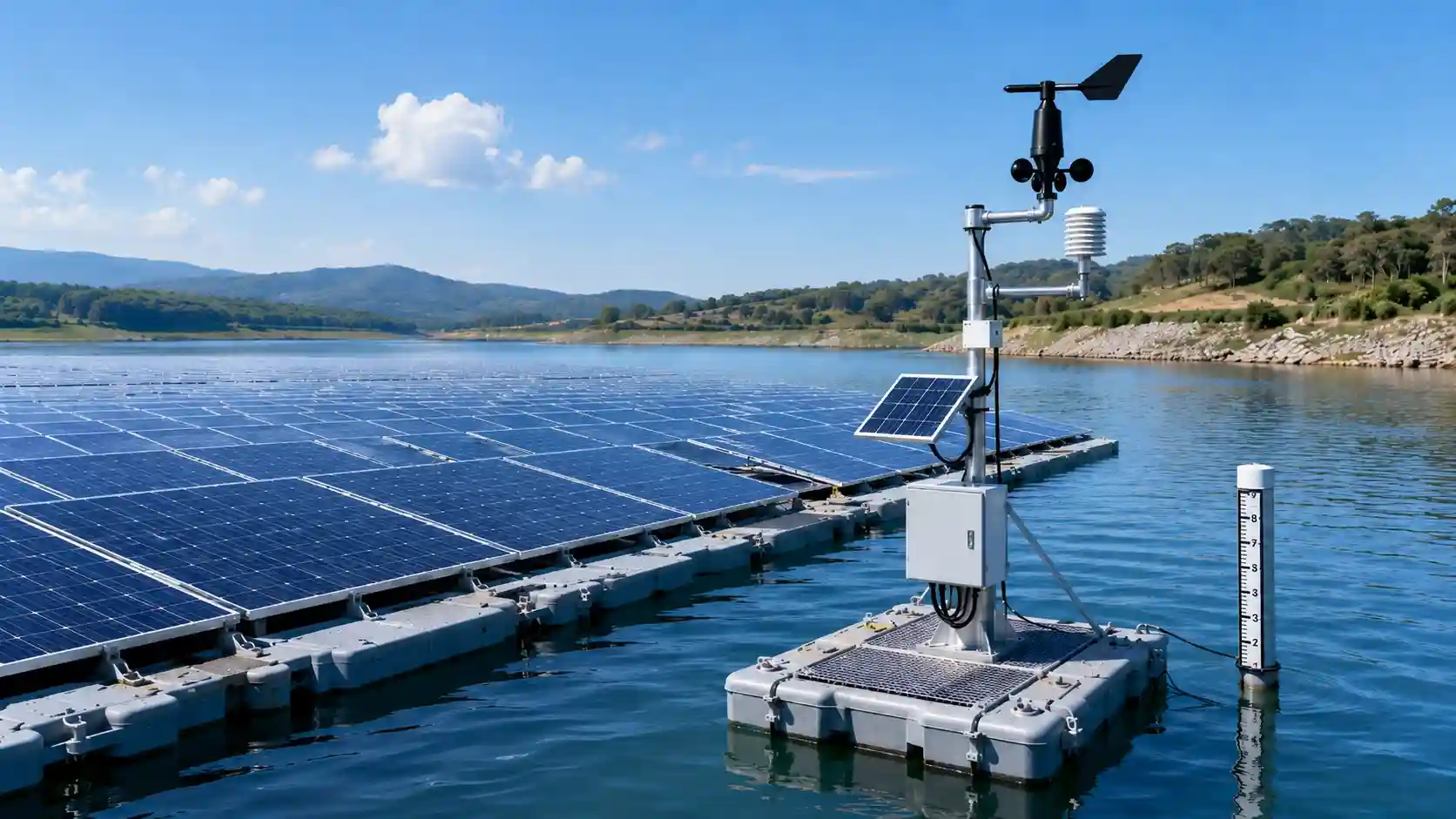
When a rapid increase in rainfall is detected within a short period, or when the cumulative rainfall exceeds a preset threshold, the system can combine data from water level sensors, soil moisture sensors, and other devices to make a comprehensive judgment and send early warning information to management personnel.
Key Values of IoT Rain Gauges in Smart Agriculture:
| Value Dimension | Traditional Rainfall Monitoring | IoT Rain Gauge | Value for Smart Agriculture |
| Data Collection | Manual measurement | Automatic measurement | Reduces manual workload and improves data continuity |
| Monitoring Frequency | Low and discontinuous | Real-time or scheduled monitoring | Provides more timely rainfall information |
| Data Transmission | Manual recording and reporting | Wireless data transmission | Enables remote monitoring and centralized data management |
| Data Accuracy | Easily affected by human factors | Automated collection reduces human errors | Provides more reliable rainfall data |
| Remote Monitoring | Usually unavailable | Supported through IoT platforms | Enables monitoring of farmland rainfall conditions remotely |
| Irrigation Management | Mainly based on experience | Based on rainfall data | Helps optimize irrigation timing and water usage |
| Drainage Management | Difficult to respond quickly | Provides timely rainfall information | Supports faster drainage decisions during heavy rainfall |
| Weather Warning | Limited | Can work with threshold-based alerts | Helps identify potential heavy rainfall and flooding risks |
| Data Storage | Mostly manual records | Cloud-based or system-based storage | Supports long-term rainfall data analysis |
| Smart Agriculture Integration | Limited | Can connect with agricultural IoT systems | Supports integrated smart farming management |
This approach helps agricultural producers take preventative measures such as drainage and protection.
How to truly make rainfall data serve smart agriculture?
Simply installing IoT rain gauges does not mean that agricultural production has achieved intelligentization. More importantly, it is necessary to establish a complete system from data collection to practical application.
First, monitoring points should be rationally set up based on farmland area, topography, and crop distribution to avoid the inaccuracy of a single rain gauge in representing the rainfall situation of the entire area.
Second, long-term stable operation of the equipment needs to be ensured. Agricultural environments are typically characterized by high temperatures, heavy rain, dust, and humidity fluctuations; therefore, the rain gauge’s protective performance, measurement stability, and communication capabilities must be fully considered.
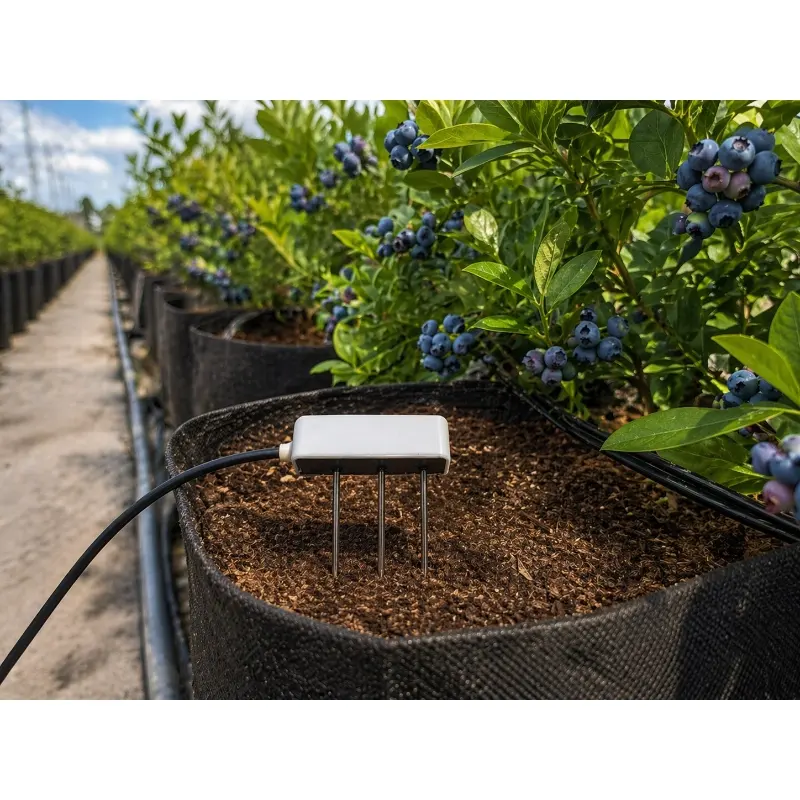
Third, rain gauges can be linked with soil moisture sensors, temperature and humidity sensors, weather stations, water level sensors, and smart irrigation systems. Single rainfall data can answer “how much rain fell,” while combining data from multiple sensors can further answer practical questions such as “is the soil short of water?”, “does irrigation need to be done?”, and “is there a risk of waterlogging?”.
Finally, long-term accumulation of historical data through a cloud platform can form a regional agricultural meteorological database. Managers can then use historical rainfall patterns to make more scientific plans for planting, irrigation, and field management of different crops.
The Future Development Trend of IoT Rain Gauges in Smart Agriculture
With the continuous development of the Internet of Things (IoT) in agriculture, the role of rain gauges will evolve from simple data collection devices to comprehensive agricultural sensing terminals. In the future, the equipment may be further integrated with AI analytics, agricultural digital twins, automated irrigation, and weather forecasting systems.
For example, when the system simultaneously acquires data on rainfall, soil moisture, temperature, humidity, and weather forecasts, it can analyze changes in farmland moisture over a future period and automatically generate irrigation recommendations. For large agricultural parks, it can also implement zoned management based on data differences in different areas.
This means that rainfall monitoring is no longer just about recording “how much rain fell today,” but is gradually becoming a fundamental data entry point in smart agriculture decision-making systems.
JW-IoT can provide corresponding IoT rain gauge solutions for different customers:
IoT rain gauges are enabling agricultural rainfall monitoring to shift from manual recording to automation, digitization, and remote monitoring. This not only improves the timeliness of rainfall data collection but also provides a more reliable data foundation for precision irrigation, farmland drainage, and meteorological disaster early warning. JW-IoT can provide corresponding IoT rain gauge solutions to meet the monitoring needs of different areas in smart agriculture. Through automatic rainfall data collection, wireless transmission, and remote management, it helps agricultural users establish a more efficient and stable rainfall monitoring system, supporting the refined management of smart agriculture.