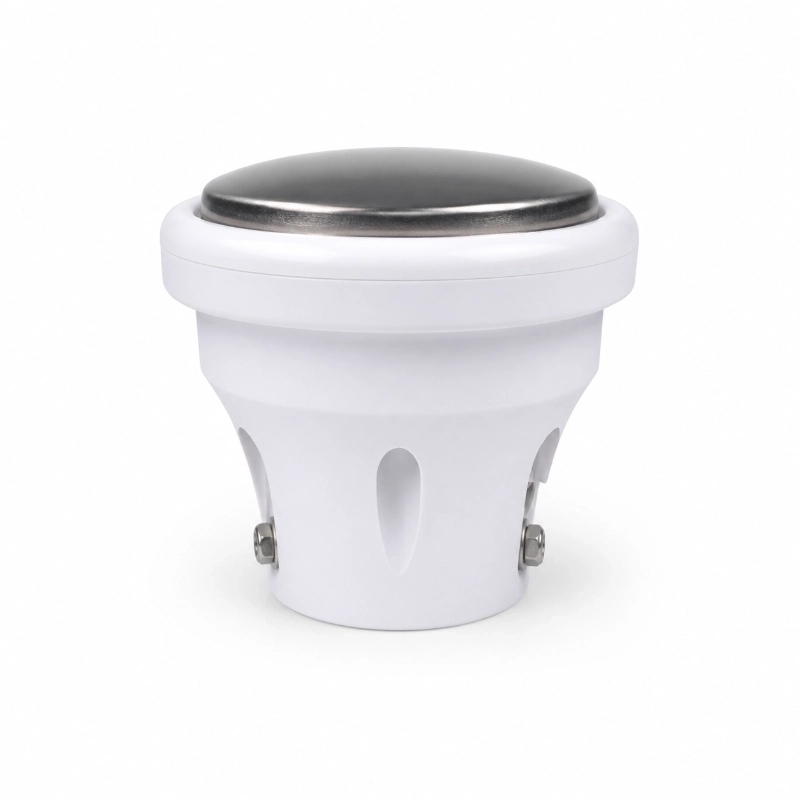
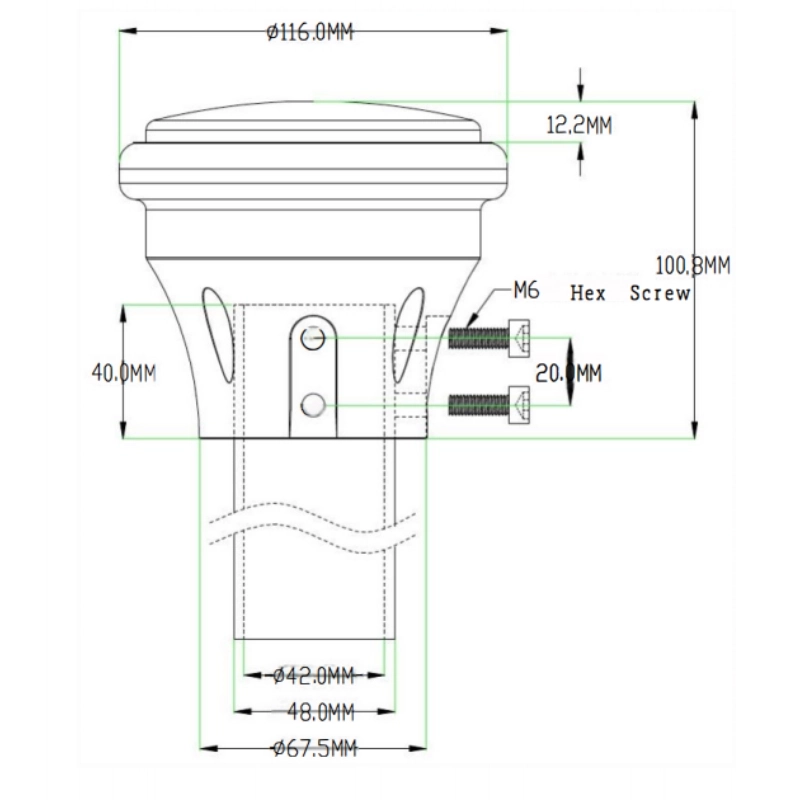
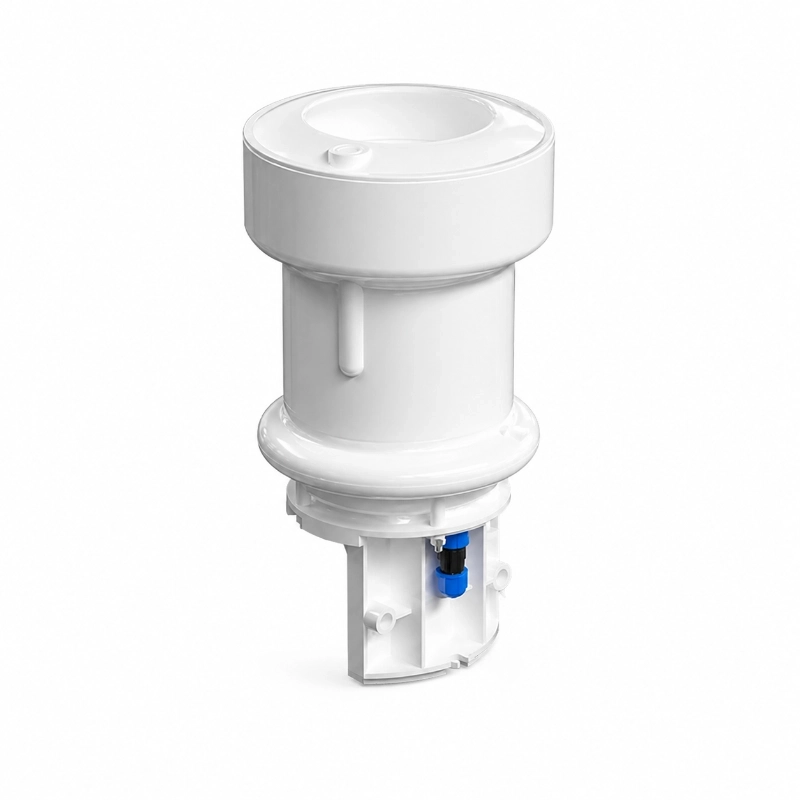
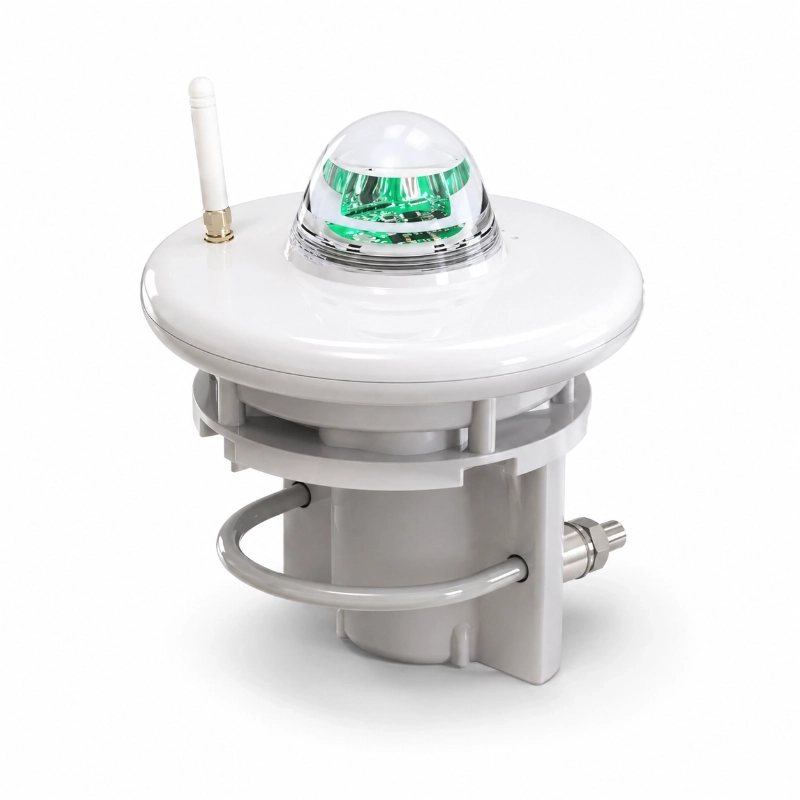
JW-XF100(YN17) Piezoelectric Rain Gauge is a compact outdoor rainfall sensor designed for continuous precipitation monitoring without a mechanical tipping bucket.
The sensor detects the impact force of falling raindrops on its sensing surface and converts the piezoelectric response into rainfall information. With no moving parts, RS485 Modbus RTU communication, low power consumption and IP65 protection, it is suitable for automatic weather stations, hydrological monitoring, smart agriculture, road weather monitoring and distributed IoT rainfall monitoring systems.
It can provide rainfall-related data including:
Continuous rainfall
Rainfall duration
Rainfall intensity
Maximum rainfall intensity
The compact design makes the sensor particularly suitable for monitoring sites where installation space, power consumption and routine mechanical maintenance need to be minimized.
Product Description
The JW-XF100(YN17) piezoelectric rain gauge is designed for 24-hour outdoor rainfall observation where continuous automatic data collection is required.
Instead of collecting rainwater into a mechanical tipping mechanism, the sensor uses a piezoelectric sensing element to detect the impact produced by individual raindrops. The resulting signal is processed to provide rainfall information for the monitoring system.
This measurement method allows the sensor to maintain a compact external structure with no mechanical tipping bucket.
For projects deploying many monitoring points or operating equipment at remote sites, reducing mechanical components can simplify routine maintenance requirements.
The rain gauge provides a standard RS485 communication interface with Modbus RTU protocol, allowing it to be incorporated into industrial and IoT monitoring architectures.
A typical system can be configured as:
Piezoelectric Rain Gauge → RS485 Modbus → Data Logger / RTU / IoT Gateway → Wireless or Wired Communication → Cloud Platform / SCADA / Monitoring Center
For projects requiring a wider range of meteorological measurements, the rain gauge can also be used as one sensing component within an automatic weather monitoring station.
How Does a Piezoelectric Rain Gauge Work?
A piezoelectric rain gauge measures precipitation differently from a conventional tipping bucket rain gauge.
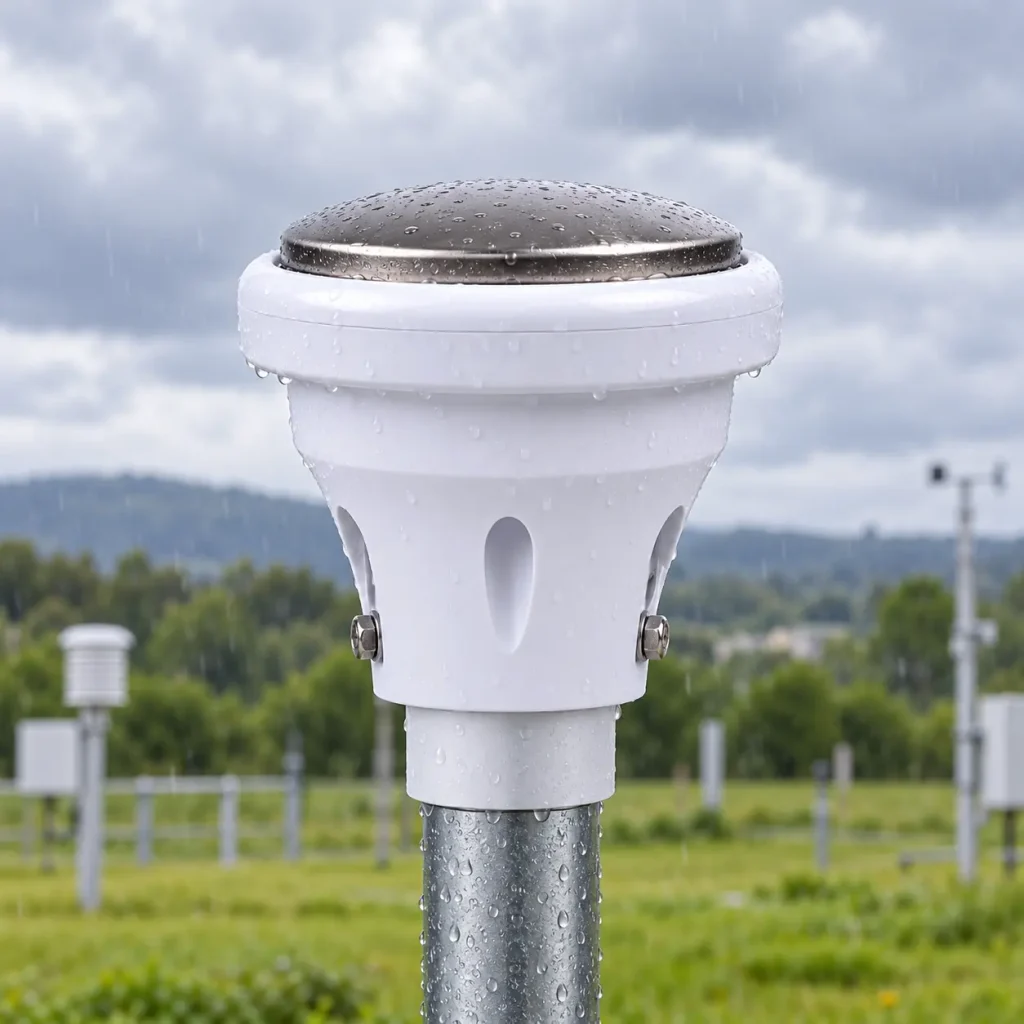
When a raindrop strikes the sensing surface, it produces a small mechanical impact. The piezoelectric sensing element responds to this impact and generates an electrical signal.
The device processes these signals to determine rainfall-related information.
This measurement principle enables the sensor to detect rainfall without requiring rainwater to fill and tip a mechanical bucket.
For the JW-XF100(YN17), rainfall information can include:
Continuous accumulated rainfall
Rainfall duration
Rainfall intensity
Maximum rainfall intensity
Because there are no mechanical tipping components, the sensor is especially useful when compact construction and reduced mechanical maintenance are important project requirements.
Piezoelectric Rain Gauge vs. Tipping Bucket Rain Gauge
Both piezoelectric and tipping bucket rain gauges can be used in automatic rainfall monitoring systems, but they operate differently.
Piezoelectric Rain Gauge
A piezoelectric sensor detects the physical impact of raindrops on the sensing surface.
Typical characteristics include:
No tipping mechanism
No mechanical moving parts
Compact structure
Low power consumption
Suitable for distributed or remote monitoring
Digital integration through RS485 Modbus on this model
Tipping Bucket Rain Gauge
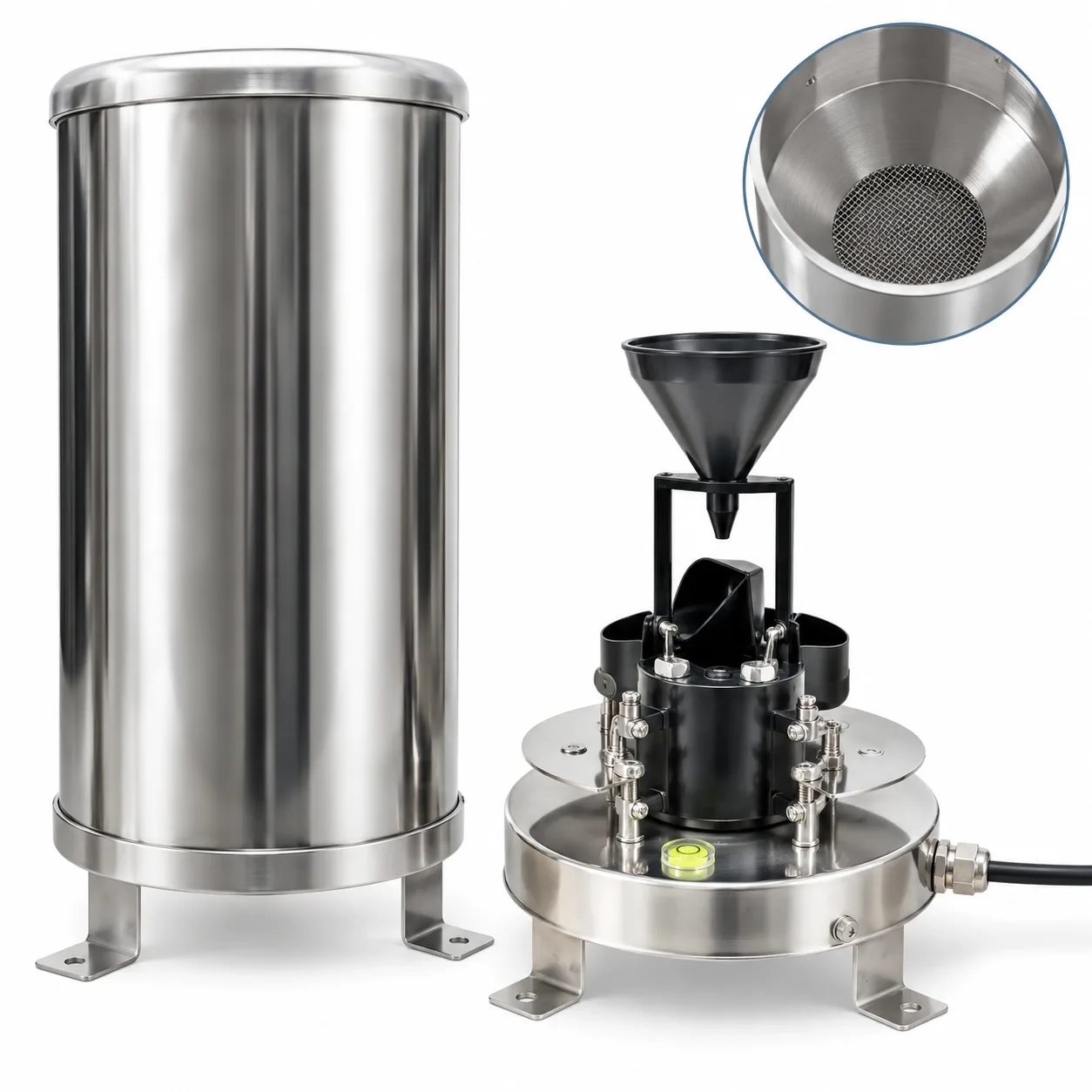
A tipping bucket rain gauge collects precipitation through a funnel. Rainwater fills a calibrated bucket until it tips, producing a pulse that represents a defined rainfall amount.
This is a widely used measurement method for conventional meteorological and hydrological rainfall stations.
The correct selection should depend on the actual monitoring requirement rather than assuming that one technology is always better.
A piezoelectric rain gauge can be considered when the project prioritizes:
Compact installation
Reduced mechanical maintenance
Low power consumption
Distributed monitoring points
Integration with digital IoT systems
Remote outdoor deployment
A tipping bucket rain gauge may be considered when the project specification specifically requires the traditional tipping bucket measuring principle.
For system integrators, it is therefore important to confirm the required measurement method, output signal, installation environment and communication architecture before selecting the rain gauge.
Technical Specifications
Item
Specification
Measurement Parameter
Rainfall
Measurement Principle
Piezoelectric rainfall measurement
Rainfall Range
0–200 mm/h
Rainfall Resolution
0.2 mm
Sampling Frequency
1Hz
Power Supply
DC 9–24V
Communication Interface
RS485
Communication Protocol
Modbus RTU
Power Consumption
<0.2W
Optional Output Data
Continuous rainfall rainfall duration rainfall intensity maximum rainfall intensity
Maximum Output Frequency
Passive mode 1 time per second
Operating Temperature
0°C to 70°C
Protection Rating
IP65
Standard Mounting
Sleeve mounting
Optional Mounting
Flange mounting or bent plate mounting
Optional Bracket
1.5 m or 1.8 m bracket
Standard Cable
3 m cable
Optional Cable
10 m communication cable
Warranty
12 months
RS485 Modbus Integration
For an outdoor rainfall sensor, measurement is only one part of the monitoring system. The collected information must also be transmitted to a data acquisition or monitoring platform.
JW-XF100(YN17) provides RS485 communication using Modbus RTU, making it suitable for integration with commonly used industrial and IoT equipment.
Compatible system components can include:
Data loggers
Remote terminal units
PLC systems
IoT gateways
Weather station controllers
Environmental monitoring terminals
Remote telemetry equipment
Depending on the architecture of the complete project, the upstream communication equipment can then transmit rainfall data through technologies such as 4G, LoRaWAN, Ethernet or other communication methods supported by the selected gateway or RTU.
Many rainfall observation points are installed away from permanent power infrastructure.
Examples include:
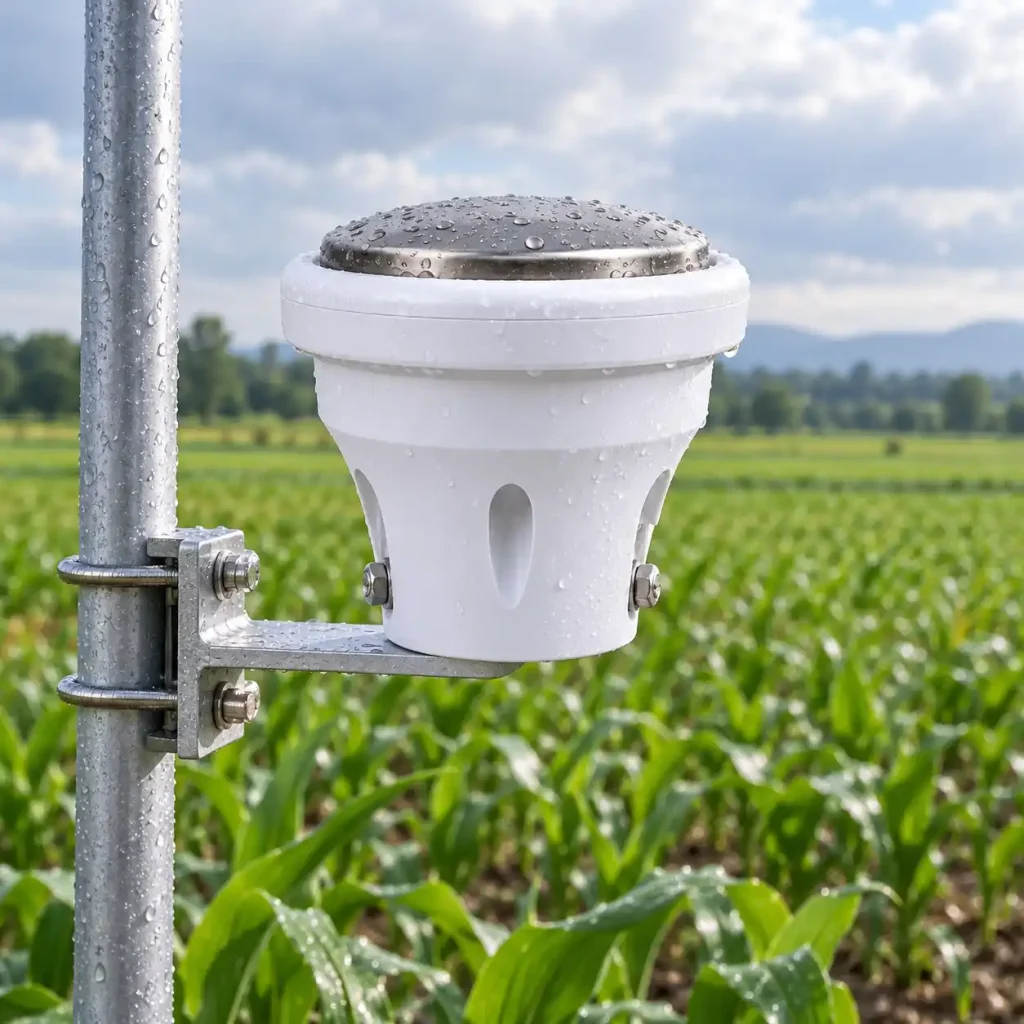
Agricultural fields
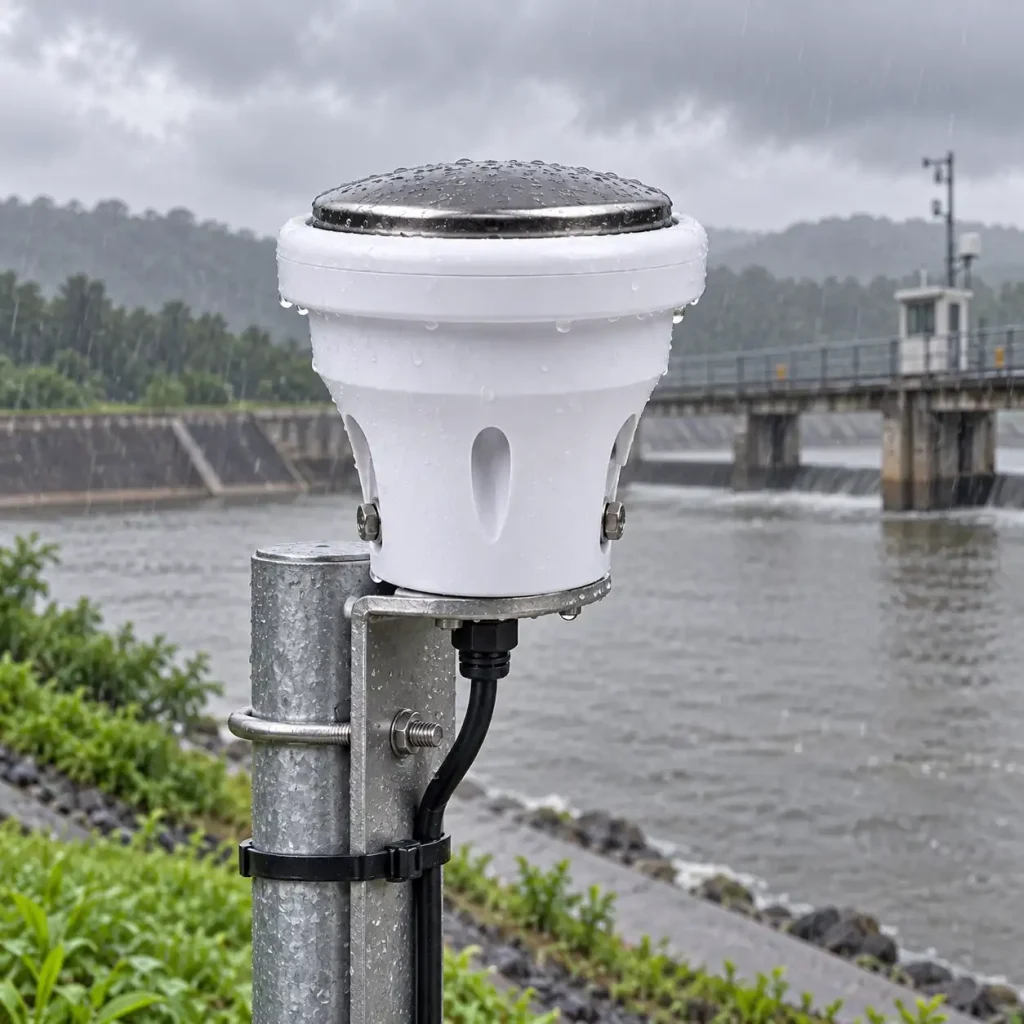
River basins
Reservoir areas
Remote weather stations
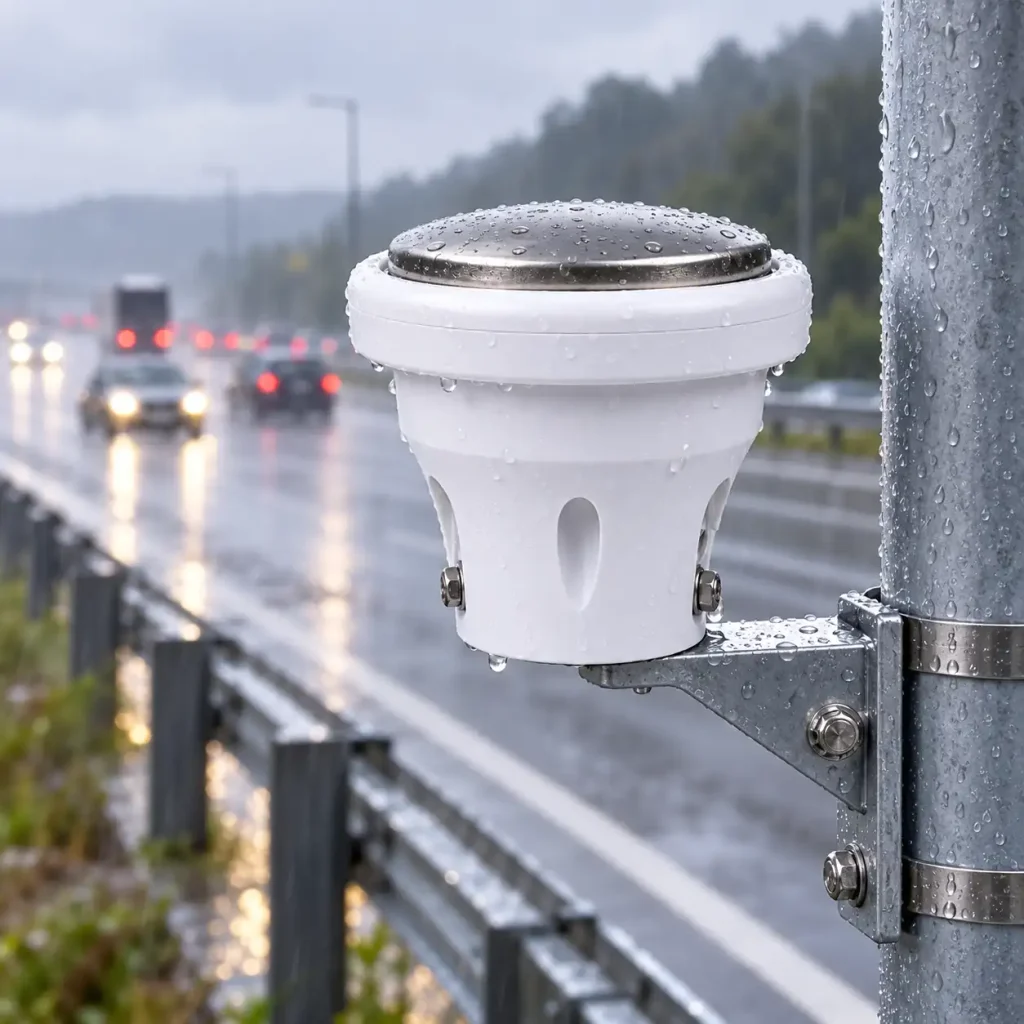
Roads and highways
Mountain monitoring points
Coastal environments
Distributed environmental monitoring sites
The JW-XF100(YN17) consumes less than 0.2 W, making it suitable for systems designed around low-power field equipment.
For remote stations, the rain gauge may be connected to a low-power data logger or RTU, with the complete system powered according to the requirements of the project.
The final power system should always be sized according to the total consumption of the rain gauge, data acquisition terminal, communication equipment and any additional sensors.
Application Scenarios
1. Meteorological Rainfall Monitoring
The sensor can be used as a dedicated rainfall measurement component in automatic weather monitoring networks.
It can provide continuous rainfall information to weather data loggers and monitoring platforms through RS485 Modbus.
Typical installations include:
Local weather stations
Environmental observation stations
Campus weather monitoring
Research monitoring sites
Distributed IoT weather networks
2. Hydrology and Water Conservancy Monitoring
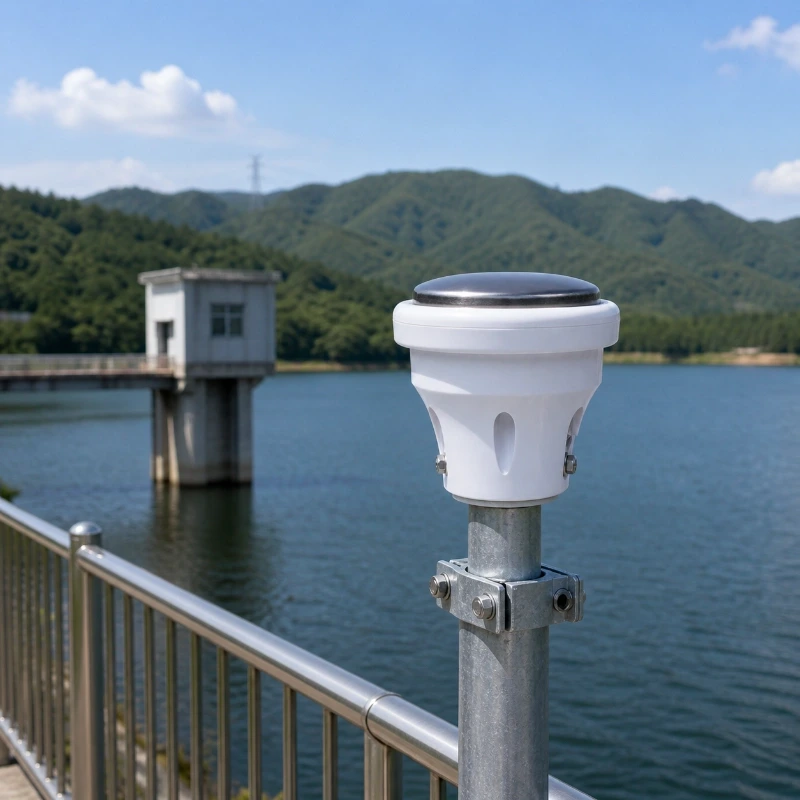
Rainfall is an important input for hydrological monitoring because changes in precipitation can influence rivers, reservoirs, drainage systems and watershed runoff.
The piezoelectric rain gauge can be deployed together with:
Water level sensors
Flow sensors
RTUs
Telemetry terminals
IoT gateways
to form part of a remote hydrological monitoring network.
Rain Gauge + Water Level Sensor → RTU → 4G / LoRaWAN Communication → Monitoring Platform
This type of architecture allows rainfall and water-level information to be collected from the same monitoring site.
3. Flood and Heavy Rainfall Monitoring
Rainfall monitoring is frequently combined with water-level observation in flood-related applications.
A rainfall sensor can provide information about precipitation conditions while a water-level sensor measures the corresponding changes in rivers, drainage channels or flood-prone areas.
The rain gauge itself does not predict flooding. Instead, it provides rainfall data that can be incorporated into a wider monitoring and warning system.
4. Smart Agriculture
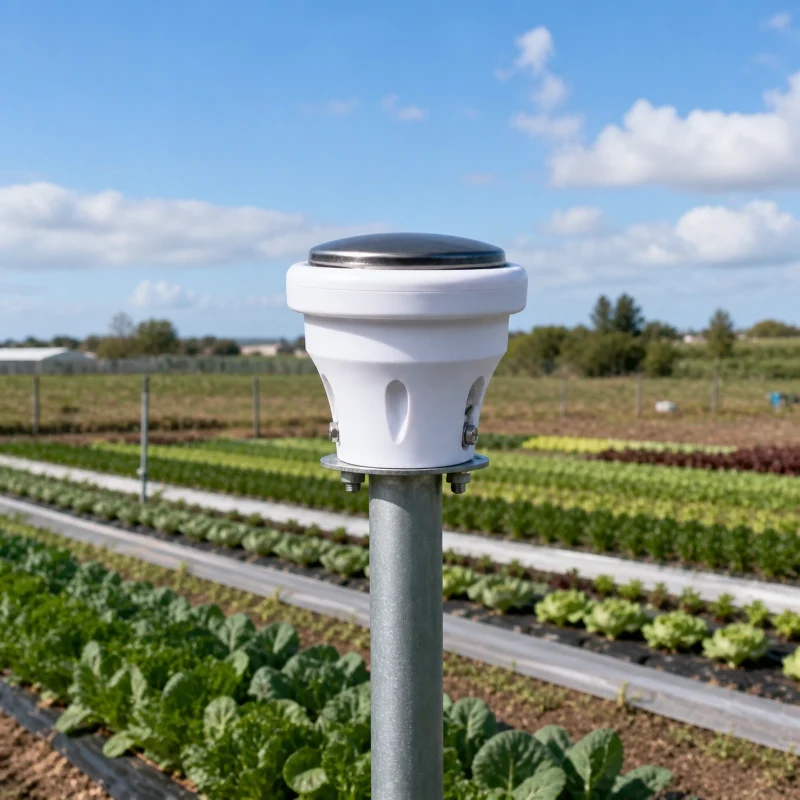
Rainfall information can be useful in outdoor agricultural monitoring networks.
The piezoelectric rain gauge can be integrated with sensors that measure:
Air temperature
Relative humidity
Wind speed
Wind direction
Solar radiation
Soil moisture
Soil temperature
Together, these measurements can provide a broader picture of field weather and soil conditions.
Rainfall can directly affect road surface conditions, visibility and transportation operations.
A compact piezoelectric rainfall sensor can be installed as part of roadside environmental monitoring stations or transportation weather monitoring systems.
Depending on the project requirements, rainfall information can be combined with other road-weather measurements to provide environmental data for monitoring centers.
6. Coastal Rainfall Monitoring
Coastal monitoring sites often require compact sensors that can operate continuously while minimizing routine field intervention.
The piezoelectric rain gauge can be used to collect rainfall information at coastal environmental observation sites, weather stations and distributed outdoor monitoring points.
Installation design should always consider the actual site conditions and mounting requirements.
7. Energy and Infrastructure Sites
Rainfall measurement can also be incorporated into environmental monitoring systems used at:
Solar PV sites
Wind energy sites
Industrial facilities
Utility infrastructure
Construction and engineering sites
In these systems, rainfall is normally one environmental parameter among several weather measurements.
8. Mobile and Temporary Monitoring Systems
Because of its compact structure and lack of a mechanical tipping mechanism, the JW-XF100(YN17) can also be considered for mobile or temporary environmental monitoring systems.
Possible applications include:
Temporary weather observation
Field research
Mobile environmental monitoring
Short-term engineering monitoring
Portable monitoring stations
The mounting arrangement should be selected according to the actual installation structure.
Installation Options
The standard installation method for JW-XF100(YN17) is sleeve mounting.
Optional installation accessories include:
Flange mounting
Bent plate mounting
1.5 m bracket
1.8 m bracket
A 3 m cable is supplied as standard, while a 10 m communication cable is available as an option.
Installation Considerations
For reliable rainfall observation, the sensor should be installed in a location appropriate for precipitation measurement.
During system design, consider:
Keeping the sensing area unobstructed
Avoiding direct blockage from nearby structures
Selecting a stable mounting structure
Routing communication cables securely
Confirming RS485 wiring before powering the system
Ensuring the mounting method matches the monitoring site
The exact installation location should be determined according to the project environment and the applicable monitoring requirements.
Why No Moving Parts Matter
Mechanical rainfall instruments contain components that physically move during measurement.
A piezoelectric rain gauge works differently.
Because rainfall is detected through the impact of raindrops rather than the movement of a tipping mechanism, there are no mechanical tipping parts in the measurement structure.
This can be advantageous for monitoring projects where:
Regular site access is difficult
Monitoring points are distributed over a wide area
Compact equipment is preferred
Mechanical maintenance should be minimized
Multiple sensors need to be integrated into one IoT network
This does not mean that outdoor equipment never requires inspection. The installation condition, sensing surface, cable connections and surrounding environment should still be checked as part of appropriate field maintenance.
Piezoelectric Rain Gauge for IoT Monitoring
One of the main benefits of this product is its ability to connect directly to digital monitoring equipment.
The RS485 Modbus RTU interface makes it possible for system integrators to build rainfall monitoring networks using a standardized sensor-to-controller architecture.
For example:
Rain Gauge → RS485 → RTU → 4G → Cloud Platform
or
Rain Gauge → RS485 → Data Logger → LoRaWAN Node / Gateway → Server
or
Rain Gauge → RS485 → PLC → Local SCADA
The actual communication architecture should be selected according to:
Number of monitoring sites
Distance between sensors and gateway
Available communication network
Power availability
Required data reporting frequency
Existing platform or SCADA system
This flexibility makes the rain gauge suitable not only as a standalone sensor but also as part of larger environmental IoT projects.
How to Select a Rain Gauge for Your Project
Before selecting a rainfall sensor, system integrators should confirm several project requirements.
Measurement Principle
Determine whether the project requires:
Piezoelectric rainfall measurement
Tipping bucket measurement
Optical rainfall detection
Different measurement methods are suitable for different system designs and project specifications.
Output Interface
JW-XF100(YN17) uses:
RS485 + Modbus RTU
Confirm that the selected data logger, RTU, PLC or gateway supports the required interface.
Power Supply
The sensor requires:
DC 9–24V
The complete station power supply should be designed according to the combined load of all sensors and communication equipment.
Rainfall Data Required
Confirm which rainfall parameters need to be collected.
This model supports:
Continuous rainfall
Rainfall duration
Rainfall intensity
Maximum rainfall intensity
Installation Method
Available options include sleeve, flange and bent plate mounting, together with optional brackets.
Select the appropriate mounting arrangement according to the site infrastructure.
Rain Gauge + Water Level Sensor ↓ RTU / Data Logger ↓ Wireless Communication ↓ Hydrology Monitoring Platform
For an automatic weather station:
Rain Gauge + Wind + Temperature + Humidity + Pressure + Radiation Sensors ↓ Weather Data Logger ↓ Remote Communication ↓ Weather Monitoring Platform
JW-IoT can provide individual sensors as well as supporting equipment for integrated environmental monitoring projects.
Build Your Rainfall Monitoring System with JW-IoT
Rainfall monitoring projects increasingly require more than a standalone sensor.
Depending on the application, a complete solution may include:
Rainfall sensor
Water-level or environmental sensors
Data logger or RTU
Wireless communication equipment
Power supply
Cloud Platform
JW-IoT provides sensors and IoT monitoring components for meteorology, agriculture, hydrology and environmental monitoring applications.
If you are designing a rainfall monitoring station, automatic weather station or hydrological monitoring network, provide us with:
Application
Required rainfall parameters
Number of monitoring sites
Installation environment
Power supply
Communication method
Data platform requirements
Contact JW-IoT for product specifications, Modbus integration information and project support.
FAQ
Q
1. What is a piezoelectric rain gauge used for?
A
A piezoelectric rain gauge is used to monitor rainfall amount, rainfall intensity, rainfall duration, and continuous rainfall accumulation in outdoor weather monitoring systems.
Q
2. How does this rain gauge measure rainfall?
A
It measures rainfall by detecting the impact force of falling raindrops on the sensing surface, then calculates rainfall data based on the piezoelectric signal.
Q
3. Does this rain gauge have moving parts?
A
No. It uses a compact solid-state piezoelectric structure with no moving parts, reducing maintenance compared with mechanical tipping bucket rain gauges.
Q
4. Can JW-IoT provide this rain gauge with RS485 Modbus RTU?
A
Yes. JW-IoT can provide the standard RS485 Modbus RTU version for integration with data loggers, RTUs, gateways, and monitoring platforms.
Q
5. What is the rainfall measurement range?
A
The rainfall measurement range is 0–200 mm/h, with 0.2 mm resolution.
Q
6. Is this rain gauge suitable for solar-powered stations?
A
Yes. Its power consumption is less than 0.2W, making it suitable for low-power and solar-powered outdoor monitoring systems.
Q
7. Can JW-IoT support rainfall monitoring for hydrology projects?
A
Yes. JW-IoT can support rainfall monitoring solutions for hydrology, water conservancy, river basin monitoring, and flood warning projects.
Q
8. Where can this piezoelectric rain gauge be installed?
A
It can be used in weather stations, farms, coastal monitoring sites, road safety stations, hydrology sites, energy sites, and remote environmental monitoring stations.
Q
9. Why choose JW-IoT piezoelectric rain gauge?
A
JW-IoT piezoelectric rain gauge provides compact size, low power consumption, no moving parts, RS485 Modbus output, and easy integration for outdoor IoT rainfall monitoring projects.
 +86 13520127780
  info@jingelway.com