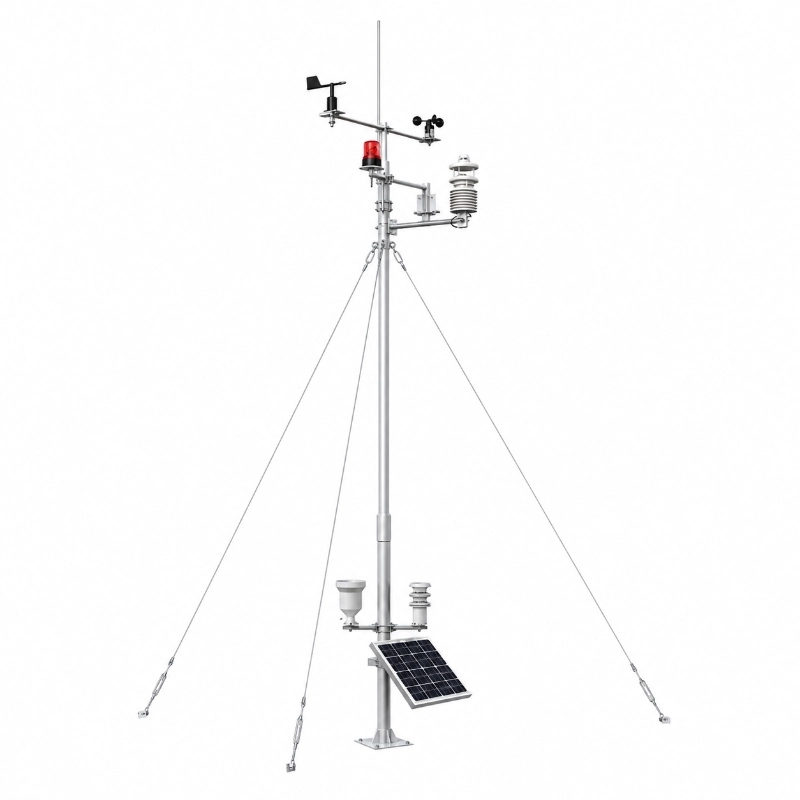
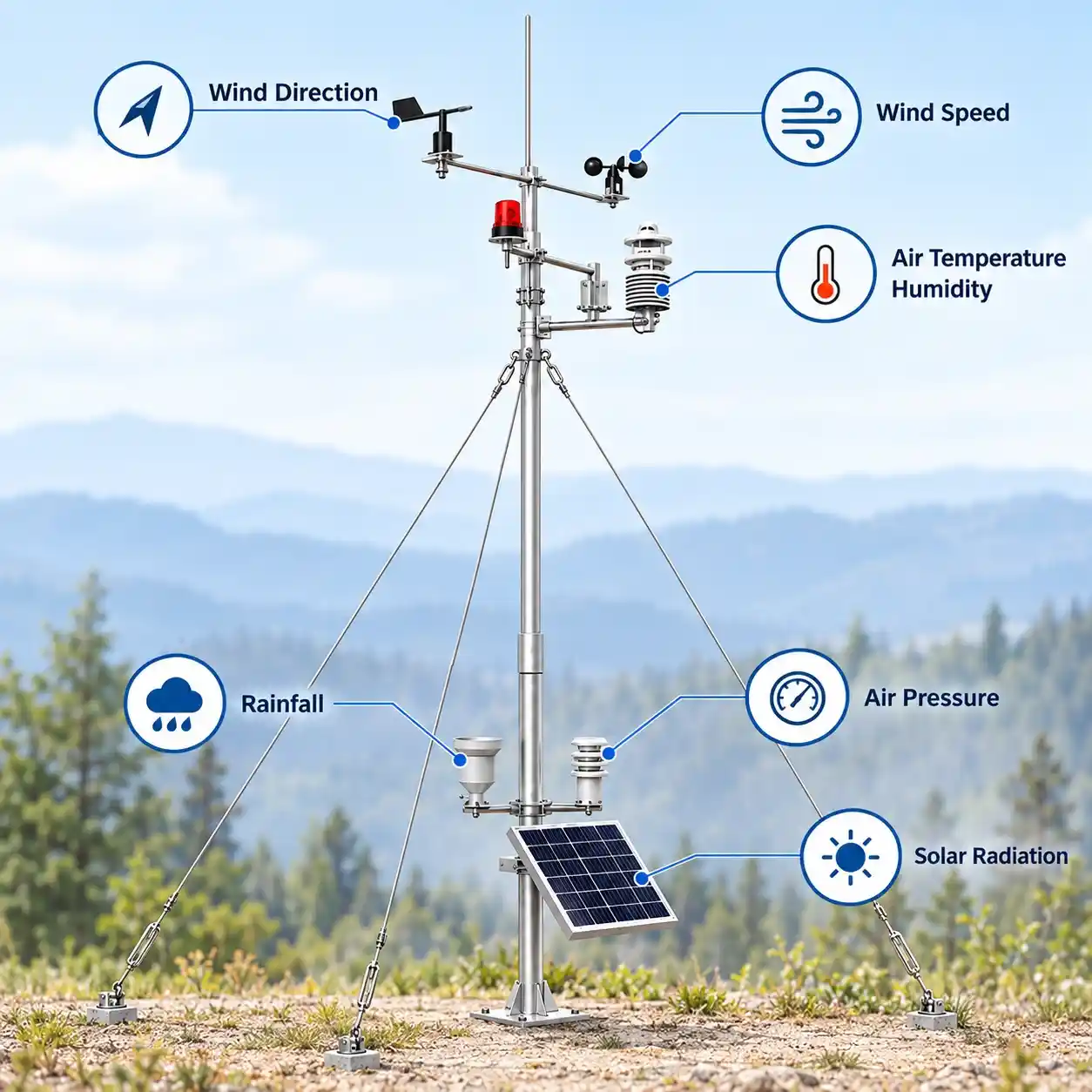
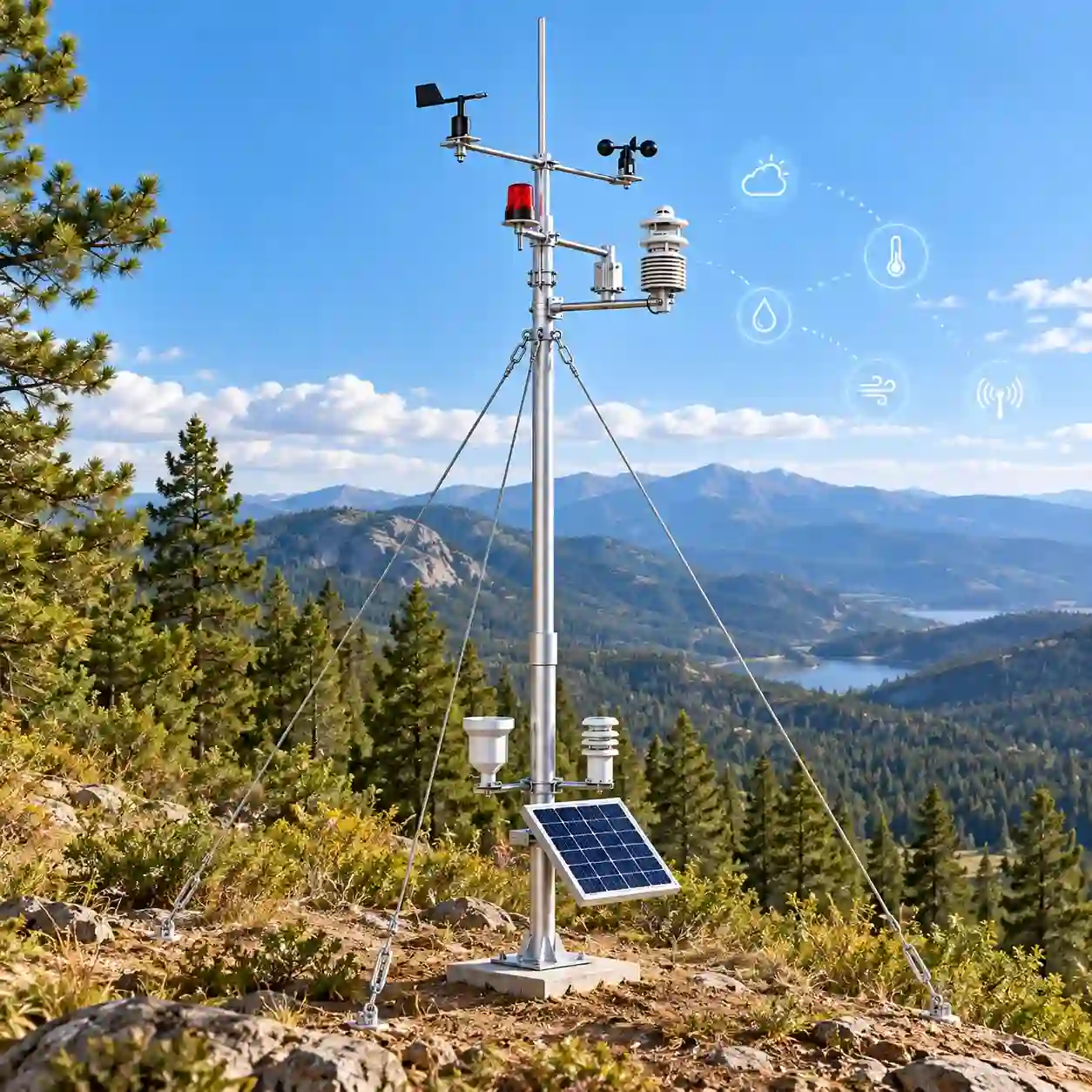
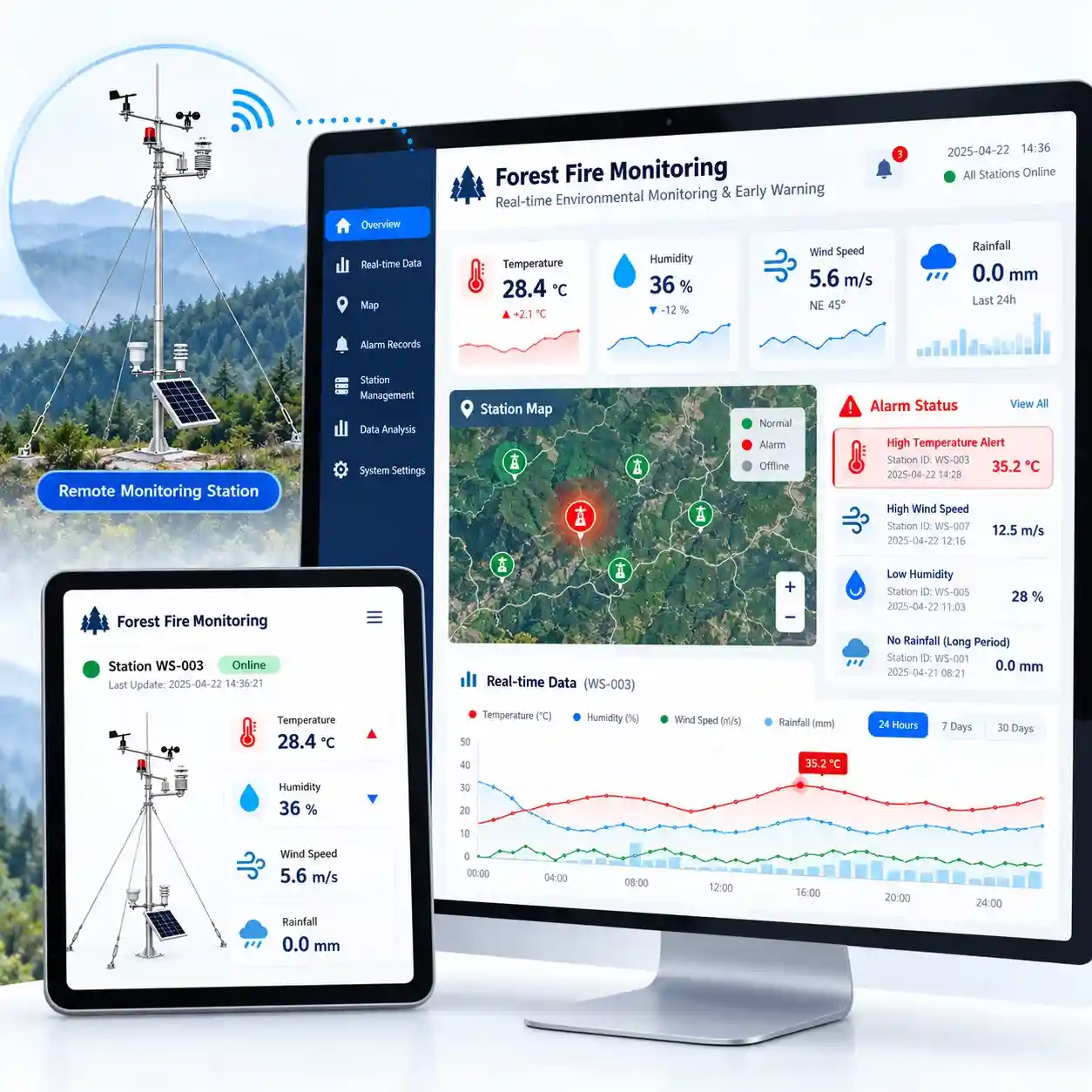
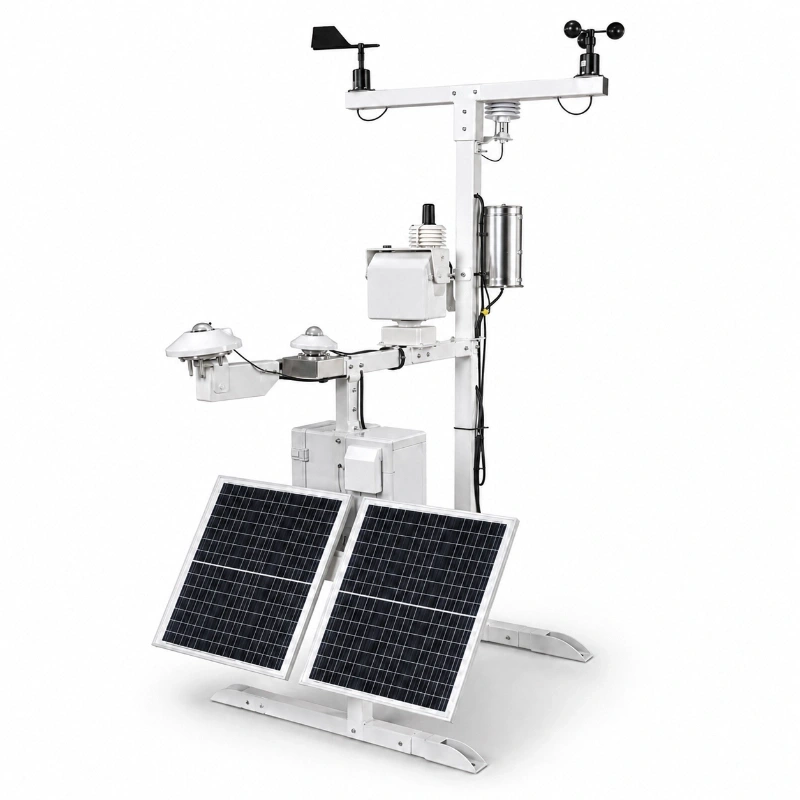
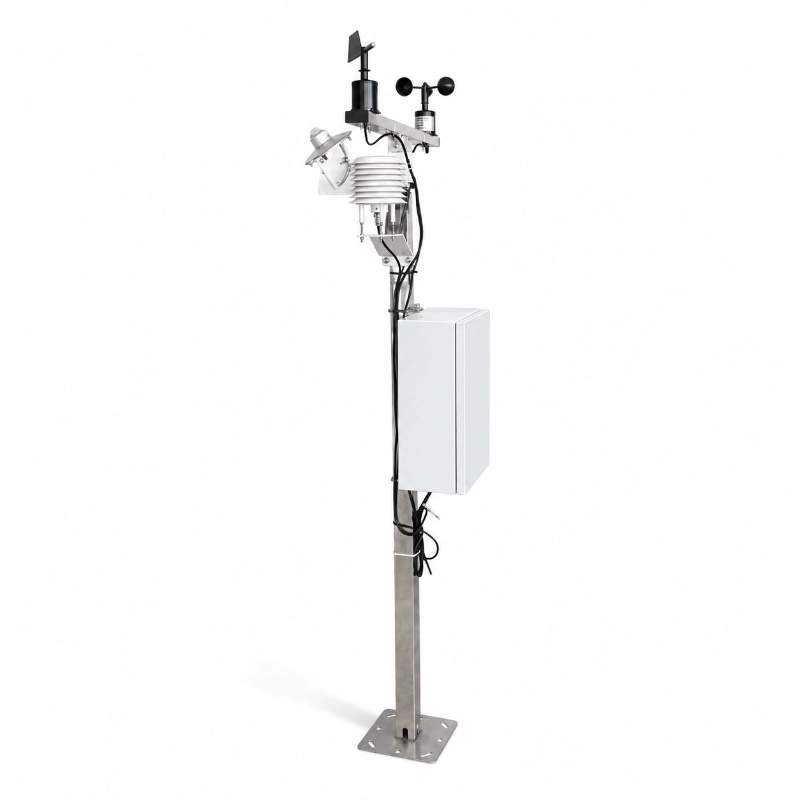
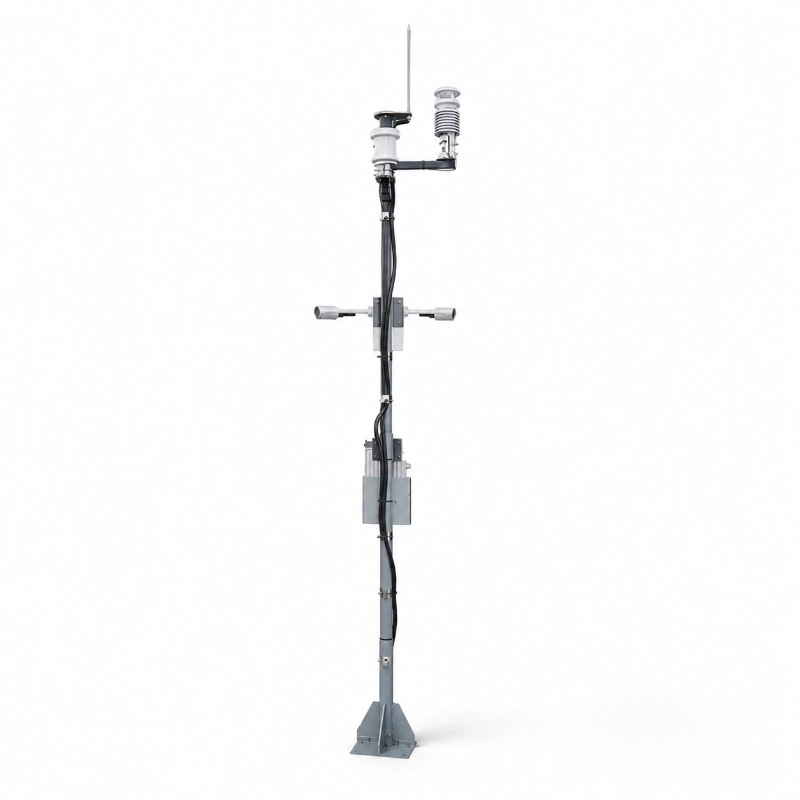
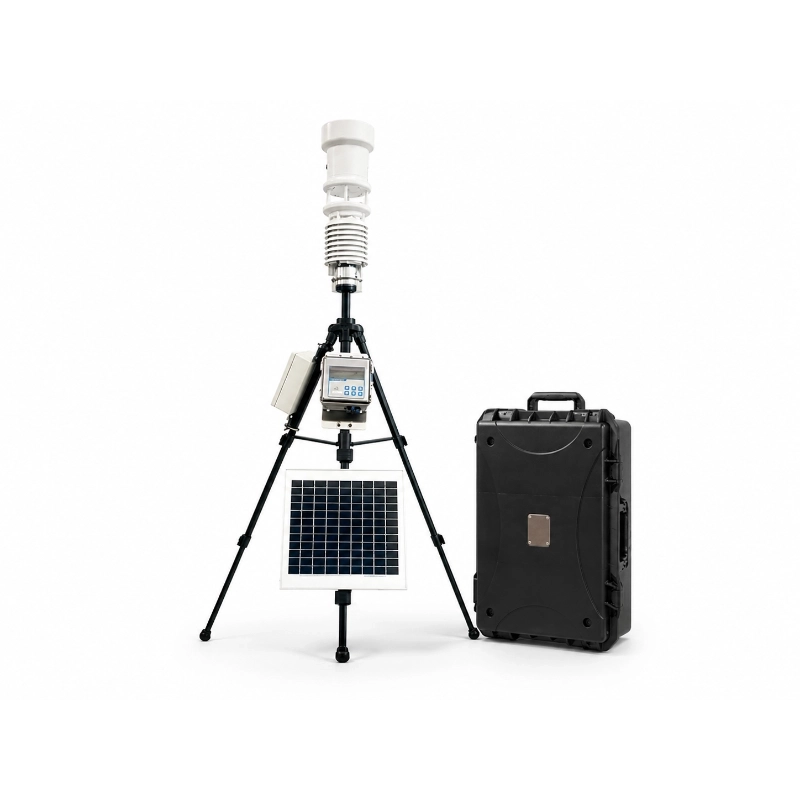
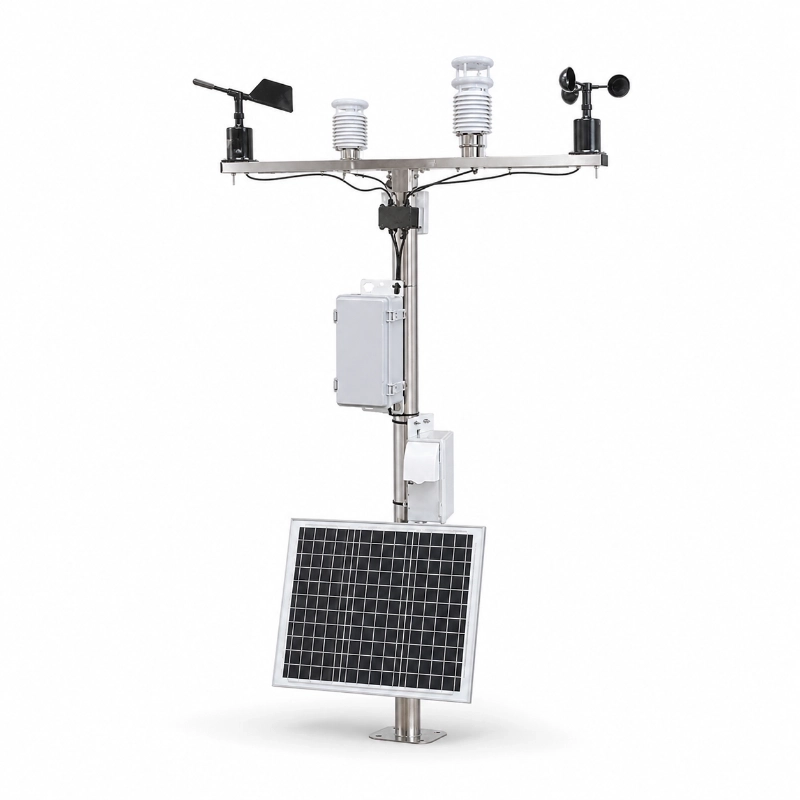
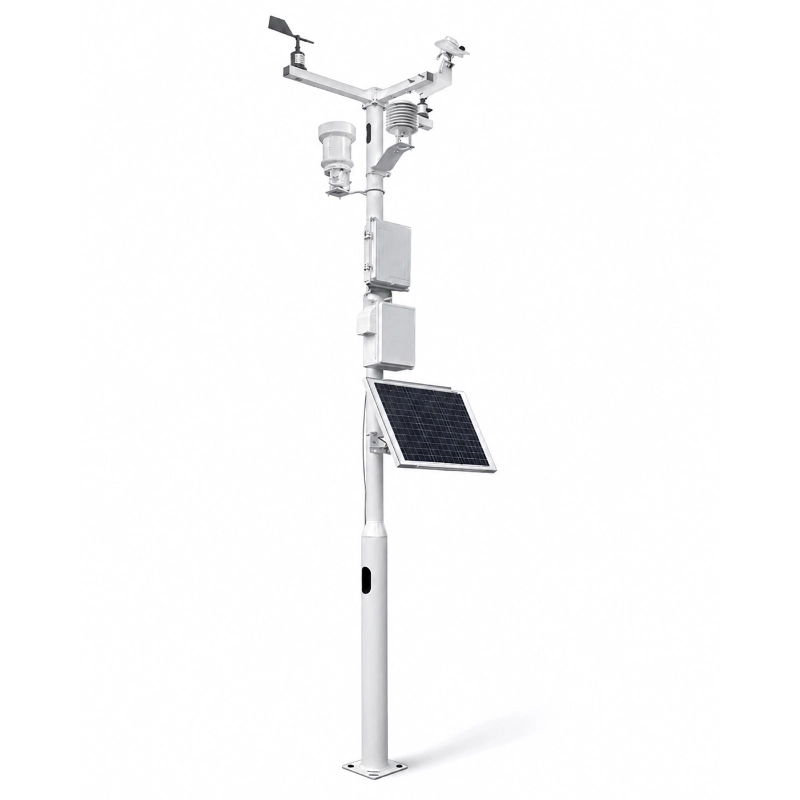
ال JW-SWS-F(LC50) Forest Fire Weather Station is a remote meteorological monitoring system designed for wildfire risk assessment, forest fire prevention, and early warning applications.
By continuously measuring temperature, humidity, wind speed, wind direction, rainfall, atmospheric pressure, and solar radiation, the station provides essential environmental data for evaluating local fire-weather conditions.
Designed for forests, national parks, mountain areas, and remote monitoring sites, the system supports solar-powered operation, wireless data transmission, centralized monitoring, and configurable environmental alerts.
1. Why Forest Fire Weather Monitoring Matters
Wildfire risk depends on interactions between atmospheric conditions, vegetation, terrain, and human activities.
High temperature, low relative humidity, and prolonged dry weather can contribute to fuel drying. Strong winds may accelerate fire spread and influence its direction.
A محطة رصد حرائق الغابات continuously collects local meteorological measurements to support fire prevention planning and operational risk assessment.
Unlike ordinary weather stations intended primarily for general weather observation, JW-SWS-F(LC50) focuses on environmental variables relevant to forest fire prevention, remote deployment, and centralized early warning management.
مهم: Weather monitoring supports fire-danger assessment but does not independently confirm an active wildfire. Actual fire detection may require cameras, smoke sensors, satellite observations, or other detection technologies.
2. Essential Fire Weather Monitoring Parameters
Temperature and Relative Humidity
Air temperature and humidity provide important information about atmospheric drying conditions.
High temperatures combined with low relative humidity can increase the drying potential of exposed vegetation and surface fuels.
سرعة واتجاه الرياح
Wind is particularly important for wildfire behavior.
Continuous wind monitoring supports the assessment of changing fire-weather conditions and provides useful situational information for forestry personnel.
Rainfall history helps characterize recent moisture conditions, while dew point provides additional information about atmospheric moisture.
Dedicated rainfall instruments can be selected from JW-IoT’s Rain Gauge Products.
Solar Radiation and Atmospheric Pressure
Solar radiation contributes to surface heating and drying.
Atmospheric pressure measurements provide supplementary weather information when analyzed alongside other meteorological variables.
3. المواصفات الفنية
The following values are based on the published JW-SWS-F(LC50) product information.
المعلمة
نطاق القياس
دقة
درجة حرارة الهواء
من -50 إلى +90 درجة مئوية
±0.3 درجة مئوية
الرطوبة النسبية
0–100% RH
±3% RH
نقطة الندى
من -50 إلى +50 درجة مئوية
±0.3 درجة مئوية
سرعة الرياح
0–60 م/ث
±(0.3 + 0.03 فولت) م/ث
اتجاه الرياح
0–360 درجة
±3°
الضغط الجوي
300–1100 هكتوباسكال
±0.3 هكتوباسكال
هطول الأمطار
0–999.9 مم
±4%
الإشعاع الشمسي
0–2500 W/m²
≤5%
V represents wind speed in m/s. Technical specifications depend on the selected sensor configuration and should be confirmed against the project datasheet.
المراقبة البيئية الاختيارية
Additional monitoring parameters may include:
Soil temperature and soil moisture
ملوحة التربة
UV radiation and illuminance
PM1, PM2.5, and PM10
Carbon dioxide and noise
الرصد الفينولوجي
Visible-light camera monitoring
For soil and vegetation moisture assessment, compatible أجهزة استشعار رطوبة التربة can be integrated into the wider monitoring solution.
4. Remote Forest Fire Monitoring System Architecture
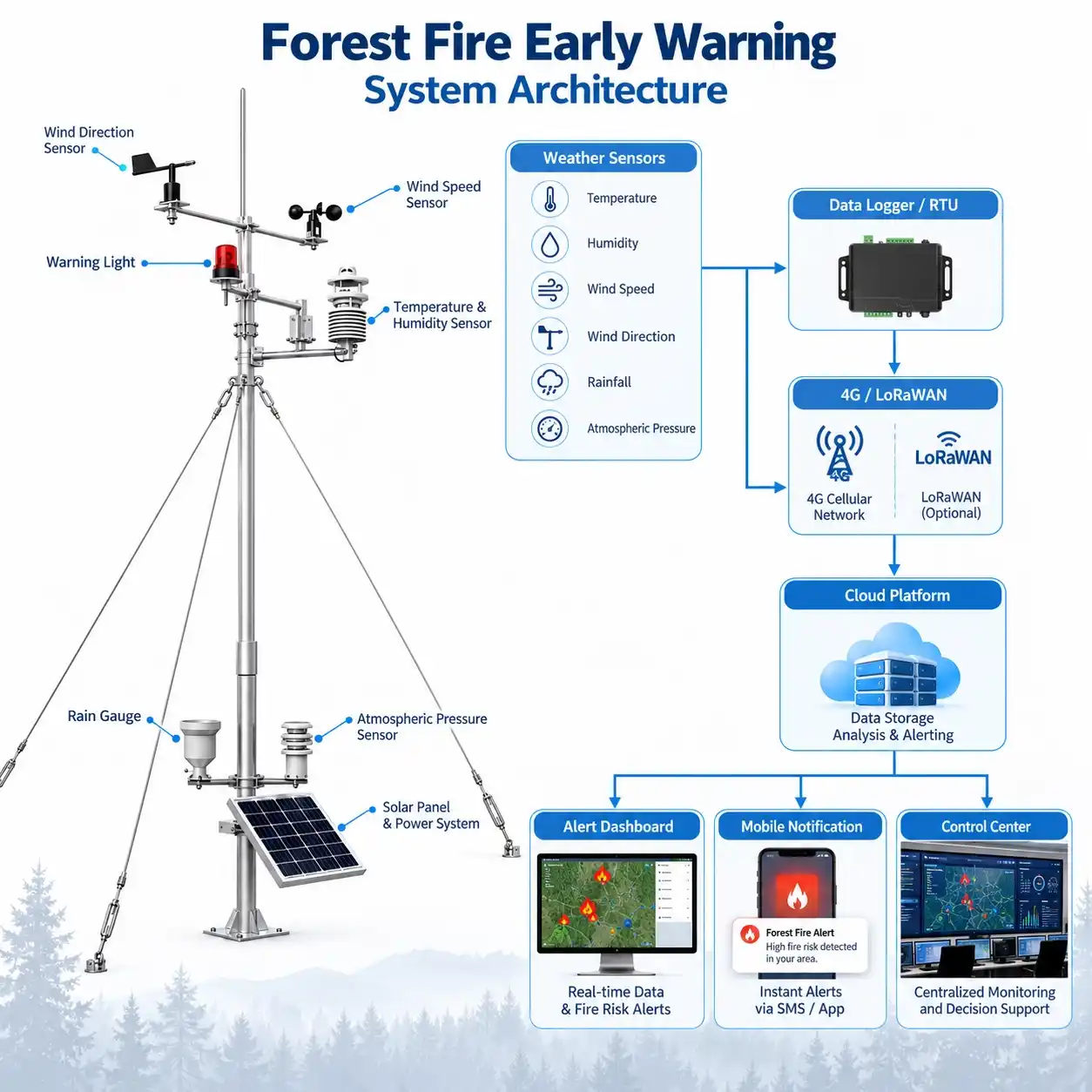
The JW-SWS-F(LC50) can be configured as an independent monitoring station or integrated into a multi-station network.
بنية النظام النموذجية
Weather Sensors → Data Logger / RTU → Wireless Communication → Cloud or Private Server → Monitoring Dashboard & Alerts
The system consists of four functional layers.
Sensor Layer: Collects meteorological measurements from the field.
Data Acquisition Layer: Records measurements and manages sensor data collection.
Communication Layer: Transfers monitoring data using a suitable network.
Platform Layer: Displays current measurements, historical trends, station status, and configured alarms.
Suitable for forest monitoring locations with reliable cellular coverage.
LoRaWAN Monitoring Networks
Can connect multiple monitoring points through a compatible gateway, subject to terrain, range, and network planning.
الاتصالات عبر الأقمار الصناعية
May be evaluated for remote locations without terrestrial network coverage.
Solar-Powered Operation
Solar panels, rechargeable batteries, and charge controllers can support unattended operation in remote forest areas.
Power system capacity must be calculated according to the selected sensors, communication equipment, reporting frequency, local solar conditions, and required battery autonomy.
6. Wildfire Early Warning and Remote Alarm Functions
The JW-SWS-F(LC50) can provide measurements to a configurable forest fire early warning platform.
Depending on the selected system configuration, available functions may include:
Real-time meteorological dashboards
Historical environmental trends
Multiple monitoring station management
GIS-based station visualization
User-defined threshold alarms
Abnormal sensor or communication notifications
Remote data access and export
تكامل منصة الطرف الثالث
How Can Weather Data Support Wildfire Alerts?
Monitoring platforms can use combinations of temperature, humidity, wind, and rainfall measurements to identify changing weather conditions.
Formal fire-danger indices must follow the calculation methods, local calibration requirements, and procedures adopted by the responsible authority.
A threshold alert indicates a monitored condition requiring attention; it does not by itself confirm a wildfire.
7. Optional Camera and Ecological Monitoring
Forest Surveillance Camera Integration
Visible-light cameras can provide additional visual information about remote forest areas.
Possible functions include image capture, live viewing, and support for visual verification of suspicious conditions.
Camera coverage, bandwidth, power consumption, and any automated detection functions must be evaluated separately.
Phenological and Soil Monitoring
Optional ecological sensors can support vegetation and environmental observation.
Soil moisture and temperature data may help characterize local environmental conditions. However, these measurements should not automatically be treated as direct substitutes for standardized forest fuel moisture measurements.
8. Recommended Applications
Forest Fire Prevention Networks
Deploy monitoring stations across forest management areas to collect localized weather measurements.
الحدائق الوطنية والمحميات الطبيعية
Support fire-season observation, environmental management, and remote site monitoring.
Mountain and Remote Forest Monitoring
Use independent power and wireless communications where permanent infrastructure is limited.
إدارات إدارة الغابات
Manage multiple stations through a centralized platform for weather observation and operational planning.
دعم الاستجابة للطوارئ
Provide localized wind and weather data that may assist situational awareness during wildfire incidents.
9. توصيات التركيب
Reliable measurements depend on representative station placement.
Install wind sensors away from major obstructions whenever practical.
Position temperature and humidity sensors in suitable ventilated radiation shields.
Install rainfall sensors according to the manufacturer’s mounting and leveling instructions.
Avoid shading of solar radiation sensors.
Evaluate mobile network coverage or LoRaWAN gateway connectivity before installation.
Size solar panels and batteries for seasonal operating conditions.
Ensure the mast, equipment enclosure, grounding, and cables are suitable for the installation site.
Station locations should be selected based on terrain, vegetation, prevailing winds, access, and maintenance requirements.
10. Forest Fire Weather Station vs Standard Weather Station
ميزة
JW-SWS-F Forest Fire Station
محطة الأرصاد الجوية العامة
الغرض الأساسي
Fire-weather and forest environmental monitoring
General meteorological observation
Core Parameters
Temperature, humidity, wind, rainfall, radiation
يعتمد على التكوين
Remote Communications
Configurable wireless options
Depends on system
الطاقة الشمسية
متاح
خياري
Multi-Station Monitoring
مدعوم من خلال تكامل المنصة
Depends on system
Camera Integration
خياري
Depends on system
Fire-Weather Alerts
قابل للتكوين
Requires suitable software
The main distinction is the application-specific system configuration, not a claim that every individual sensor is unique to wildfire monitoring.
11. Request a Forest Fire Weather Monitoring Solution
ال JW-SWS-F(LC50) Forest Fire Weather Station provides a configurable foundation for remote forest weather monitoring and wildfire prevention projects.
To recommend a suitable system configuration, please provide:
Installation country and environmental conditions
Number and location of monitoring stations
المعايير المناخية المطلوبة
Available communication networks
Solar power and backup requirements
Camera or additional sensor requirements
Monitoring platform and data integration preferences
تواصل مع JW-IoT to request a technical proposal, product specifications, or a quotation for your forest fire weather monitoring project.
التعليمات
Q
1. What is a forest fire weather station?
A
A forest fire weather station measures local meteorological conditions relevant to wildfire risk, including temperature, humidity, wind, rainfall, and solar radiation.
Q
2. Can the station detect an active wildfire?
A
The weather station primarily monitors fire-weather conditions. Confirmation of active fires requires suitable detection and verification methods.
Q
3. Is the system suitable for remote forest areas?
A
Yes. Solar power and wireless communications can be configured according to site conditions and operational requirements.
Q
4. Can multiple stations connect to one platform?
A
Yes. A compatible data platform can collect and display measurements from multiple distributed monitoring stations.
Q
5. Does JW-SWS-F support camera integration?
A
Optional visible-light camera integration is available. Camera performance and functions depend on the selected equipment.
Q
6. Can the monitoring parameters be customized?
A
Yes. Sensor selection, communications, power systems, and data integration can be configured according to project requirements.
 +86 13520127780
 info@jingelway.com