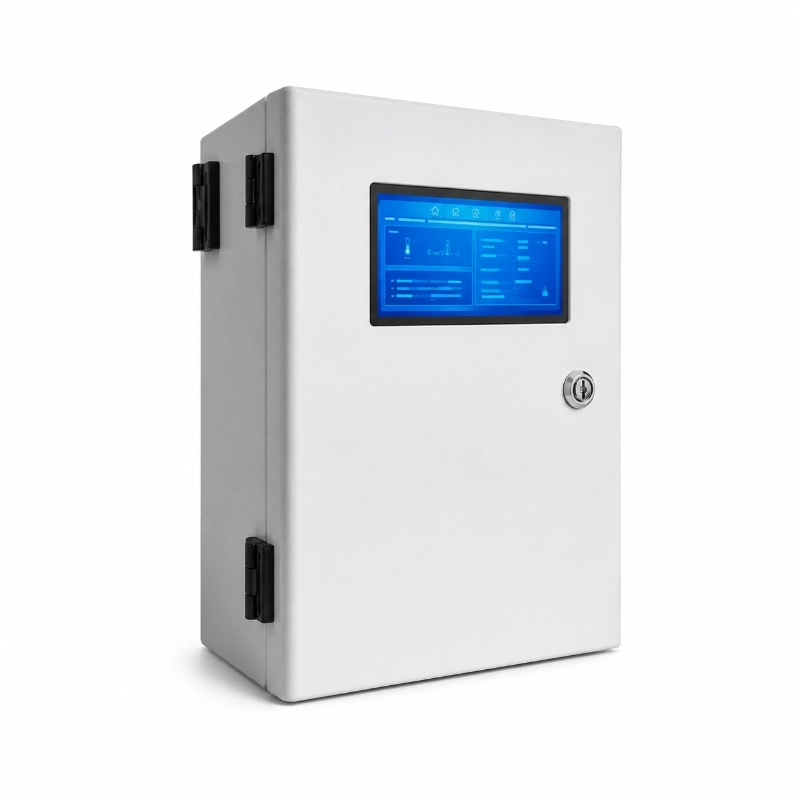
Drinking Water Quality Monitoring System For Supply Networks
Key Features
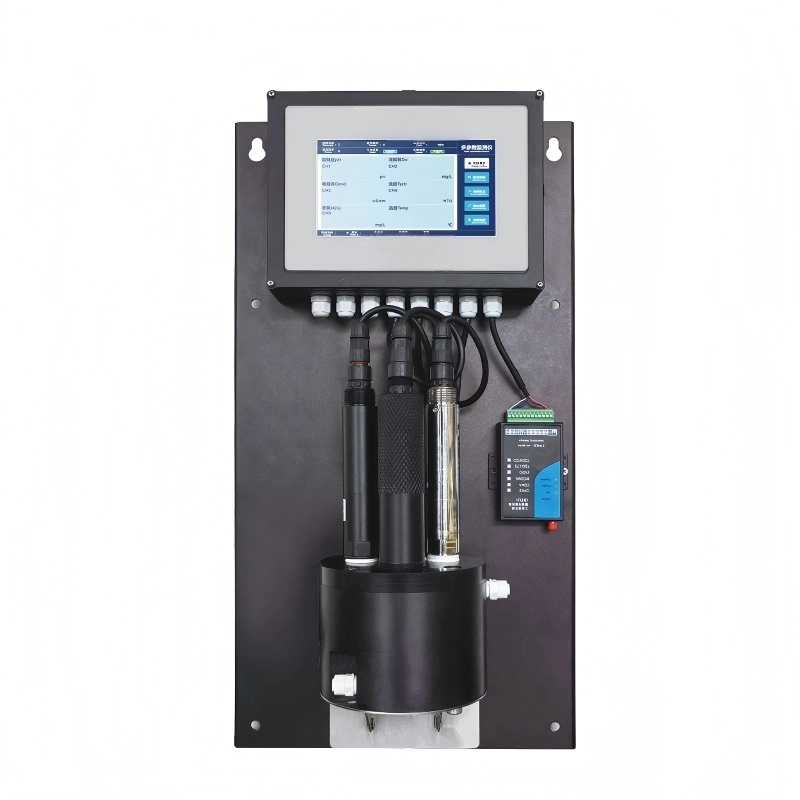
Five Parameter Drinking Water Monitoring: Continuously monitors pH, free chlorine, conductivity, turbidity, and temperature for drinking water quality control.
Compact Open Frame Design: Cabinet free structure reduces cost, saves installation space, and makes daily maintenance easier.
Supports Up To Four Sensors: The system can connect up to four sensors and monitor five water quality parameters including temperature.
Flow Stabilization and Air Release Unit: Helps maintain stable sample flow and reduce bubble interference for more reliable sensor readings.
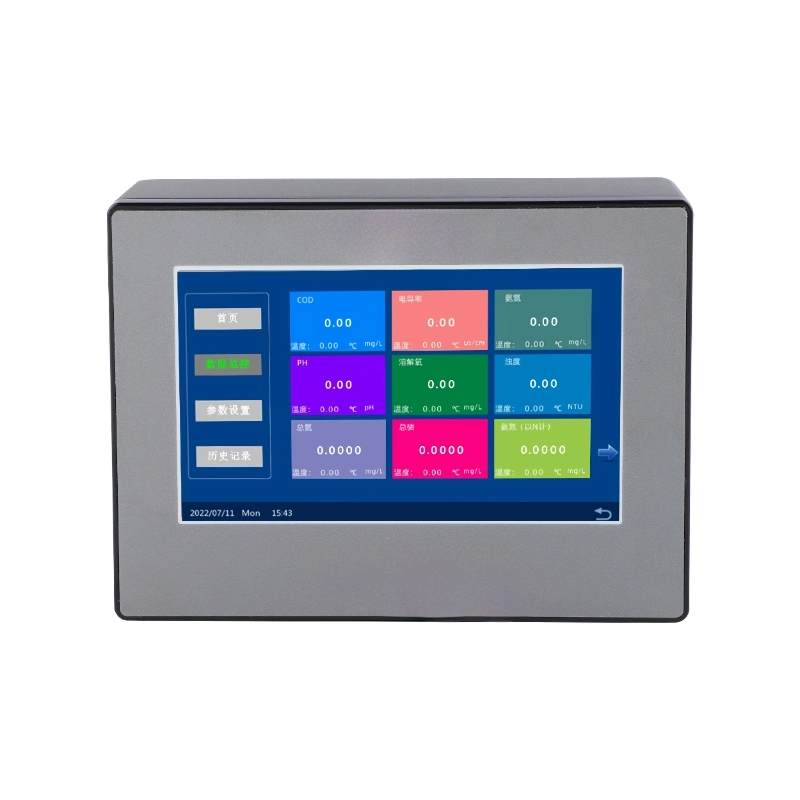
MPC-206S Industrial Control Terminal: Supports data acquisition, data analysis, display, calibration, and data storage operations.
RS485 Communication Interface: Equipped with one RS485 output and four independent RS485 sensor interfaces for stable operation.
Optional Remote Data Transmission: DTU module can upload monitoring data to a server for real time access through a website or mobile app.
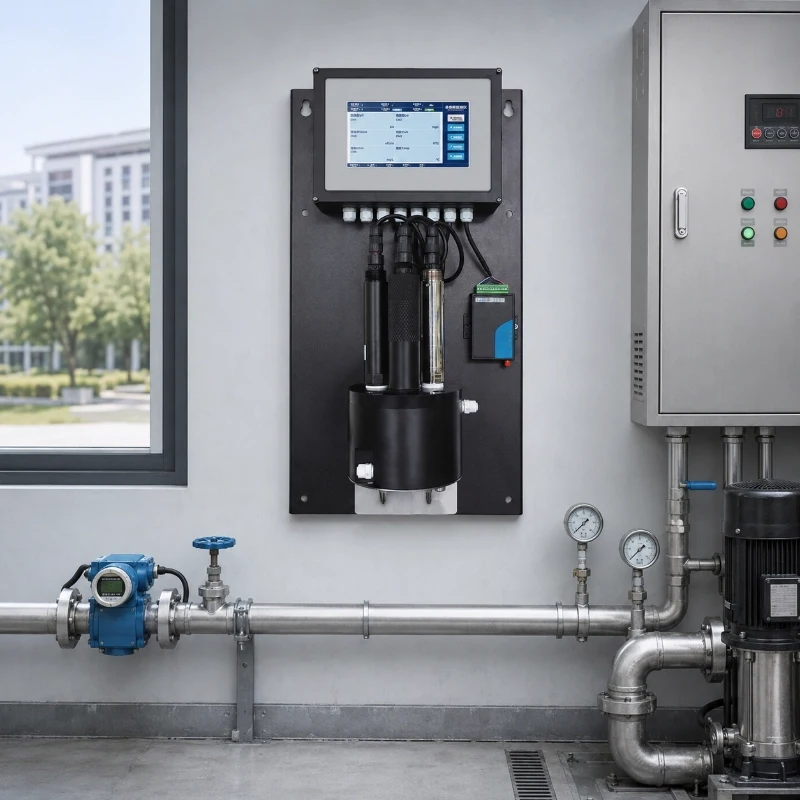
Wall Mounted Installation: Aluminum alloy backplate supports wall hanging or expansion bolt installation in water supply rooms or cabinets.
Flexible Custom Configuration: Flow cell structure and sensor combination can be customized according to project requirements.
Low Maintenance Operation: Designed for unattended applications with simple routine inspection and easy pipe maintenance.
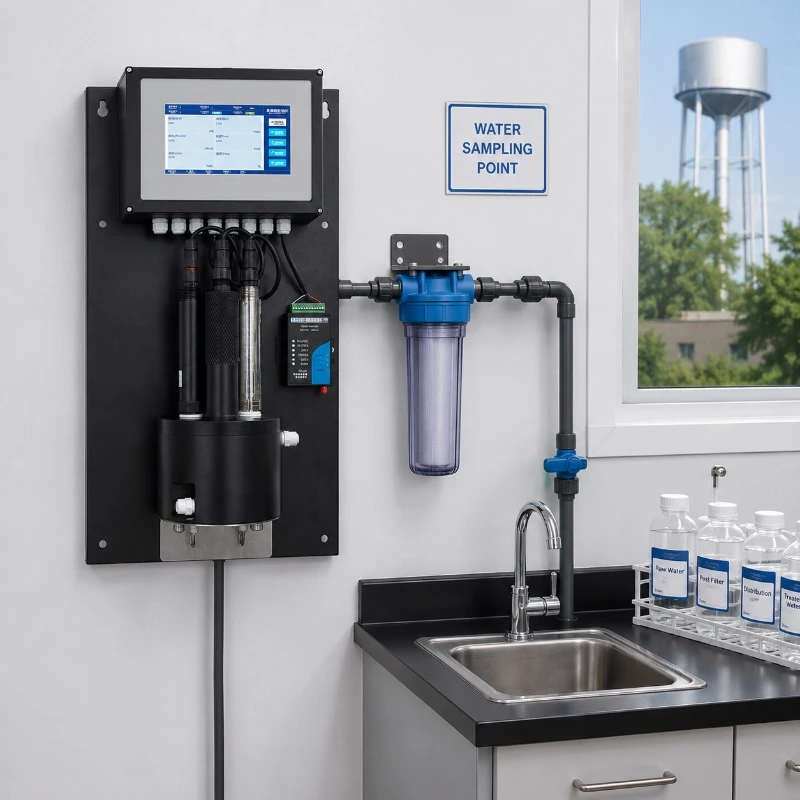
JW-EGM-200(K35)Drinking Water Quality Monitoring System For Supply Networks is a compact online monitoring solution for drinking water pipelines and secondary water supply systems. It supports continuous measurement of pH, free chlorine, conductivity, turbidity, and temperature, helping users track water quality changes in real time.
With a wall mounted open frame design, RS485 communication, optional DTU remote transmission, and flexible sensor configuration, the system is suitable for pump rooms, community water supply rooms, municipal pipeline networks, and smart water monitoring projects.
Drinking water supply monitoring is one application of a broader water quality monitoring system, which can also be configured for surface water, reservoirs, wastewater, industrial water, and environmental projects.
2. Product Overview
JW-EGM-200(K35)Drinking Water Quality Monitoring System For Supply Networks is designed for continuous online monitoring of drinking water pipelines, secondary water supply systems, and municipal water distribution points. It can measure key water quality parameters including pH, free chlorine, conductivity, turbidity, and temperature.
The system adopts a compact open frame design with a flow stabilization and air release unit, analysis sensors, control terminal, and optional remote communication module. It uses pipeline pressure for sample water supply and supports real time data acquisition, display, calibration, storage, and remote transmission.
With wall mounted installation, flexible sensor configuration, RS485 communication, and optional DTU data upload, this water quality monitoring micro system is suitable for unattended drinking water monitoring stations, community water supply rooms, pump stations, and smart water management projects.
Item
Specification
Product Type
Drinking water quality monitoring micro system
Model Reference
EGM-200
Application
Drinking water pipeline and secondary water supply
Main Parameters
pH free chlorine conductivity turbidity temperature
Sensor Capacity
Up to 4 sensors
pH Range
0 to 14
Free Chlorine Range
0 to 2 mg/L or 0 to 20 mg/L
Conductivity Range
0 to 2000 μS/cm or 0 to 5000 μS/cm
Turbidity Range
0 to 10 NTU or 0 to 20 NTU
Temperature Range
0 °C to 50 °C
Control Terminal
MPC-206S multifunction industrial terminal
Data Functions
Acquisition analysis display calibration data storage
Remote Transmission
Optional DTU module
Communication
RS485 output and multiple RS485 sensor interfaces
Power Supply
DC12V
Installation Method
Wall mounted or expansion bolt fixed installation
Backplate Size
550 × 320 × 13 mm
Backplate Material
Aluminum alloy with black anodized surface
Water Inlet
φ6.5 mm PE pipe pressure ≤0.2 MPa
Water Outlet
φ6.5 mm PE pipe
Drain Outlet
φ6.5 mm PE pipe manual regular drainage
3. Application Scenarios
Drinking Water Pipeline Monitoring: Continuous monitoring of pH, free chlorine, conductivity, turbidity, and temperature in municipal water supply networks.
Secondary Water Supply Monitoring: Suitable for residential buildings, communities, schools, hospitals, and commercial buildings with secondary water supply systems.
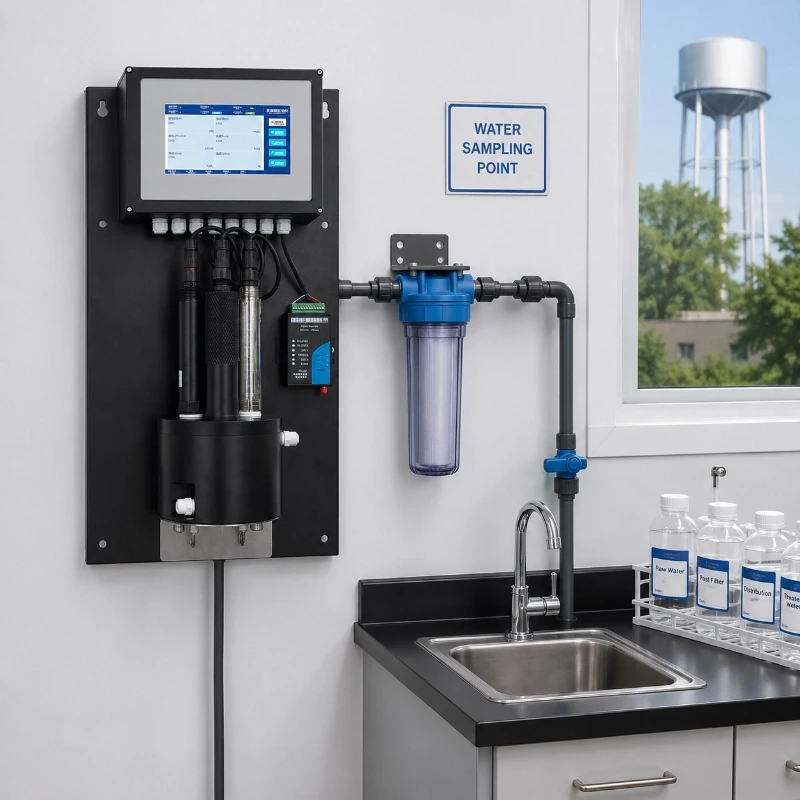
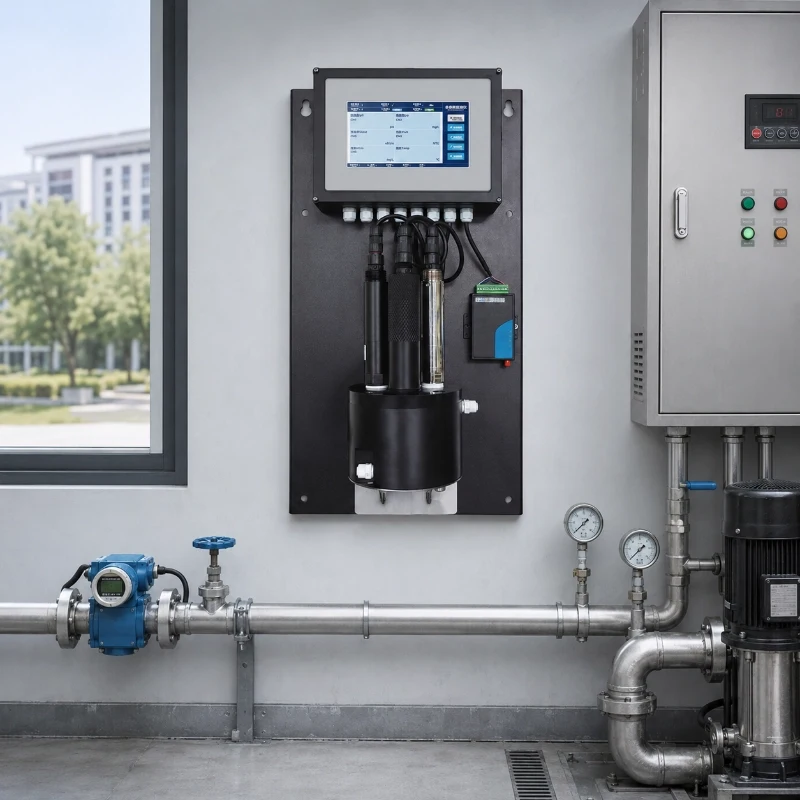
Pump Room Water Quality Monitoring: Installed in water supply pump rooms for real time monitoring and remote data transmission.
Municipal Smart Water Projects: Integrated with smart water platforms for online water quality data collection and abnormal condition alerts.
Community Drinking Water Monitoring: Used in residential water supply rooms to support daily water safety supervision.
Pipeline Network Monitoring Points: Suitable for distributed monitoring points in water distribution networks.
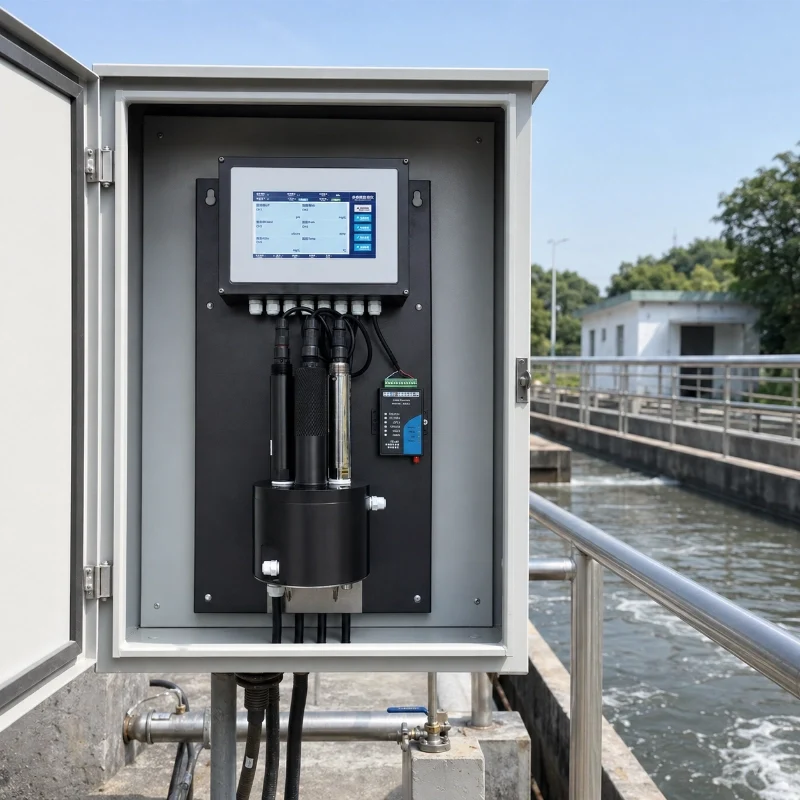
Water Supply Cabinet Integration: Compact design allows installation inside cabinets or on walls in monitoring stations.
FAQ
Q
1. What is this drinking water quality monitoring system used for?
A
It is used for continuous online monitoring of drinking water pipelines, secondary water supply systems, pump rooms, and municipal water distribution points.
Q
2. Which parameters can the system monitor?
A
The system can monitor pH, free chlorine, conductivity, turbidity, and temperature. Other parameters can also be customized according to project requirements.
Q
3. Can JW-IoT integrate this system with a remote monitoring platform?
A
Yes. JW-IoT can integrate the system with DTU modules, servers, web platforms, mobile apps, and smart water monitoring dashboards.
Q
4. Is the system suitable for secondary water supply projects?
A
Yes. It is suitable for residential communities, commercial buildings, hospitals, schools, and other secondary water supply monitoring sites.
Q
5. How many sensors can the system connect?
A
The system can connect up to four sensors and monitor five parameters including temperature.
Q
6. What communication interface does the system support?
A
It supports RS485 communication and can use an optional DTU module for remote data transmission.
Q
7. Why choose JW-IoT for drinking water monitoring projects?
A
JW-IoT provides sensor selection, system integration, remote communication, platform connection, and project based smart water monitoring solutions.
Q
8. How is the system installed?
A
The system supports wall hanging installation or expansion bolt fixed installation on a wall or inside a cabinet.
Q
9. Can JW-IoT customize the sensor configuration?
A
Yes. JW-IoT can customize the sensor configuration, flow cell structure, and communication solution based on the project site and monitoring requirements.
 +86 13520127780
  info@jingelway.com